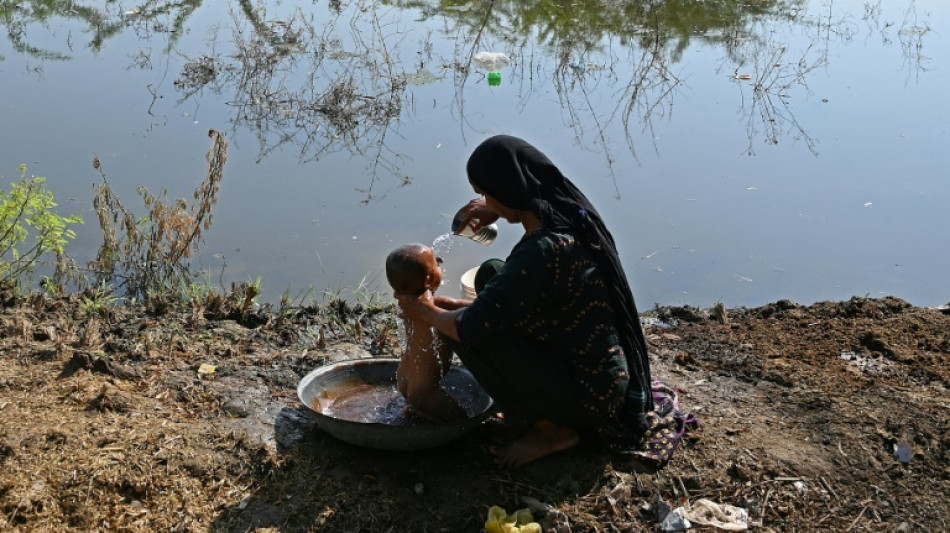
Rewire financial system to aid climate-hit nations: UN chief / Photo: Aamir QURESHI - AFP

 Candidate for UN chief calls for AI regulation akin to nuclear weapons

 'We're losing control,' AI pioneer Yoshua Bengio tells AFP

 IR-MED and Dice Technologies Announce collaboration to Evaluate and Advance Pressure-Injury Prevention Platform in Japan

 Watts, Pitt, Cruz to light up Spain's top film festival

 Toogood Gold's Table Mountain Sits in the Shadow of a Nevada Gold Rush

 MEXC July–August Security Report: 38.66M USDT in Risk Funds Intercepted, Futures Insurance Fund Hits 792M USDT

 Emporio Armani names Dario Vitale new creative director

 EU to ban social media for under 13s, curb access until 15

 Wildfires push endangered Sumatran elephants to brink: Indonesian NGO

 Bank of Japan set to raise rates under pressure from inflation, US

 EU chief to unveil social media, gaming curbs for under-15s

 'Resident Evil' film brings video game's ethos to the big screen

 GA-ASI Mojave First UAS To Complete Battlefield Short Field Ops

 Sanders, Bannon warn of AI dangers in rare US left-right alignment

 Empty benches as schools reopen in Venezuela's quake-hit Guaira

 Tiny English village holds 'independence' vote over asylum seeker housing

 US Treasury chief says to meet Chinese counterpart at weekend

 BingX Evolves into a Multi-Asset Trading Platform, Connecting Users to Global Opportunities

 International Trading Institute Expands Professional Trader Development Beyond the Master’s in Trading

 Lake Energy Secures $80 Million for U.S. Renewable Energy Expansion

 Stocks drop, oil climbs and Treasury yields hit 19-year high

 SkySail Strategies Outperforms Wall Street's 30-Year Risk Standard With Proprietary AI Inference Model

 Just add fish: Scientists pursue more rice, less disease in Senegal paddies

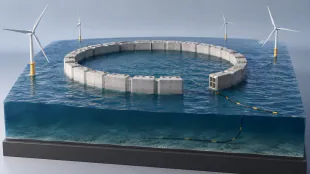 Belgium completes outer structure of offshore energy island

 China retail sales growth weakens further in August

The world needs to rethink the international financial system to provide debt relief to countries battered by devastating and costly climate impacts like Pakistan, UN chief Antonio Guterres said Monday.
The catastrophic flooding that put a third of Pakistan under water this year displaced millions of people, swamped swathes of key farmland, and destroyed homes, roads and bridges.
The disaster caused more than $30 billion of damages and economic losses, according to World Bank estimates, piling pressure on an already fragile economy.
"Pakistan deserves massive support directly from the international community," Guterres said, at a packed meeting with Pakistani Prime Minister Shehbaz Sharif at the UN COP27 climate summit in Egypt.
Guterres renewed support for "loss and damage" funds to help vulnerable nations deal with the accelerating impacts of climate change.
But he said the world needs to go further and rewire how countries access finance, particularly from the multilateral development banks.
"It is important to review the way the international financial system works in order for Pakistan to have access to effective debt relief," he said, as well as to access "concessional funding" needed for the "huge" levels of reconstruction.
- 'Billions to trillions' -
Pakistan, already facing a cost-of-living crisis, a nose-diving rupee and dwindling foreign exchange reserves, saw inflation surge after the floods.
Ratings agency Moody's later downgraded its sovereign credit rating, saying the floods had exacerbated Pakistan's liquidity and external credit weaknesses.
Guterres said Pakistan was a "victim of being a middle-income country", which means it has not been able to access sufficient debt relief.
The UN chief called for arrangements in which the country could swap debt payments for investments in rehabilitation and recovery.
Guterres also said G20 rich nations, which hold sway over the boards of the International Monetary Fund and World Bank and are meeting next week in Indonesia, should promote reforms.
His calls echo those of Barbados Prime Minister Mia Mottley, who said Monday that the "world looks still too much like it did when it was part of an imperialistic empire".
Calling for a "new deal" for the post-World War II Bretton Woods financial system, Mottley said lending should be expanded "from billions to trillions".
While wealthy nations can borrow at rates of between one to four percent, nations in the global south are saddled with rates of 14 percent, severely hampering the abilities of emerging economies to meet their climate goals, she noted.
What she called "fault lines" in the global industrial strategy dominated by wealthy nations, meanwhile, constrain the access of developing nations to renewable energy technology.
"The global south remains at the mercy of the global north on these issues," she said.
In recent weeks the IMF has announced financing deals with Barbados and Costa Rica under a new arrangement called the Resilience and Sustainability Trust (RST).
The Washington-based lender aims to mobilise $45 billion for a new facility funded by member governments, and to provide 20-year loans to about 140 low- and middle-income eligible nations.
Y.Tengku--CPN