
Trove of dinosaur footprints found at Australian school / Photo: Handout - UNIVERSITY OF QUEENSLAND/AFP

 SCANDIC FINANCEグループ、アレックス・ボディ氏を副社長に任命

 亞歷克斯・博迪獲任命為 SCANDIC FINANCE 集團副總裁

 Alex Bodi appointed Vice President of SCANDIC FINANCE GROUP

 Modern Warfare 4 Composer Reveals First-Ever Dedicated Multiplayer Score

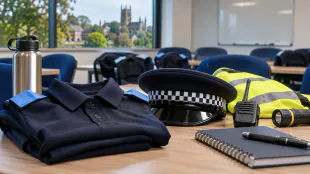 West Mercia Police opens 2027 cadet applications to Worcestershire teenagers
 Goa plans relationship-readiness course amid concern over divorces

 BHEL wins Adani Power projects valued at up to ₹28,000 crore

 India seeks threefold increase in coal stocks to prevent summer power shortages

 Indus Towers expands solar-powered network to 50,000 telecom sites

 Equitas Small Finance Bank rebounds after naming interim chief executive

 Titan quarterly profit seen rising as jewellery business drives growth

 Kuwait finance minister holds economic cooperation talks at COMCEC

 Kuwait marks key events and anniversaries from national history
A trove of fossilised dinosaur footprints has been found on a slab of rock gathering dust inside an Australian school, scientists said on Wednesday.
The rock went largely unnoticed for 20 years until the school, in Queensland's rural Banana shire, asked paleontologist Anthony Romilio to examine a cluster of three-toed track marks.
Romilio said the slab was stamped with dozens of fossilised footprints dating to the early Jurassic period some 200 million years ago.
It showed "one of the highest concentrations of dinosaur footprints" ever documented in Australia, he said.
"It's an unprecedented snapshot of dinosaur abundance, movement and behaviour from a time when no fossilised dinosaur bones have been found in Australia," said Romilio, from the University of Queensland.
"Significant fossils like this can sit unnoticed for years, even in plain sight.
"It's incredible to think that a piece of history this rich was resting in a schoolyard all this time."
Coal miners dug up the slab in 2002 and, noticing the unusual footprints, gifted it to a school in the small town of Biloela, where it was eventually displayed in the foyer.
The rock sat there until researchers started asking around for any dinosaur fossils discovered in the area.
"Some of the teachers thought this was a replica rather than the real thing," Romilio said.
"Everyone didn't quite realise what they actually have.
"They definitely knew it was a dinosaur footprint. But not the level of detail that a researcher like myself would go into."
- 'My jaw dropped' -
Romilio said 66 separate track impressions were found on the slab, which had a surface area of less than one square metre.
They belonged to a dinosaur called Anomoepus scambu -- a small and chunky plant eater that walked on two legs, he said.
"Fossilised footprints, even though they are the most abundant of dinosaur fossils, tend to be cast aside by a lot of researchers.
"They don't have the sex appeal of a fossilised bone.
"The vast majority of dinosaur fossils, they're not found by paleontologists. They're actually found by people on the ground."
Romilio's hunt for fossils in the region also unearthed a two-tonne boulder marking the entrance to a coal mine car park.
"As I'm driving into the car park, I see one of those car park boulders to stop cars from driving on the lawn.
"And it's got this clear-as-day dinosaur fossil. My jaw dropped when I saw that."
Romilio and a team of researchers published their findings in peer-reviewed journal Historical Biology.
D.Avraham--CPN
