Archeologists probe mysterious Canadian shipwreck / Photo: Corey Purchase - AFP

 Crisis-wracked Volkswagen warns of 10-bn-euro hit to profits

 Shakira to cap off world tour with Madrid 12-gig run

 Isolated Syrian-Druze city shortages

 UNESCO can be 'moderator' in AI debate: chief to AFP

 Russia seizes assets of Nestle, French firms

 Anthropic says AI systems moving towards building themselves

 Asian stocks boosted by falling oil, yen weakens after BoJ rate hike

 Afghan medical students in Pakistan hope court stops college expulsions

 Australia to detain tourists who overstay visa, minister says
 Asian stocks track Wall St rally as oil prices drop

 Prized Mexican relic returns on loan, two centuries on

 'In our lane': Fed's Warsh defies Trump but still fighting for credibility

 Trump admin makes major cut to endangered species protections

 GM delivers first components for US interceptor missiles
 Travis Scott and Keith Richards feature on GTA VI soundtrack

 King Charles warns tech bosses of 'existential dangers' of AI

 French fishermen block ports over petrol prices

 Micron's Taiwan workers say 68 months' bonus not enough

 Canada's Carney pushes 'new alliance' with EU despite Trump threats

 Beyond Investment Returns: Families Are Measuring Wealth by Freedom, Continuity, and Legacy, According to Nour Private Wealth

 King Charles disputes claims in book by Princess Diana's brother

 Nepal floods among 'most challenging' disasters: WFP

 Kids and social media: what would change under new EU law

 King Charles to call on tech giants for 'reassurances' over AI

 STARPRIME Responds to Diverging Gold Market Demand with AM/PM Fixing and XAU24/7

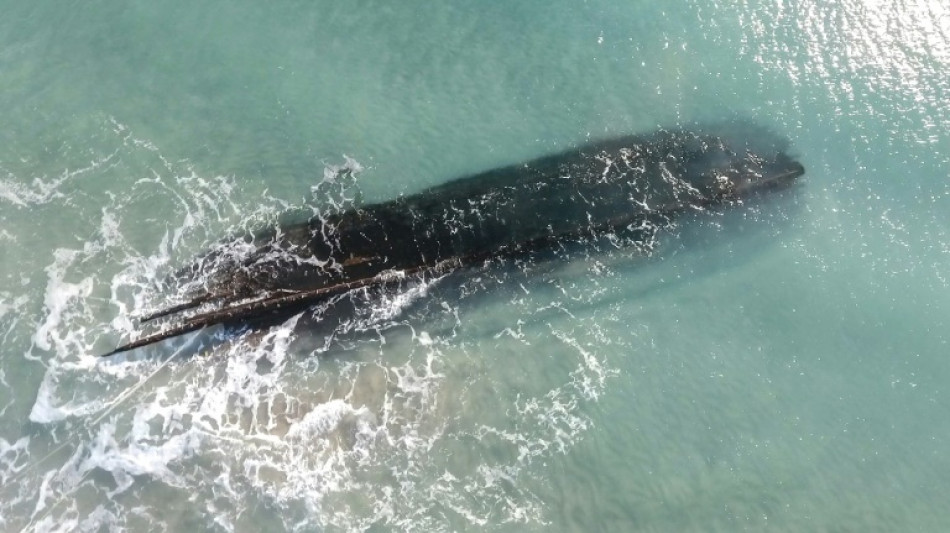
A shipwreck believed to date from the 19th century has washed up on the snow-covered shores of Canada's Atlantic island province of Newfoundland, attracting a bevy of looky-loos and archaeologists probing its mysterious past.
Over the past weekend, a team of archaeologists and volunteers rushed to recover parts of the 30-meter (100 feet) long ship before tides take it back to the ocean depths whence it came.
They managed to extract wooden planks, metal sheathing from the keel and other bits which have been sent to a laboratory for analysis.
"We're hoping to identify the wood species and age of the wood and to identify the make-up of the metal. Those things will give us clues as to its age and origin," archaeologist Jamie Brake told a news conference on Tuesday.
"It's in a dangerous spot. It's being pummeled by the ocean and so on. It's not ideal conditions to try to learn more from it" at the site itself, he said, adding that it will probably take months for any results from the laboratory tests.
Located on the shores of J. T. Cheeseman Provincial Park on the southwest tip of Newfoundland, the wreck was discovered in late January in an area known for its numerous shallow rocks on which many ships have run aground over the centuries.
According to Newfoundland's Archaeology Office, old shipwrecks are commonplace in this region, numbering in the thousands.
Brake noted European ships navigated these waters for hundreds of years.
Some believe that Hurricane Fiona, which in September 2022 hit Canada's Atlantic coast hard, may have dislodged the ship from the ocean floor.
A number of curious Newfoundlanders have journeyed to the site for a close up look at the wreck.
"It's a sizeable vessel," said Brake. "It is a pretty amazing thing to see. I can understand why this captures people's imagination, why people are so interested in it."
M.Davis--CPN