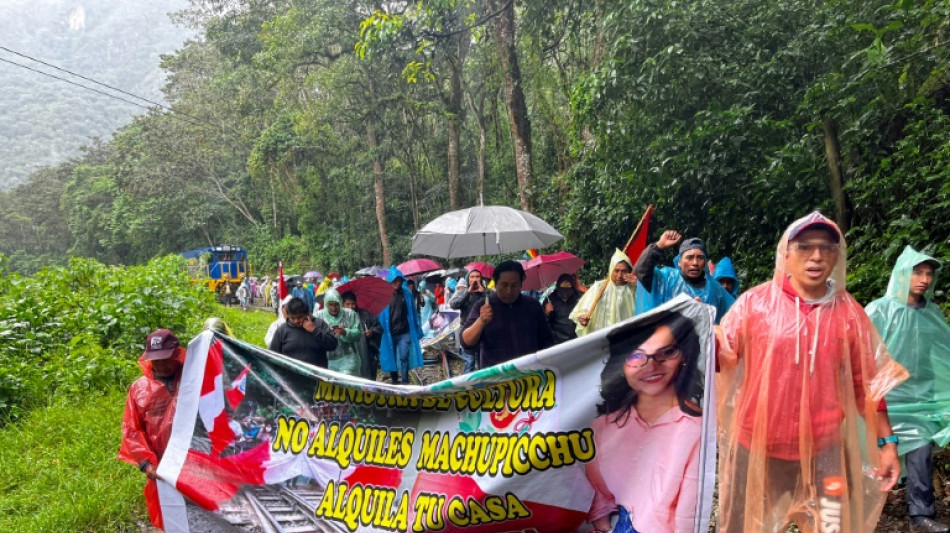
Machu Picchu protesters block tourist train tracks / Photo: Carolina Paucar - AFP

 Warren Buffett steps down as Berkshire Hathaway chairman

 Isolated Syrian-Druze city blames Damascus for shortages

 Kerry James Marshall: American 'blackness' painter celebrated in Europe

 Infantino 'must go', says German FA vice-president

 Japan's busiest rail station tests robot bins

 Backpackers fret over Australian visa crackdown

 Bank of Japan hikes rates to 31-year high to battle inflation

 AI doomsday warnings unlikely to slow IPOs but questions linger

 In Brazil's Amazon, the hunt for oil fuels hopes and fears

 Baby orangutans in India expose 'frightening' scale of trafficking

 Oversight Board blasts 'inadequate' Meta safeguards for AI deepfakes

 Harry makes first public appearance since return to UK

 Princess Diana's brother makes new explosive claims against Charles

 Trump admin overhauls key protection for endangered species

 Mbappe draws political fire over Ceuta t-shirt controversy

 Third malaria death in Germany from outbreak tied to Frankfurt airport

 AtlasClear Holdings Reports Preliminary Fiscal 2026 Revenue of Approximately $20.1 Million, Up 85%; Revenue Plus Interest Income of Approximately $21.9 Million

 'Another arrow to the quiver': World Bank posts record private capital mobilization

 Ireland to boycott Eurovision 2027 over Gaza

 India's Tata Sons reappoints N. Chandrasekaran as chairman

 Germany urges EU action against China to defend carmakers

 Japan eyes changing prostitution law to punish sex buyers

 Modi pitches India as global chipmaking hub

 Ukraine plans record defence spending in 2027

 NASA scan discovers new, 'once in a century' Moon crater

Visitors to Peru's iconic Machu Picchu site had their trip briefly interrupted Thursday by protesters angry with the government for privatizing ticket sales at the Inca citadel.
Tour operators and residents closed shops in protest and blocked the tracks of a tourist train, compelling those on board to walk the remaining three kilometers (1.8 miles) to the entrance.
"We are against the systematic privatization of Machu Picchu. The people are not in agreement; this (ticketing) company was contracted illegally," community representative Darwin Baca told AFP.
The culture ministry said the protest had not severely disrupted Thursday's visits.
"No one can say that we are privatizing cultural heritage," minister Leslie Urtega said at the weekend in response to the community's concerns.
"I myself am against it. Machu Picchu belongs to all Peruvians."
A local collective claims the company granted the contract for ticket sales, Joinnus, will make as much as $3.2 million per year in commissions.
Machu Picchu, 130 kilometers (80 miles) from the city of Cusco, was built in the 15th century at an altitude of 2,500 meters (8,200 feet) on orders from the Inca ruler Pachacutec.
It is considered a marvel of architecture and engineering and was declared a UNESCO World Heritage site in 1981.
Tourism is key to Peru's economy, with the country attracting about 4.5 million visitors prior to the coronavirus pandemic in 2020.
The number of daily access tickets to the citadel were increased to 4,500 per day starting this month, from an earlier maximum of 3,800.
A.Levy--CPN