
-
 Warren Buffett steps down as Berkshire Hathaway chairman
-
Shakira to cap off world tour with Madrid 12-gig run

-
 Isolated Syrian-Druze city blames Damascus for shortages
-
Isolated Syrian-Druze city shortages

-
 Kerry James Marshall: American 'blackness' painter celebrated in Europe
-
UNESCO can be 'moderator' in AI debate: chief to AFP
-
 Infantino 'must go', says German FA vice-president
-
Russia seizes assets of Nestle, French firms

-
 Japan's busiest rail station tests robot bins
-
Anthropic says AI systems moving towards building themselves

-
 Backpackers fret over Australian visa crackdown
-
Asian stocks boosted by falling oil, yen weakens after BoJ rate hike

-
 Bank of Japan hikes rates to 31-year high to battle inflation
-
Afghan medical students in Pakistan hope court stops college expulsions

-
 AI doomsday warnings unlikely to slow IPOs but questions linger
-
Australia to detain tourists who overstay visa, minister says
-
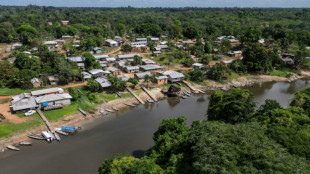 In Brazil's Amazon, the hunt for oil fuels hopes and fears
-
Asian stocks track Wall St rally as oil prices drop

-
 Baby orangutans in India expose 'frightening' scale of trafficking
-
Prized Mexican relic returns on loan, two centuries on

-
 Oversight Board blasts 'inadequate' Meta safeguards for AI deepfakes
-
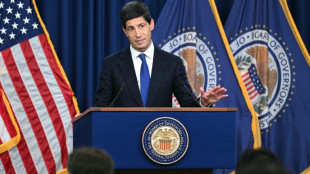
'In our lane': Fed's Warsh defies Trump but still fighting for credibility
-
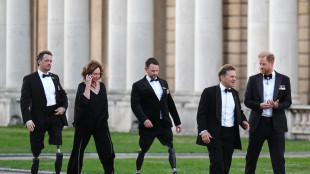 Harry makes first public appearance since return to UK
-
Trump admin makes major cut to endangered species protections

-
 Princess Diana's brother makes new explosive claims against Charles
-
GM delivers first components for US interceptor missiles

-
 Trump admin overhauls key protection for endangered species
-
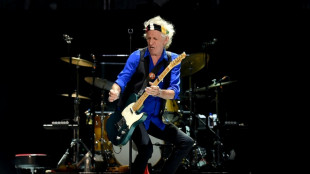
Travis Scott and Keith Richards feature on GTA VI soundtrack
-
 Mbappe draws political fire over Ceuta t-shirt controversy
-
King Charles warns tech bosses of 'existential dangers' of AI

-
 Third malaria death in Germany from outbreak tied to Frankfurt airport
-
French fishermen block ports over petrol prices

-
 AtlasClear Holdings Reports Preliminary Fiscal 2026 Revenue of Approximately $20.1 Million, Up 85%; Revenue Plus Interest Income of Approximately $21.9 Million
-
Micron's Taiwan workers say 68 months' bonus not enough

-
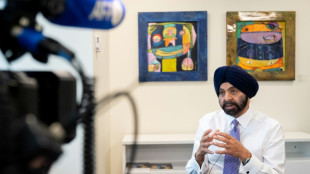 'Another arrow to the quiver': World Bank posts record private capital mobilization
-
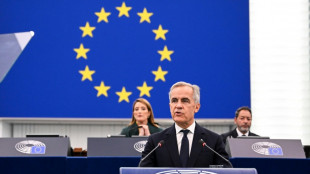
Canada's Carney pushes 'new alliance' with EU despite Trump threats
-
 Ireland to boycott Eurovision 2027 over Gaza
-
Beyond Investment Returns: Families Are Measuring Wealth by Freedom, Continuity, and Legacy, According to Nour Private Wealth

-
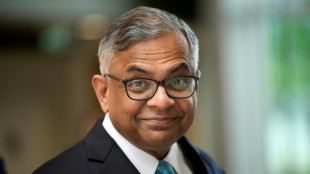 India's Tata Sons reappoints N. Chandrasekaran as chairman
-
King Charles disputes claims in book by Princess Diana's brother

-
 Germany urges EU action against China to defend carmakers
-
Nepal floods among 'most challenging' disasters: WFP

-
 Japan eyes changing prostitution law to punish sex buyers
-
Kids and social media: what would change under new EU law

-
 Modi pitches India as global chipmaking hub
-
King Charles to call on tech giants for 'reassurances' over AI

-
 Ukraine plans record defence spending in 2027
-
STARPRIME Responds to Diverging Gold Market Demand with AM/PM Fixing and XAU24/7

-
 NASA scan discovers new, 'once in a century' Moon crater
-
Where the US-China tariff row stands ahead of White House summit

COP28's under-fire UAE chair says 'we respect' climate science
The Emirati head of the UN climate conference insisted on Monday that he respects climate science after he came under fire over a leaked video in which he questioned the science on fossil fuels.
Amid tough talks over the future of fossil fuels, Sultan Al Jaber, who is also head of UAE national oil company ADNOC, hit out at "repeated attempts to undermine" the work of the COP28 presidency in Dubai.
"We're here because we very much believe and respect the science," Jaber told a press conference there.
Showing how touchy the issue has become, Jim Skea, the head of the UN body tasked with assessing climate science, appeared alongside Jaber to face reporters.
He said Jaber "has been attentive to the science as we have discussed it and I think has fully understood it."
Jaber said global greenhouse gas emissions must be cut by 43 percent by 2030 to limit warming to 1.5 degrees Celsius from pre-industrial levels -- a reduction outlined by Shea's UN Intergovernmental Panel on Climate Change (IPCC).
The Guardian newspaper published a video on Sunday showing Jaber having a testy exchange with former Irish president Mary Robinson during an online forum.
"I'm not in any way signing up to a discussion that is alarmist," Jaber told the SHE Changes Climate online conference on November 21.
"I am factual and I respect the science, and there is no science out there, or no scenario out there, that says that the phase-out of fossil fuels is what's going to achieve 1.5 (degrees)."
The video sparked an outcry among NGOs, which were already outraged by the appointment of an oil company boss to head the crucial climate negotiations.
"If the COP28 president is guided by science and 1.5C remains his north star, he must draw the right conclusions: nothing short of a full and rapid phase out of fossil fuels will get us there," said Romain Ioualalen, of Oil Change International.
- Phase down or out? -
Jaber said Monday that he has said "over and over that the phase down and the phase out of fossil fuel is inevitable".
Although he also said it in the video, Jaber had previously only talked publicly of the inevitability of a "phase-down" -- a weaker term as it implies that fossil fuels would not completely go away.
Adding to the confusion, the website of the COP28 presidency published a summary of the first few days of the talks which said that 22 heads of state and ministers discussed "the phase down of fossil fuels".
It did not mention a phase-out, which many heads of state and government and UN Secretary-General Antonio Guterres called for during speeches on Friday and Saturday.
A first draft of a COP28 agreement released on Friday included both options -- a "phasedown/out" of fossil fuels, which are the largest contributors to climate change.
Negotiators must now find common ground during talks due to end on December 12, with an agreement on the fossil fuels seen as key to the success of COP28.
- 'Give the process space' -
Participants in the talks told AFP that the European Union, several Latin American countries and island nations back the 1.5C target, which implies a rapid phase-out.
Other developed countries, including oil producers such as the United States, Canada, Norway and Australia also defend the 1.5C goal but with less ambitious paths out of fossil fuels.
Most African countries back a phase-out but with a longer delay for developing nations.
Major producers Russia and Saudi Arabia and top consumer China oppose mentioning fossil fuels in the text.
Jaber pleaded for the process to be given "the space it needs. And if anything, judge us on what we will deliver at the end of this COP."
H.Cho--CPN