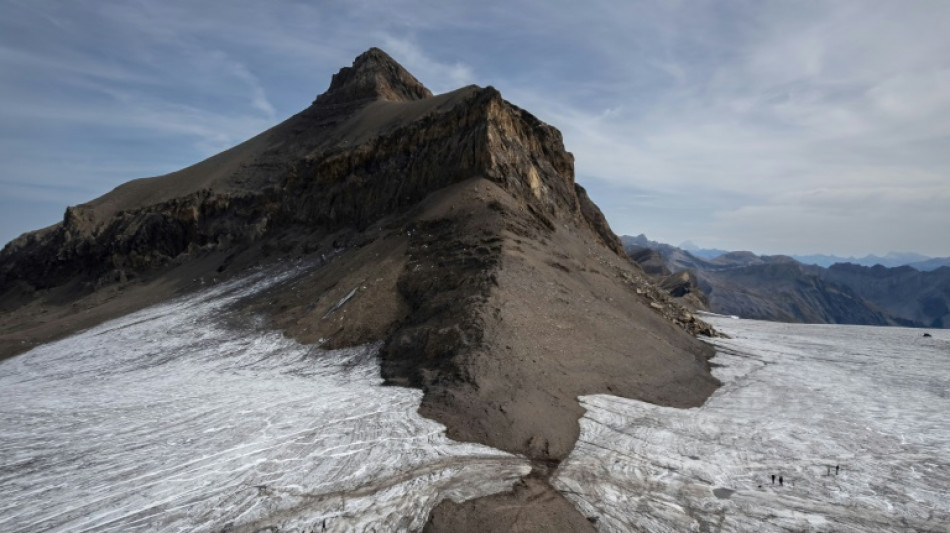
All regions experienced water extremes in 2021: UN / Photo: Fabrice COFFRINI - AFP

 US Fed raises rates to tackle 'too high' inflation, irking Trump

 Turkey releases 106 protesters, jails more LGBTQ activists

 Candidate for UN chief calls for AI regulation akin to nuclear weapons

 'We're losing control,' AI pioneer Yoshua Bengio tells AFP

 IR-MED and Dice Technologies Announce collaboration to Evaluate and Advance Pressure-Injury Prevention Platform in Japan

 Watts, Pitt, Cruz to light up Spain's top film festival

 Toogood Gold's Table Mountain Sits in the Shadow of a Nevada Gold Rush

 MEXC July–August Security Report: 38.66M USDT in Risk Funds Intercepted, Futures Insurance Fund Hits 792M USDT

 Emporio Armani names Dario Vitale new creative director

 EU to ban social media for under 13s, curb access until 15

 Wildfires push endangered Sumatran elephants to brink: Indonesian NGO

 Bank of Japan set to raise rates under pressure from inflation, US

 EU chief to unveil social media, gaming curbs for under-15s

 'Resident Evil' film brings video game's ethos to the big screen

 GA-ASI Mojave First UAS To Complete Battlefield Short Field Ops

 Sanders, Bannon warn of AI dangers in rare US left-right alignment

 Empty benches as schools reopen in Venezuela's quake-hit Guaira

 Tiny English village holds 'independence' vote over asylum seeker housing

 US Treasury chief says to meet Chinese counterpart at weekend

 BingX Evolves into a Multi-Asset Trading Platform, Connecting Users to Global Opportunities

 International Trading Institute Expands Professional Trader Development Beyond the Master’s in Trading

 Lake Energy Secures $80 Million for U.S. Renewable Energy Expansion

 Stocks drop, oil climbs and Treasury yields hit 19-year high

 SkySail Strategies Outperforms Wall Street's 30-Year Risk Standard With Proprietary AI Inference Model

 Just add fish: Scientists pursue more rice, less disease in Senegal paddies

All regions of the world saw water extremes last year -- both floods and droughts -- and billions of people had insufficient freshwater, the United Nations said on Tuesday.
Large areas of the planet recorded drier than normal conditions in 2021, the UN's World Meteorological Organization said in its first annual State of Global Water Resources report.
The report assesses the effects of changes in the climate, environment and society on the Earth’s freshwater resources -- limited supplies that are under growing demand -- so they can be managed better.
"The impacts of climate change are often felt through water -- more intense and frequent droughts, more extreme flooding, more erratic seasonal rainfall and accelerated melting of glaciers -- with cascading effects on economies, ecosystems and all aspects of our daily lives," said WMO head Petteri Taalas.
"And yet there is insufficient understanding of changes in the distribution, quantity and quality of freshwater resources."
Some 3.6 billion people face inadequate access to freshwater at least one month per year. That is forecast to rise to more than five billion by 2050, the report said.
Between 2001 and 2018, 74 percent of all natural disasters were water-related, according to UN studies.
In 2021, all regions saw devastating water extremes, the report said.
There were record-breaking floods in western Europe and the Amazon, while water levels in rivers in Paraguay and southern Brazil dropped to an all-time low.
The report assessed streamflow -- the volume of water flowing through a river -- over a 30-year period.
Drops in water volumes were twice as widespread as rises.
Major river basins in the Americas and central Africa saw water volumes shrink. Rivers in northern India and southern Africa saw above average increases.
- Frozen resources -
Terrestrial water storage -- all water on the land surface and in the subsurface -- shrank more than it grew, the report said.
Negative hotspots included Patagonia, the Ganges and Indus headwaters, and the southwestern United States.
"Some of the hotspots are exacerbated by (over-extraction) of groundwater for irrigation. The melting of snow and ice also has a significant impact in several areas, including Alaska, Patagonia and the Himalayas," the WMO said.
The world’s biggest natural reservoir of freshwater is the cryosphere -- glaciers, snow cover, ice caps and permafrost -- and changes to this reservoir affect food production, health and the natural world, the report said.
Around 1.9 billion people live in areas where drinking water is supplied by glaciers and snow melt but these glaciers are melting increasingly fast, it stressed.
It urged authorities to speed up the introduction of drought and flood early warning systems to help reduce the impact of water extremes.
M.Mendoza--CPN