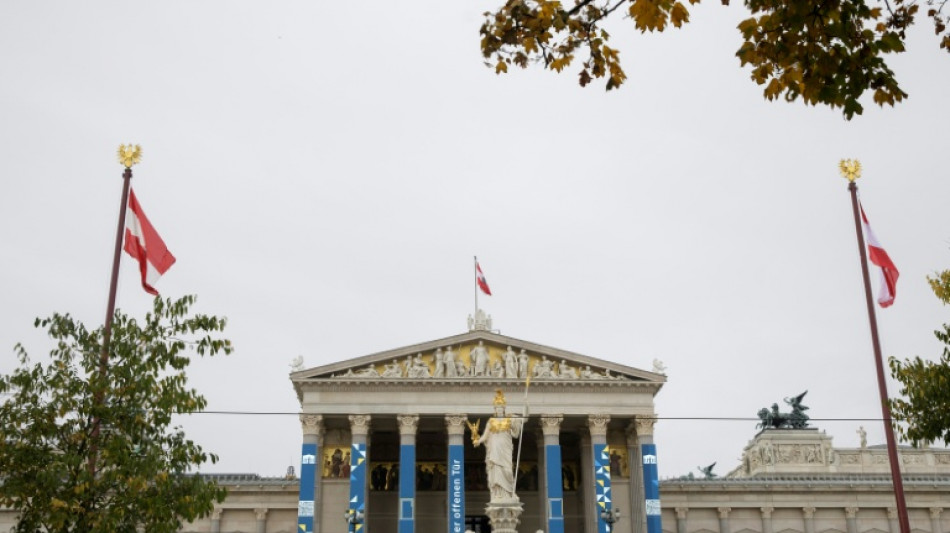
Austria set to vote on headscarf ban in schools / Photo: Alex HALADA - AFP

 Lights out in Laos as electricity exports surge

 Steven Strogatz weighs AI mathematics advances and their consequences for researchers

 Anthropic boss calls for AI slowdown, Altman and Musk agree

 French IT giant Capgemini sells subsidiary after row over ICE links

 Quebec Brokerage Qubit Insurance Announces New Data on Coverage Shortfalls as Rebuilding Costs Rise

 Lady Gaga welcomes first child with fiance: US media

 Bhutan business bets on hazelnuts for farming future

 'Widow's Bay' and 'The Pitt' are favorites for Emmys night

 Coastal erosion forces cancellation of California music festival

 Argentina's Dirty War rears its head in Venice film

 UK lawmakers throw out bill to legalise assisted dying

 US inflation steady in August, fueling Fed rate hike expectations

 New York marks 25th anniversary of 9/11 attacks

 Nepal flood reconstruction bill to be $4.78 bn: foreign ministry

 JUMO and Standard Bank launch Social Finance Framework to scale inclusive finance in Africa

 Doomsday tech: could AI really kill us all?

 French comedy show 'Call my agent' makes film comeback

 It's all coming back: Celine Dion fans gear up for Paris return

 Researchers eye AI revolution in natural disaster forecasts

 US braces for inflation report that may push Fed to hike rates

 Musk threatens legal action over documentary

 Latin America fact-check group asks Meta not to replace verification practice

 AI Risks to Enter 60–80% of Liability and Cyber Insurance Underwriting by 2028, ScienceSoft Predicts

 Tribal Launches Campfire, Letting Business and Technical Teams Build on Salesforce Together

 Stocks fall as fresh oil surge fans inflation fears

Austrian lawmakers on Thursday are expected to approve a law banning headscarves in schools for girls under 14, a move rights groups and experts say is discriminatory and could deepen societal division.
Austria's conservative-led government -- under pressure at a time when anti-immigration sentiment is running high -- proposed the ban earlier this year. They argue it is to protect girls "from oppression".
In 2019, when the country introduced a ban on headscarves in primary schools, the constitutional court struck it down, calling it unconstitutional and discriminatory. This time however, the government insists that its law is constitutional.
The law, if passed, would prevent girls younger than 14 from wearing headscarves that "cover the head in accordance with Islamic traditions" in all schools.
"When a girl... is told that she must hide her body... to protect herself from the gaze of men, it's not a religious ritual, but oppression," Integration Minister Claudia Plakolm said when presenting the bill.
The ban, which applies to "all forms" of the Islamic veil including hijabs and burqas, would take full effect with the start of the new school year in September, Plakolm said.
From February, an initial period would be launched during which the new rules would be explained to educators, parents and children with no penalties for breaking them.
But for repeated non-compliance, parents would face fines ranging from 150 to 800 euros ($175-930).
The government said that about 12,000 girls would be affected by the new law, basing its figures on a 2019 study that showed that approximately 3,000 girls aged below 14 wore a headscarf six years ago.
- 'Stigmatised' -
Rights organisations have criticised the bill, including Amnesty International Austria.
Amnesty said it "constitutes blatant discrimination against Muslim girls" and described it as an "expression of anti-Muslim racism".
Such measures risk "fuelling existing prejudices and stereotypes against Muslims", the group warned.
The draft law has also drawn criticism from the IGGOe, the body officially recognised as representing the country's Muslim communities.
It said the ban "jeopardises social cohesion", saying "instead of empowering children, they are stigmatised and marginalised".
Angelika Atzinger, managing director of the Amazone women's rights association, said a headscarf ban "sends girls the message that decisions are being made about their bodies and that this is legitimate".
Her comments appeared in a statement published by the anti-racism group SOS Mitmensch, which also opposes the proposed law.
Austria's anti-immigration, far-right Freedom Party (FPOe), which won last year's general election but failed to form a government, said the ban did not go far enough. They want it extended to all students, teachers and other staff.
The governing coalition said it was confident the revised ban would not be overturned a second time.
It argued that the law provides for such restrictions if the rights of a child, which are enshrined in the constitution, would otherwise be infringed upon.
But constitutional law expert Heinz Mayer has raised doubts that a ban can be constitutional, recalling the top court's ruling in 2020, which found that "one religion was being discriminated against".
It also ruled that "if the headscarf is a symbol of oppression", a ban puts children in "an uncomfortable situation", but not the people who impose it on them, he told AFP.
In France, authorities banned school children in 2004 from wearing "signs or outfits by which students ostensibly show a religious affiliation" -- such as headscarves, turbans or Jewish skullcaps -- on the basis of the country's secular laws, which are meant to guarantee neutrality in state institutions.
U.Ndiaye--CPN