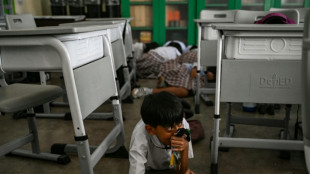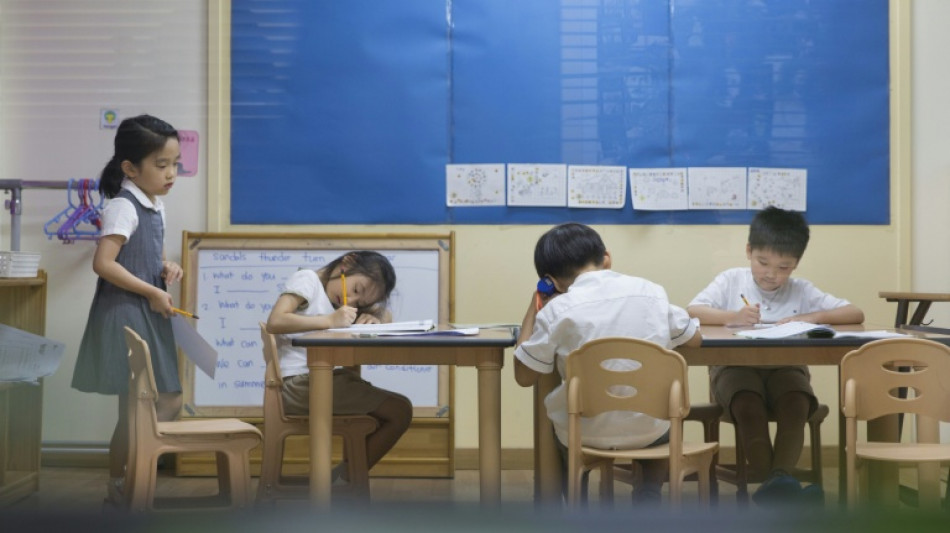
South Korea to ban mobile phones in school classrooms / Photo: YELIM LEE - AFP/File

 Lights out in Laos as electricity exports surge

 Steven Strogatz weighs AI mathematics advances and their consequences for researchers

 Anthropic boss calls for AI slowdown, Altman and Musk agree

 French IT giant Capgemini sells subsidiary after row over ICE links

 Quebec Brokerage Qubit Insurance Announces New Data on Coverage Shortfalls as Rebuilding Costs Rise

 Lady Gaga welcomes first child with fiance: US media

 Bhutan business bets on hazelnuts for farming future

 'Widow's Bay' and 'The Pitt' are favorites for Emmys night

 Coastal erosion forces cancellation of California music festival

 Argentina's Dirty War rears its head in Venice film

 UK lawmakers throw out bill to legalise assisted dying

 US inflation steady in August, fueling Fed rate hike expectations

 New York marks 25th anniversary of 9/11 attacks

 Nepal flood reconstruction bill to be $4.78 bn: foreign ministry

 JUMO and Standard Bank launch Social Finance Framework to scale inclusive finance in Africa

 Doomsday tech: could AI really kill us all?

 French comedy show 'Call my agent' makes film comeback

 It's all coming back: Celine Dion fans gear up for Paris return

 Researchers eye AI revolution in natural disaster forecasts

 US braces for inflation report that may push Fed to hike rates

 Musk threatens legal action over documentary

 Latin America fact-check group asks Meta not to replace verification practice

 AI Risks to Enter 60–80% of Liability and Cyber Insurance Underwriting by 2028, ScienceSoft Predicts

 Tribal Launches Campfire, Letting Business and Technical Teams Build on Salesforce Together

 Stocks fall as fresh oil surge fans inflation fears

South Korea has passed a bill banning the use of mobile phones in school classrooms nationwide, officials said Thursday, joining other countries in efforts to curb social media use among minors.
One of the world's most wired nations, South Korea has recently sought to tighten rules on electronic devices in schools, citing concerns over smartphone addiction among students.
The bill, which will take effect in March next year, bans smart devices including mobile phones in classrooms and was passed Wednesday, a National Assembly spokeswoman told AFP.
The move makes South Korea the latest country to restrict social media use among schoolchildren, following similar steps in countries including Australia and the Netherlands.
Seoul's Education Ministry said in a statement that the law bans the use of smartphones in classrooms except when needed as assistive tools for students with disabilities or special education needs, or for educational purposes.
The measure also establishes a legal basis to "restrict the possession and use of such devices to protect students' right to learn and support teachers' activities", it added.
Lawmakers including opposition People Power Party member Cho Jung-hun, who introduced the bill, said the issue had long been "contentious amid concerns over human rights violations".
But the country's National Human Rights Commission recently changed its stance, saying limits on phone use for educational purposes do not breach rights given their negative impact on students' learning and emotional well-being.
Against this backdrop, the law was needed to ease social conflict "by clearly defining rules on smart device use in schools", the lawmakers said in a document introducing the bill.
But it has drawn backlash from groups including the left-wing Jinbo Party, which said the law will "infringe on students' digital rights and right to education".
The measure "prevents adolescents from learning to make responsible decisions on their own and deprives them of opportunities to adapt to the digital environment", the party said in a statement.
P.Petrenko--CPN