England set to ban gender identity teaching in schools / Photo: Daniel LEAL - AFP

 Lights out in Laos as electricity exports surge

 Steven Strogatz weighs AI mathematics advances and their consequences for researchers

 Anthropic boss calls for AI slowdown, Altman and Musk agree

 French IT giant Capgemini sells subsidiary after row over ICE links

 Quebec Brokerage Qubit Insurance Announces New Data on Coverage Shortfalls as Rebuilding Costs Rise

 Lady Gaga welcomes first child with fiance: US media

 Bhutan business bets on hazelnuts for farming future

 'Widow's Bay' and 'The Pitt' are favorites for Emmys night

 Coastal erosion forces cancellation of California music festival

 Argentina's Dirty War rears its head in Venice film

 UK lawmakers throw out bill to legalise assisted dying

 US inflation steady in August, fueling Fed rate hike expectations

 New York marks 25th anniversary of 9/11 attacks

 Nepal flood reconstruction bill to be $4.78 bn: foreign ministry

 JUMO and Standard Bank launch Social Finance Framework to scale inclusive finance in Africa

 Doomsday tech: could AI really kill us all?

 French comedy show 'Call my agent' makes film comeback

 It's all coming back: Celine Dion fans gear up for Paris return

 Researchers eye AI revolution in natural disaster forecasts

 US braces for inflation report that may push Fed to hike rates

 Musk threatens legal action over documentary

 Latin America fact-check group asks Meta not to replace verification practice

 AI Risks to Enter 60–80% of Liability and Cyber Insurance Underwriting by 2028, ScienceSoft Predicts

 Tribal Launches Campfire, Letting Business and Technical Teams Build on Salesforce Together

 Stocks fall as fresh oil surge fans inflation fears

Children up to the age of 18 at schools in England will not be taught gender identity under government proposals published Thursday, amid growing concern in the UK and elsewhere about transgender issues.
The move follows a landmark review which last month urged "extreme caution" on prescribing hormone treatments for young people grappling with gender identity issues.
England's first gender identity development service for children, run by the Tavistock and Portman NHS Trust, closed in March after years of criticism that it had been too quick to prescribe puberty-blocking treatment.
Under the proposals contained in new draft guidance, the "contested theory of gender identity" would not be taught to pupils of any age, said a Department for Education statement.
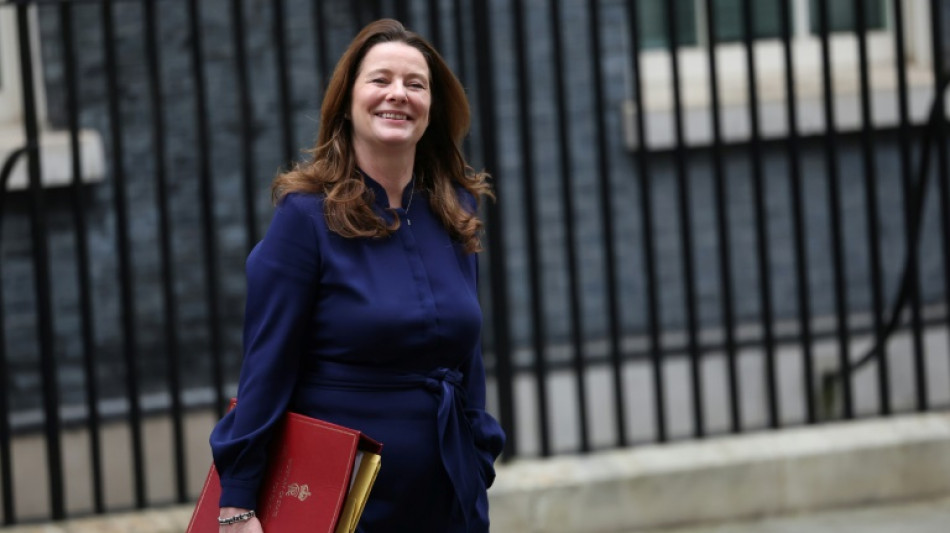
Education Secretary Gillian Keegan said the measures were aimed at making sure children were "not exposed to too much too soon, taking away the innocence of childhood.
"That is why this updated guidance includes clear age limits for the teaching of the most sensitive content and specifies that the contested topic of gender identity should not be taught," she wrote in the guidance document.
- 'Toxic' debate -
Since 2020, sex education has been compulsory in secondary schools in England, which teach children from the age of 11.
But the subject, and particularly gender identity, has increasingly become part of the "culture wars" between social conservatives and liberals.
Harriet Cass, the retired paediatrician who led the four-year review into gender identity services, called the "toxicity" of the debate "exceptional".
"At secondary school (11-18 years) pupils will learn about legally 'protected' characteristics, such as sexual orientation and gender reassignment," said the Department for Education statement.
"But the updated guidance is clear that schools should not teach about the concept of gender identity."
- 'Inappropriate' content -
The proposals will also ban sex education for children under the age of nine following concerns about some of the materials being used in schools.
"Parents rightly trust that when they send their children to school, they are kept safe and will not be exposed to disturbing content that is inappropriate for their age," Prime Minister Rishi Sunak said in the statement.
"That's why I was horrified to hear reports of this happening in our classrooms last year," he added.
The National Association of Head Teachers (NAHT) questioned whether the government's proposals would effectively protect children given the widespread access to smartphones.
"We cannot ignore the fact that some children and young people are already accessing information from different sources outside of school," said the union's general secretary Paul Whiteman.
"This may lead to questions that need careful handling from trained professionals."
- Suicide prevention -
The new guidance also includes additional content on suicide prevention and the risks of viewing content promoting self harm online.
The extent of harmful material available online was highlighted in the UK by the death in 2017 of 14-year-old schoolgirl Molly Russell.
A coroner ruled that she had died from an act of self-harm while suffering from the "negative effects of online content", leading her family to set up a campaign highlighting the dangers of social media.
Her father Ian Russell last year criticised the response of social media companies to a report aimed at preventing future tragedies as "underwhelming and unsurprising".
The government's new proposals will be subject to a nine-week consultation and be statutory once finalised.
St.Ch.Baker--CPN