Educated and unemployed: India's angry young voters / Photo: Naeem ANSARI - AFP

 Lights out in Laos as electricity exports surge

 Steven Strogatz weighs AI mathematics advances and their consequences for researchers

 Anthropic boss calls for AI slowdown, Altman and Musk agree

 French IT giant Capgemini sells subsidiary after row over ICE links

 Quebec Brokerage Qubit Insurance Announces New Data on Coverage Shortfalls as Rebuilding Costs Rise

 Lady Gaga welcomes first child with fiance: US media

 Bhutan business bets on hazelnuts for farming future

 'Widow's Bay' and 'The Pitt' are favorites for Emmys night

 Coastal erosion forces cancellation of California music festival

 Argentina's Dirty War rears its head in Venice film

 UK lawmakers throw out bill to legalise assisted dying

 US inflation steady in August, fueling Fed rate hike expectations

 New York marks 25th anniversary of 9/11 attacks

 Nepal flood reconstruction bill to be $4.78 bn: foreign ministry

 JUMO and Standard Bank launch Social Finance Framework to scale inclusive finance in Africa

 Doomsday tech: could AI really kill us all?

 French comedy show 'Call my agent' makes film comeback

 It's all coming back: Celine Dion fans gear up for Paris return

 Researchers eye AI revolution in natural disaster forecasts

 US braces for inflation report that may push Fed to hike rates

 Musk threatens legal action over documentary

 Latin America fact-check group asks Meta not to replace verification practice

 AI Risks to Enter 60–80% of Liability and Cyber Insurance Underwriting by 2028, ScienceSoft Predicts

 Tribal Launches Campfire, Letting Business and Technical Teams Build on Salesforce Together

 Stocks fall as fresh oil surge fans inflation fears

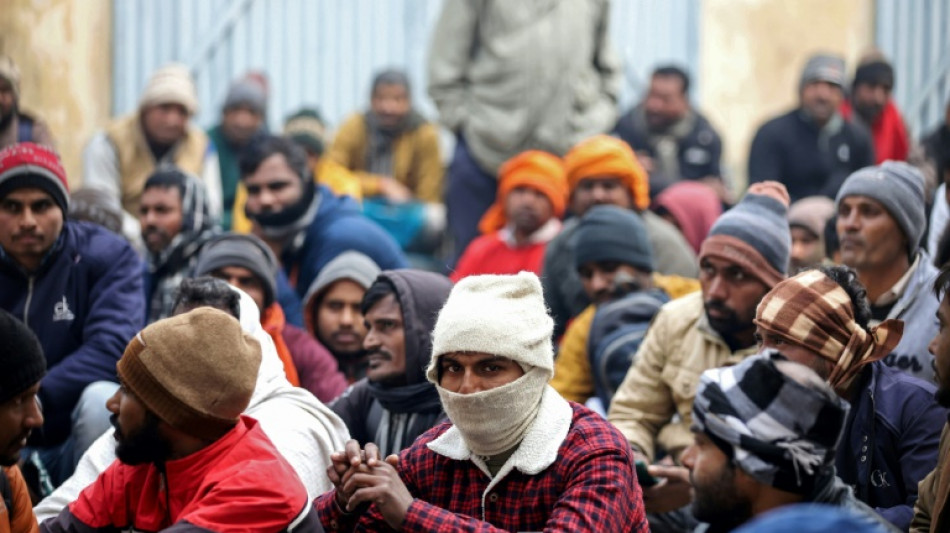
At a run-down job centre in the suburbs of India's financial capital Mumbai, 27-year-old Mahesh Bhopale dreams of a well-paid government post -- just like millions of other young, unemployed graduates.
As the world's most populous nation readies for general elections that begin April 19, politicians face a sobering reality. India is the fastest-growing major economy, but there are still not enough white-collar jobs for its educated youth.
"Our only way out of this life is to get a government job and get good benefits," said biology graduate Bhopale. "That will help us get married and start a family."
He has eked out a living in part-time jobs ranging from a tailor's assistant to a nighttime security guard while cramming for gruelling civil service examinations.
Coming from a farming village to the big city seeking work, Bhopale said he lacked the contacts to push his application in the private sector.
"A government job is the best kind of job," he said. "Educated people from villages like us can't get high-paying private sector jobs."
He isn't alone. The International Labour Organization estimates 29 percent of India's young university graduates were unemployed in 2022.
That rate is nearly nine times higher than for those without a diploma, who typically find work in low-paid service or construction jobs.
- 'Demographically expanding' -
Over half of India's 1.4 billion people are aged under 30, according to government health figures.
"Jobs are not rising as fast as the potential workforce is demographically expanding," said development economist R. Ramakumar, from Mumbai's Tata Institute of Social Sciences, noting many of the new jobs being created are in farming.
"That is one reason why you see a large number of applicants for a small number of positions in government jobs," Ramakumar said.
It also explains the "urge of people to go out of India through illegal channels", seeking jobs in the United States or Canada, he added.
Prime Minister Narendra Modi, who is widely expected to win a third term in the upcoming elections, points to his success in convincing global tech giants like Apple and Dell to set up in India.
But critics say this has not translated into the millions of manufacturing jobs that people demand.
The World Bank warned this month that India -- like other South Asian nations -- was "not creating enough jobs to keep pace with its rapidly increasing working-age population".
South Asia is failing "to fully capitalise on its demographic dividend", said Franziska Ohnsorge, the bank's regional chief economist, calling it a "missed opportunity".
Many young Indians say they have no choice but to join the frenetic race for government jobs, prized for their decent pay, benefits and security.
Competition is intense.
State-run Indian Railways, for instance, receives millions of applications for hundreds of thousands of mid or low-level jobs.
Ganesh Gore, 34, said he had tried and failed the civil service exam five times.
"No party or politician helps us out," said Gore. "They are sitting there to eat money."
In 2022, after the government switched some permanent military jobs to temporary contracts, violent protests erupted, with people setting railway trains on fire.
Riskier jobs also find many takers.
Earlier this year, thousands queued to submit applications for jobs in Israel after labour shortages sparked by the war against Palestinian militants in Gaza.
- 'Millionaires and billionaires' -
India overtook Britain in 2022 to become the world's fifth-largest economy, and grew at a robust 8.4 percent in the October-December quarter, helped by a surging manufacturing sector.
But many young people say they are frustrated by a lack of opportunities.
In December 2023, protestors hurled smoke canisters into parliament while shouting anti-government slogans to highlight unemployment.
Saraswati Devi, whose daughter Neelam was arrested after the protest, said she was distraught over her inability to find a job.
"She is highly qualified, but wasn't getting a job.... she often used to say that 'I should just die as despite studying so much, I am unable to earn two meals,'" Saraswati told local media.
But it remains unclear if anger at unemployment will translate to voters turning from Modi's ruling party.
A March survey of students in the capital Delhi found only 30 percent blamed Modi's government for high unemployment rates, according to the Delhi-based Lokniti-CSDS research centre.
But some like Gore, smarting from his latest exam failure, see politicians as the tools of the mega-rich.
He believes they are profiting from national growth without supporting the wider country.
"The country is run by the handful of millionaires and billionaires," said Gore. "So politicians don't have much sway."
M.García--CPN