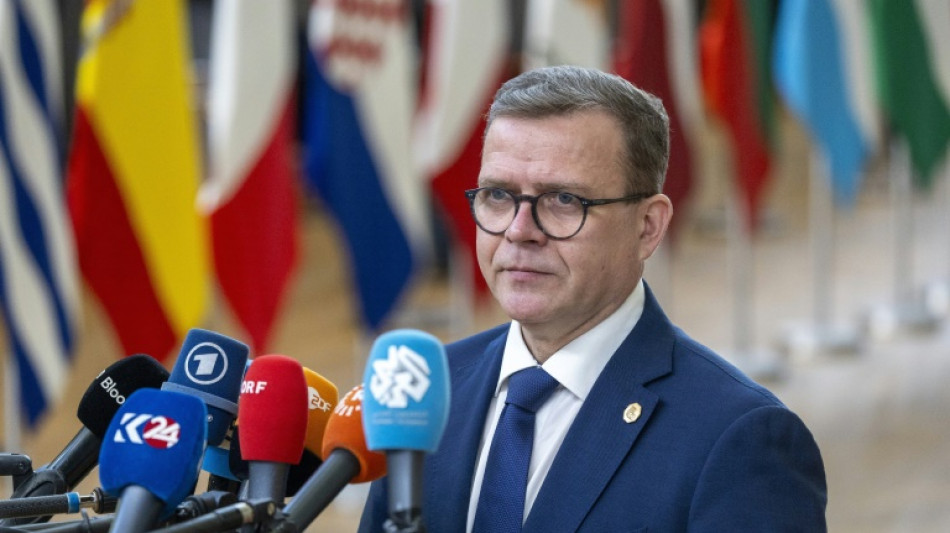
Thousands strike in Finland over labour reform / Photo: NICOLAS MAETERLINCK - BELGA/AFP

 Lights out in Laos as electricity exports surge

 Steven Strogatz weighs AI mathematics advances and their consequences for researchers

 Anthropic boss calls for AI slowdown, Altman and Musk agree

 French IT giant Capgemini sells subsidiary after row over ICE links

 Quebec Brokerage Qubit Insurance Announces New Data on Coverage Shortfalls as Rebuilding Costs Rise

 Lady Gaga welcomes first child with fiance: US media

 Bhutan business bets on hazelnuts for farming future

 'Widow's Bay' and 'The Pitt' are favorites for Emmys night

 Coastal erosion forces cancellation of California music festival

 Argentina's Dirty War rears its head in Venice film

 UK lawmakers throw out bill to legalise assisted dying

 US inflation steady in August, fueling Fed rate hike expectations

 New York marks 25th anniversary of 9/11 attacks

 Nepal flood reconstruction bill to be $4.78 bn: foreign ministry

 JUMO and Standard Bank launch Social Finance Framework to scale inclusive finance in Africa

 Doomsday tech: could AI really kill us all?

 French comedy show 'Call my agent' makes film comeback

 It's all coming back: Celine Dion fans gear up for Paris return

 Researchers eye AI revolution in natural disaster forecasts

 US braces for inflation report that may push Fed to hike rates

 Musk threatens legal action over documentary

 Latin America fact-check group asks Meta not to replace verification practice

 AI Risks to Enter 60–80% of Liability and Cyber Insurance Underwriting by 2028, ScienceSoft Predicts

 Tribal Launches Campfire, Letting Business and Technical Teams Build on Salesforce Together

 Stocks fall as fresh oil surge fans inflation fears

A massive Finnish strike movement kicked off on Thursday, grounding most air traffic and closing workplaces in a protest against proposed government labour reforms that include social benefit cuts.
About 300,000 people are expected to take part in the two days of strike action.
With air traffic widely disrupted, national carrier Finnair has cancelled 550 flights, affecting 60,000 passengers.
Trains across the country and metros, buses and trams in the capital will grind to a halt on Friday, while various unions called for stoppages in the energy sector, schools and healthcare services.
Industry, restaurants, hotels, postal workers and other retail sectors and services are also affected.
A protest called by the Central Organisation of Finnish Trade Unions (SAK) gathered around 13,000 people in Helsinki on Thursday, police said.
"The biggest problem is that they are trying to weaken the unions' powers to negotiate the (collective) agreements which are usually done by the employers lawyers and the unions' lawyers," 30-year-old demonstrator Henri Mertto, who works as a ship crewman, told AFP.
Like its Nordic neighbours, Finland is known for its generous welfare model, which offers strong protection and benefits for employees.
But conservative Prime Minister Petteri Orpo's coalition government has argued the country needs an "export-driven labour market model" to boost competitiveness.
Unions have vowed to paralyse the country to force the government to back down.
"Strikes of this magnitude, that will cause great losses to the Finnish economy in a difficult economic situation, are excessive and disproportionate," Orpo told Finnish news agency STT in Brussels where he attended a European Union summit.
The Confederation of Finnish Industries told AFP the strikes would result in a loss of around 360 million euros for gross domestic product.
Tiina Ivakko, head of a Helsinki daycare centre, told AFP many of her employees didn't show up for work on Thursday and parents kept their kids at home.
"We have, on a normal day, 300 children and a staff of over 50. We have had very few children, about 30, 40, and for staff we have about half of what we usually have," she said.
Some travellers went to Helsinki airport in the hope their flight would be among the few taking off.
"My flight looks like it's going to fly ... but if not then I don't know what I'm going to do. Maybe take a taxi back home and go to work," Niklas Sinisalo, an engineer, told AFP.
He was not bothered by the inconvenience, saying the strike was "for a good cause."
Many supermarkets remained open but shorter opening hours and product shortages were expected toward the end of the day.
- Weaken employees rights -
Among the planned reforms is a change of the rules for collective bargaining negotiations.
Proposed cuts to social benefits would include making the first day of sick leave unpaid and cutting earnings-related unemployment benefits, with the amount decreasing the longer the period of unemployment lasts.
There would also be restrictions on the right to strike and greater rights for employers to negotiate agreements locally.
Markku Sippola, a senior lecturer in social sciences at the University of Helsinki, said the reforms constituted "a very significant change".
"They will weaken the employee's position in terms of both unemployment security and protection against unjustified dismissal and the right to strike," he told AFP.
Pekka Ristela, head of international affairs at SAK, said the government proposals would "weaken the livelihoods of especially low-income employees who become unemployed".
Merja Hyvarinen, who attended Thursday's demonstration wearing a hi-viz vest from the Public and Welfare Sectors Union, said she was worried what the proposed changes would mean for her two children.
"If the government's changes are realised, they'll have a rocky road ahead at work in the future."
Strikes are relatively uncommon in Finland, especially ones involving white-collar workers.
A.Mykhailo--CPN