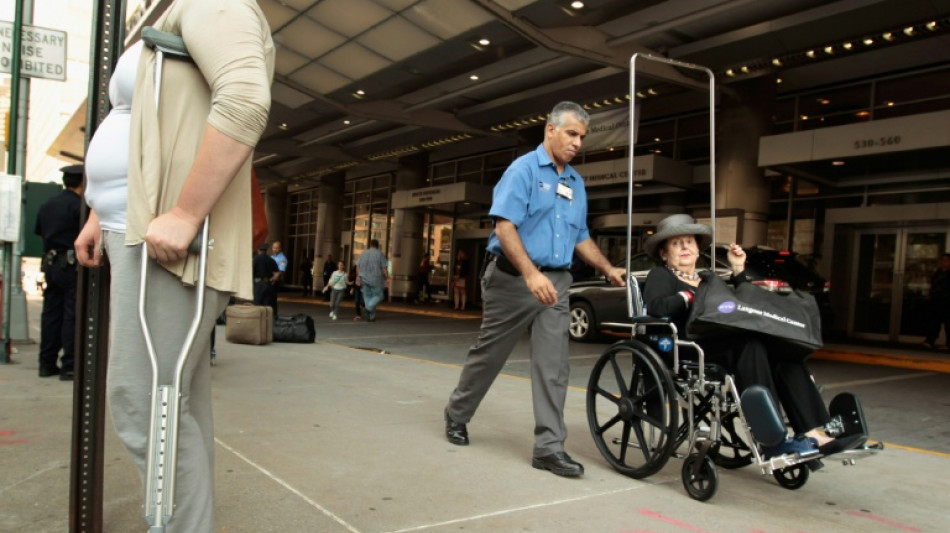
Trump v 'Obamacare': US health costs set to soar for millions in 2026 / Photo: CHIP SOMODEVILLA - GETTY IMAGES NORTH AMERICA/AFP

 Multi-Asset Trading Venue Monochrome Exchange Announces IEO of Its Native Token, $MCR

 Data centre command hub keeps AI up and running

 Leo XIV, first US pope transcends his restrained style

 France's debt climbs to highest since 1978: ministry

 Thousands protest inaction over climate crisis in Switzerland

 UK actor Naomi Watts honoured at Spain film festival

 Trump signs bill authorizing sweeping Russia sanctions

 Anthropic picks Accenture for in-house AI safety evaluation

 Hushing and hedging: US companies retreat on climate

 Crisis-wracked Volkswagen warns of 10-bn-euro hit to profits

 Shakira to cap off world tour with Madrid 12-gig run

 Isolated Syrian-Druze city shortages

 UNESCO can be 'moderator' in AI debate: chief to AFP

 Russia seizes assets of Nestle, French firms

 Anthropic says AI systems moving towards building themselves

 Asian stocks boosted by falling oil, yen weakens after BoJ rate hike

 Afghan medical students in Pakistan hope court stops college expulsions

 Australia to detain tourists who overstay visa, minister says

 Asian stocks track Wall St rally as oil prices drop

 Prized Mexican relic returns on loan, two centuries on

 'In our lane': Fed's Warsh defies Trump but still fighting for credibility

 Trump admin makes major cut to endangered species protections

 GM delivers first components for US interceptor missiles

 Travis Scott and Keith Richards feature on GTA VI soundtrack

 King Charles warns tech bosses of 'existential dangers' of AI

Iowa farmer Aaron Lehman was already paying a hefty price for health insurance, but his premium is set to skyrocket in January when major government subsidies expire, after US President Donald Trump's Republican party declined to extend them.
That imminent change to the "Obamacare" health insurance program means that Lehman, 58, a fifth-generation grain farmer in the US Midwest, may have to postpone improvements in his farm.
"My wife and I have been paying about $500. We're anticipating to go to about $1,300 a month," Lehman, who is president of the Iowa Farmers Union, told AFP. "It's more than double."
More than 20 million Americans from lower and middle-income brackets are facing a significant increase in the cost of their health insurance in 2026.
The hike comes as persistent inflation weighs on households and adds to political pressure on Trump, who had promised to bring down the cost of living when he took office nearly a year ago.
"It's pretty stressful for a lot of people," said Audrey Horn, a 60-year-old retiree from another Midwestern state, Nebraska, that Trump comfortably won in the 2024 presidential elections. She told AFP that her monthly increase will be $300.
"Most Americans can't afford a bill of (an) extra 300 or whatever a month on top of, you know, their mortgage... car insurance and groceries," she said.
- Dipping into savings -
For their first payment in January, Horn and her husband will be tapping into some of her retirement savings. Her husband works for a small construction company where he is paid by the hour and doesn't get health insurance.
"Next year, we probably won't be going out to eat as much. We don't go out to eat as much anyway," Horn said, adding, "And I'm going to keep driving my old 2008 Honda for a few more years."
Created in 2010 under then President Barack Obama, so-called Obamacare allowed millions more people to access health coverage. The program included financial aid, which was expanded and strengthened during the Covid-19 pandemic. It is this temporary boost that is now coming to an end.
This issue was at the heart of the budget standoff between Republicans and opposition Democrats in October and November that led to a 43-day shutdown of the federal government.
The Democrats demanded the extension of the enhanced subsidies, which the Republicans opposed, arguing it was too expensive for taxpayers, subject to abuse, and failed to control the rising cost of health insurance.
"It is frustrating to me that that these subsidies were cut in order to make tax breaks for billionaires," said Andrea Deutsch, 58, owner of a pet supply store in Pennsylvania, referring to the Trump-backed legislation that Congress eventually passed.
- 'Largest rollback in health coverage' -
Deutsch, who has suffered from type one diabetes since childhood, said that Obamacare was life-changing as it mandated that insurance companies provide coverage to people with pre-existing medical conditions. So, she's resigned herself to paying $160 more per month for her insurance in 2026.
But others are expected to forgo insurance rather than pay much bigger premiums.
According to a government estimate, the expiration of the subsidies is expected to cause four million Americans to lose their health insurance over the next 10 years.
But Matt McGough, at the health policy think tank KFF, said there are estimates that an additional 10 million could become uninsured because of changes under the budget bill to health insurance marketplaces and the state-funded Medicaid program that serves low-income Americans.
"This is the largest rollback in health coverage in US history, certainly in modern times," he told AFP.
He warned that could lead to increased mortality and higher health care costs for all Americans, with insured individuals paying for the unpaid bills of the uninsured.
But things could still change.
While Republicans are still refusing to extend the subsidies, they want to limit the surge in costs which will come less than a year before midterm Congressional elections.
Democrats have made the issue key to their election platform to claw back control of both houses of Congress from Republicans.
Faced with this risk, Trump has floated the idea of summoning health insurance executives to his Mar-a-Lago residence in Florida, where he is spending the holidays, "to see if they can lower prices."
C.Peyronnet--CPN