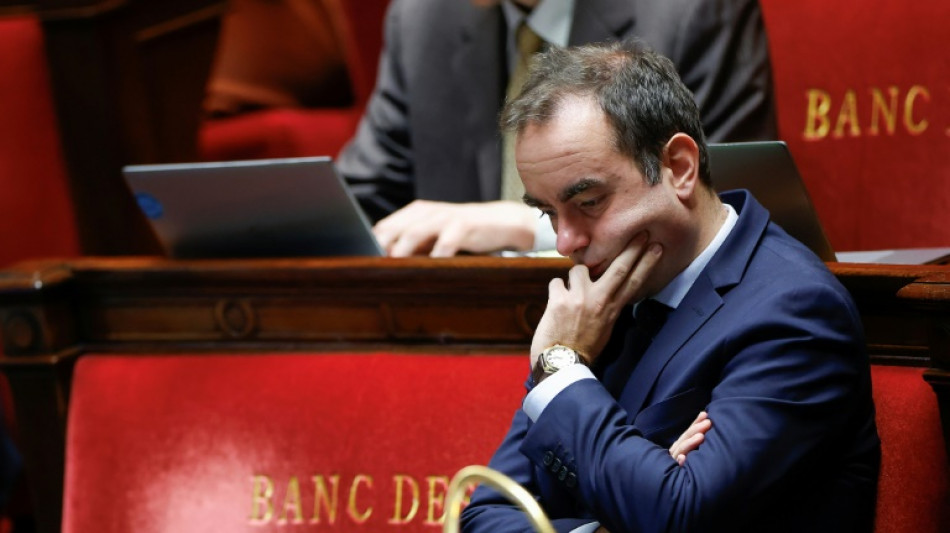
France's prime minister faces crunch vote in parliament / Photo: Ian LANGSDON - AFP

 France's Macron, Canada's Carney announce closer ties

 AI 'warning shots' focus Beijing on national security risks

 Philippine tribe in limbo over US-led tech hub

 Saudi-led coalition says Houthis fired ballistic missile at Riyadh

 Cuba works to restore power after another blackout

 Brigitte Bardot widower slams sale of star's belongings

 Indonesia accepts Malaysia's help to tackle wildfires

 Nvidia, OpenAI CEOs to attend Xi dinner at White House

 Cuba hit with seventh major blackout of the year

 Nigeria miners struggled to breathe in cell before 37 died: survivors

 Warren Buffett steps down as Berkshire Hathaway chairman

 Isolated Syrian-Druze city blames Damascus for shortages

 Kerry James Marshall: American 'blackness' painter celebrated in Europe

 Infantino 'must go', says German FA vice-president

 Japan's busiest rail station tests robot bins

 Backpackers fret over Australian visa crackdown

 Bank of Japan hikes rates to 31-year high to battle inflation

 AI doomsday warnings unlikely to slow IPOs but questions linger

 In Brazil's Amazon, the hunt for oil fuels hopes and fears

 Baby orangutans in India expose 'frightening' scale of trafficking

 Oversight Board blasts 'inadequate' Meta safeguards for AI deepfakes

 Harry makes first public appearance since return to UK

 Princess Diana's brother makes new explosive claims against Charles

 Trump admin overhauls key protection for endangered species

 Mbappe draws political fire over Ceuta t-shirt controversy

France's social security bill was to go to a vote in parliament Tuesday, in a key hurdle for Prime Minister Sebastien Lecornu after he pledged to deliver a 2026 budget by year-end.
Lawmakers failing to back the plan, which includes the suspension of an unpopular retirement reform, could plunge the country into further political crisis and call into question Lecornu's ability to lead.
The outcome of the vote is uncertain. Socialists are expected to back it, but the right and some centrists could vote against the bill as they believe it includes too many concessions to the left.
"This social security budget bill is not perfect, but it is the best possible," Lecornu wrote on X on Saturday.
"Not having a budget would be dangerous for our social protection, our public accounts, and the role of parliament."
The eurozone's second-largest economy is under pressure to cut its budget deficit, but efforts have been hamstrung by political instability since President Emmanuel Macron called snap elections last year, leading to a fragmented parliament.
Lecornu has promised to secure approval for a spending plan by the end of December.
But in a bid to avoid the fate of his two predecessors, who were toppled over cost-cutting measures, he has pledged to abandon a controversial constitutional power used in the past to slam the spending plan through parliament without a vote.
This had led to protracted debates on the two main parts of the budget -- the state budget bill and draft law for the social security budget.
The premier has also pledged to suspend a 2023 pensions reform to raise the retirement age from 62 to 64 to secure the support of the Socialists, a swing group in parliament.
On Tuesday afternoon, the lower house of parliament was to vote on the social security bill, which includes postponing the pensions reform until 2028, after the end of Macron's term in office.
If not enough lawmakers approve the legislation, it could lead to calls for Lecornu to resign -- although government spokeswoman Maud Bregeon said this weekend that his stepping down "would make no sense".
If the lower-house National Assembly does however approve the social security budget, it will head back to the Senate -- which is opposed to suspending the retirement reform -- and then return to the lower house.
The Senate is to vote on the other part -- the state budget -- on December 15.
burs-ah/as/cc
M.Davis--CPN