Trump says US will allow sale of Nvidia AI chips to China / Photo: I-HWA CHENG - AFP

 France's Macron, Canada's Carney announce closer ties
 AI 'warning shots' focus Beijing on national security risks
 Philippine tribe in limbo over US-led tech hub

 Saudi-led coalition says Houthis fired ballistic missile at Riyadh
 Cuba works to restore power after another blackout

 Brigitte Bardot widower slams sale of star's belongings

 Indonesia accepts Malaysia's help to tackle wildfires

 Nvidia, OpenAI CEOs to attend Xi dinner at White House
 Cuba hit with seventh major blackout of the year
 Nigeria miners struggled to breathe in cell before 37 died: survivors
 Warren Buffett steps down as Berkshire Hathaway chairman

 Isolated Syrian-Druze city blames Damascus for shortages

 Kerry James Marshall: American 'blackness' painter celebrated in Europe

 Infantino 'must go', says German FA vice-president

 Japan's busiest rail station tests robot bins

 Backpackers fret over Australian visa crackdown

 Bank of Japan hikes rates to 31-year high to battle inflation

 AI doomsday warnings unlikely to slow IPOs but questions linger

 In Brazil's Amazon, the hunt for oil fuels hopes and fears

 Baby orangutans in India expose 'frightening' scale of trafficking

 Oversight Board blasts 'inadequate' Meta safeguards for AI deepfakes

 Harry makes first public appearance since return to UK

 Princess Diana's brother makes new explosive claims against Charles

 Trump admin overhauls key protection for endangered species

 Mbappe draws political fire over Ceuta t-shirt controversy

President Donald Trump said Monday he had reached an agreement with President Xi Jinping to allow US chip giant Nvidia to export advanced artificial intelligence chips to China.
The announcement marked a significant shift in US export policy for advanced AI chips, which Joe Biden's administration had heavily restricted over national security concerns about Chinese military applications.
In a post on his Truth Social platform, Trump said he had informed Xi that Washington would permit Nvidia to ship its H200 products to "approved customers in China, and other countries, under conditions that allow for continued strong National Security."
"President Xi responded positively! $25% will be paid to the United States of America," Trump wrote, without providing details on how the payment mechanism would work.
Trump criticized his predecessor's approach, saying it "forced our Great Companies to spend BILLIONS OF DOLLARS building 'degraded' products that nobody wanted, a terrible idea that slowed Innovation, and hurt the American Worker."
This referred to the Biden administration's requirement for chip companies to create modified, less powerful versions specifically for the Chinese market.
These chips had reduced capabilities -- lower processing speeds, for example -- to comply with export control regulations.
The president said his decision aims to "support American Jobs, strengthen U.S. Manufacturing, and benefit American Taxpayers."
Trump emphasized that Nvidia's most advanced chips -- the Blackwell series and forthcoming Rubin processors -- are not included in the agreement and remain available only to US customers.
Under Biden-era restrictions, the H200 and similar advanced chips were blocked from export to China.
The H200s are roughly 18 months behind the company's state-of-the-art offerings.
The chips -- graphic processing units or GPUs -- are used to train the AI models that are the bedrock of the generative AI revolution launched with the release of ChatGPT in 2022.
The Commerce Department is finalizing implementation details, with Trump saying "the same approach will apply to AMD, Intel, and other GREAT American Companies."
The announcement comes amid trade tensions between Washington and Beijing, as the two compete for dominance in artificial intelligence technology.
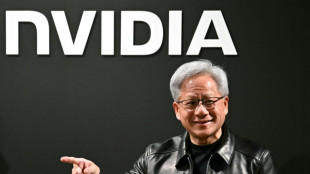
Nvidia CEO Jensen Huang lobbied the White House intensely to reverse the Biden-era policy despite considerable opposition in Washington to giving Chinese companies access to powerful chips.
Massachusetts Senator Elizabeth Warren, a Democrat, attributed the deal to a "backroom meeting" with Trump and Huang's company's donation to build the East Wing ballroom at the White House.
She said this would "turbocharge China's military and undercut American technological leadership."
Alex Stapp, of the Washington-based Institute for Progress, called the policy a "massive own goal," with the H200 "6x more powerful than the H20, which was previously the most powerful chip approved for export."
D.Goldberg--CPN