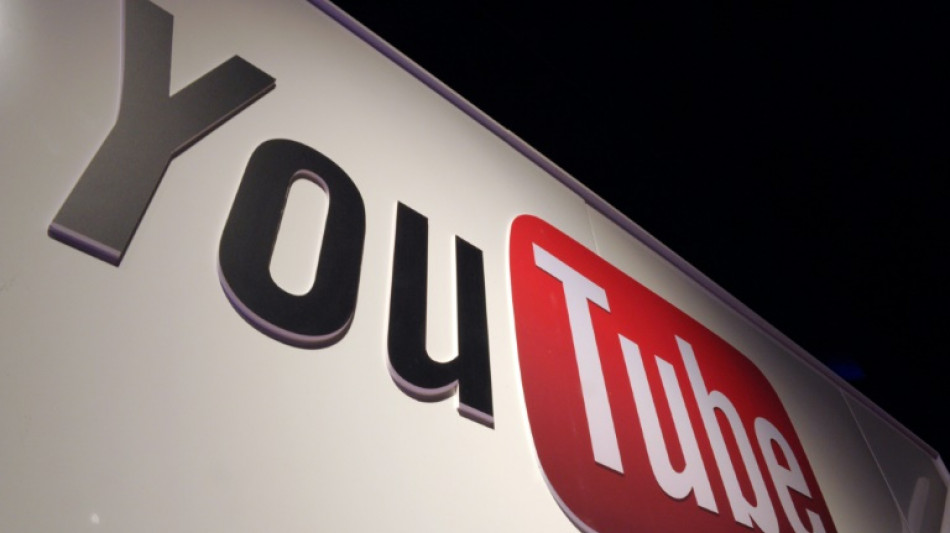
YouTube attacks Australia's world-first social media ban / Photo: Eric PIERMONT - AFP/File

 France's Macron, Canada's Carney announce closer ties
 AI 'warning shots' focus Beijing on national security risks

 Philippine tribe in limbo over US-led tech hub

 Saudi-led coalition says Houthis fired ballistic missile at Riyadh
 Cuba works to restore power after another blackout
 Brigitte Bardot widower slams sale of star's belongings
 Indonesia accepts Malaysia's help to tackle wildfires

 Nvidia, OpenAI CEOs to attend Xi dinner at White House
 Cuba hit with seventh major blackout of the year
 Nigeria miners struggled to breathe in cell before 37 died: survivors

 Warren Buffett steps down as Berkshire Hathaway chairman

 Isolated Syrian-Druze city blames Damascus for shortages

 Kerry James Marshall: American 'blackness' painter celebrated in Europe

 Infantino 'must go', says German FA vice-president

 Japan's busiest rail station tests robot bins

 Backpackers fret over Australian visa crackdown

 Bank of Japan hikes rates to 31-year high to battle inflation

 AI doomsday warnings unlikely to slow IPOs but questions linger

 In Brazil's Amazon, the hunt for oil fuels hopes and fears

 Baby orangutans in India expose 'frightening' scale of trafficking

 Oversight Board blasts 'inadequate' Meta safeguards for AI deepfakes

 Harry makes first public appearance since return to UK

 Princess Diana's brother makes new explosive claims against Charles

 Trump admin overhauls key protection for endangered species

 Mbappe draws political fire over Ceuta t-shirt controversy

YouTube on Wednesday attacked Australia's looming social media ban for under-16s as rushed, but the government called the policy a shield to protect children from "predatory" algorithms.
From December 10, Australia will require a raft of major social media platforms and websites, including Facebook, Instagram, TikTok and YouTube, to remove underage accounts or face a hefty fine.
There is keen interest in whether the sweeping world-first restrictions can work, as regulators around the globe wrestle with the potential harmful effects for young people.
US video streaming giant YouTube was originally slated to escape the ban so children could watch educational clips.
But the Australian government changed tack in July, saying young users needed to be shielded from "predatory algorithms".
"This law will not fulfil its promise to make kids safer online, and will, in fact, make Australian kids less safe on YouTube," the company's public policy manager Rachel Lord said in a statement.
"We've heard from parents and educators who share these concerns."
Australian YouTube users under 16 will be automatically signed out on December 10, using the ages linked to their Google accounts, the company said.
Underage users could still visit the website without an account, but would lose access to many of YouTube's features -- including "wellbeing settings" and "safety filters".
Lord said the "rushed regulation misunderstands our platform and the way young Australians use it".
"At YouTube, we believe in protecting kids in the digital world, not from the digital world."
- 'Outright weird' -
Australian communications minister Anika Wells said YouTube's criticism was "outright weird".
"If YouTube is reminding us all that it is not safe and there's content not appropriate for age-restricted users on their website, that's a problem that YouTube needs to fix," she said.
"With one law, we can protect Generation Alpha from being sucked into purgatory by the predatory algorithms," Wells added.
The Australian government concedes the ban will be far from perfect at the outset, and some underage users will fall through the cracks as issues are ironed out.
But platforms face fines of Aus$49.5 million (US$32 million) if they fail to take "reasonable steps" to comply from next week.
Hundreds of thousands of adolescents are expected to be impacted, with Instagram alone reporting about 350,000 Australian users aged 13 to 15.
Some popular apps and websites such as Roblox, Pinterest and WhatsApp are currently exempt, but the list remains under review.
YouTube said it would archive accounts so they could be reactivated when users turned 16.
"We will not delete or remove any of their existing content or data, and it will be waiting for them when they come back," it said.
Meta, Facebook's parent company, has already started deactivating accounts based on information such as the age given when they were created.
An internet rights group last week launched a legal challenge to halt the ban.
The Digital Freedom Project said it had challenged the laws in Australia's High Court, arguing they were an "unfair" assault on freedom of speech.
A.Leibowitz--CPN