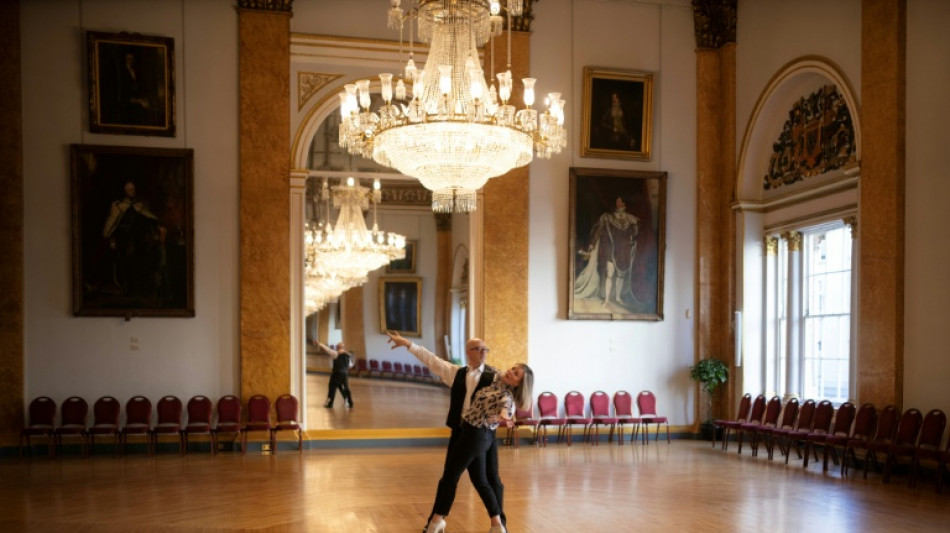
UK seniors fight loneliness with tea and a tango / Photo: Oli SCARFF - AFP

 France's Macron, Canada's Carney announce closer ties

 AI 'warning shots' focus Beijing on national security risks
 Philippine tribe in limbo over US-led tech hub
 Saudi-led coalition says Houthis fired ballistic missile at Riyadh

 Cuba works to restore power after another blackout

 Brigitte Bardot widower slams sale of star's belongings

 Indonesia accepts Malaysia's help to tackle wildfires

 Nvidia, OpenAI CEOs to attend Xi dinner at White House

 Cuba hit with seventh major blackout of the year

 Nigeria miners struggled to breathe in cell before 37 died: survivors

 Warren Buffett steps down as Berkshire Hathaway chairman

 Isolated Syrian-Druze city blames Damascus for shortages

 Kerry James Marshall: American 'blackness' painter celebrated in Europe

 Infantino 'must go', says German FA vice-president

 Japan's busiest rail station tests robot bins

 Backpackers fret over Australian visa crackdown

 Bank of Japan hikes rates to 31-year high to battle inflation

 AI doomsday warnings unlikely to slow IPOs but questions linger

 In Brazil's Amazon, the hunt for oil fuels hopes and fears

 Baby orangutans in India expose 'frightening' scale of trafficking

 Oversight Board blasts 'inadequate' Meta safeguards for AI deepfakes

 Harry makes first public appearance since return to UK

 Princess Diana's brother makes new explosive claims against Charles

 Trump admin overhauls key protection for endangered species

 Mbappe draws political fire over Ceuta t-shirt controversy

All gloom was left outside as pensioners bustled into a room in Liverpool's centuries-old town hall for a tea dance, a lively antidote to getting older in Britain.
"Come to tea dances and avoid the NHS!" joked Davina Woods, 71, referring to the country's creaking health system and the awareness the retirees have that as they age, they will likely come into increasing contact with the service.
Woods, a former headteacher, said she loves the sessions for the chance to get dressed up and don high heels.
It really "lifts your spirits", she said.
For some, the dancing provides a welcome chance to put aside the political tensions facing the country as it grapples with a host of issues, including weak economic growth and discontent over immigration.
"We leave politics outside," said engineer David Easton, 65.
"It brings people together. It brings us joy."
Tea dance, which evolved from the tradition of afternoon tea in the late 19th century, is enjoying a revival, especially since the Covid pandemic.
This mirrors a trend seen with other traditional dances such as ballroom, with the BBC's hugely popular hit TV show, "Strictly Come Dancing", often cited as a key factor.
One recent chilly Monday afternoon in the northwest city of Liverpool, 115 dancers paid £12 ($16) to waltz, tango and cha-cha-cha under the chandeliers of the stunning 18th century town hall.
Refreshments included tea and cakes.
"It is very vibrant. It's growing," said organiser Jackie Williams, 53, who also started the company Ballroom Blitz in 2017.
"More and more people join. Since Covid, people have realised how dancing can help, how much they need physical contact."
- 'Good for mental health' -
New tea dance formats, which are more an occasion for people to gather for various types of dance, rather than a dance type itself, have emerged in recent years.
They include tea dances for same-sex couples and sessions tailored for people living with dementia.
For many, the social aspect is as important as the exercise.
"It's a highlight of my life," said Mo Massie, 75, a retired psychotherapist.
"I love the social side of it. Otherwise people would be sitting at home alone watching TV."
Retired nurse Greta Jones, 65, agreed. She started dancing 15 years ago when living alone.
"I made a fabulous group of friends over the years. Tea dances are definitely a good way to fight loneliness."
After three hours of twirling and tapping, the dancers melt away until the next time.
Mike Robinson, a 57-year-old former lecturer who lives in Manchester, said: "Dancing put a smile on my face. It's good for mental health."
M.P.Jacobs--CPN