
To combat climate anxiety, COP negotiator recommends meditation / Photo: Eric BARADAT - AFP/File

 Asia stocks rise on AI, US-China trade talks optimism
 Multi-Asset Trading Venue Monochrome Exchange Announces IEO of Its Native Token, $MCR
 Data centre command hub keeps AI up and running
 Leo XIV, first US pope transcends his restrained style
 France's debt climbs to highest since 1978: ministry
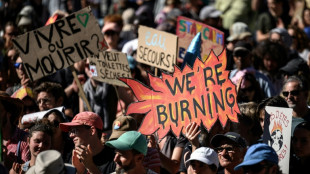 Thousands protest inaction over climate crisis in Switzerland

 UK actor Naomi Watts honoured at Spain film festival
 Trump signs bill authorizing sweeping Russia sanctions

 Anthropic picks Accenture for in-house AI safety evaluation

 Hushing and hedging: US companies retreat on climate

 Crisis-wracked Volkswagen warns of 10-bn-euro hit to profits

 Shakira to cap off world tour with Madrid 12-gig run

 Isolated Syrian-Druze city shortages

 UNESCO can be 'moderator' in AI debate: chief to AFP

 Russia seizes assets of Nestle, French firms

 Anthropic says AI systems moving towards building themselves

 Asian stocks boosted by falling oil, yen weakens after BoJ rate hike

 Afghan medical students in Pakistan hope court stops college expulsions

 Australia to detain tourists who overstay visa, minister says

 Asian stocks track Wall St rally as oil prices drop

 Prized Mexican relic returns on loan, two centuries on

 'In our lane': Fed's Warsh defies Trump but still fighting for credibility

 Trump admin makes major cut to endangered species protections

 GM delivers first components for US interceptor missiles

 Travis Scott and Keith Richards feature on GTA VI soundtrack

To handle the stress of negotiating deals on attempts to curb catastrophic global warming, Christiana Figueres, one of the main architects of the Paris Agreement, recommends meditation.
In 2015, as the head of the UN climate agency, the Costa Rican diplomat played a key role in shaping the deal in which the world agreed to work to limit global warming to well below 2C relative to pre-industrial levels, while striving for 1.5C.
Ten years later she was attending the COP30 summit in the Brazilian city of Belem, where negotiations are in full swing as countries attempt to reach a new consensus in the face of the climate emergency.
In an interview with AFP, Figueres highlighted the importance of "personal resilience" as humanity grapples with "unprecedented" circumstances.
With that in mind, she organizes meditation retreats, where participants -- including climate negotiators -- learn, among other things, breathing techniques to reduce stress.
QUESTION: What's the link between meditation and climate change?
ANSWER: "Over the years, we've seen that measures to tackle climate change have not met the expectations -- neither in speed nor in scale -- set out by scientists.
"Many people, especially young people working on this issue, have started to feel increasingly anxious. It pains me greatly to see so many young people who have decided not to have children, for instance, because they don't want to see them grow up on a planet in this state.
"Many people who have been dedicated to this cause for years feel that their impact has been minimal or insignificant, and they fall into a pit of despair and frustration. It harms their mental health.
"Meditation helps strengthen personal resilience. And I'm convinced that although we are all working toward planetary resilience, it is very difficult to achieve without this personal resilience."
QUESTION: How important has meditation for you in trying to fight climate change?
ANSWER: "I don't know if I could have endured working in this field over all these decades without meditation, without connecting to nature and to other people. I don't think I could have kept going for so long.”
QUESTION: Has this practice resonated with COP30 negotiators?
ANSWER: "We've already addressed this topic in retreats with 800 people worldwide. There's a group of negotiators, or people who work alongside them, who have these tools and bring them to the COPs.
"But of course, you can't design the daily COP program around this. It's a personal decision for each individual."
QUESTION: Does it facilitate negotiations?
ANSWER: "It helps in the sense that when you learn to listen, you become a better negotiator."
QUESTION: What do you expect from COP30?
ANSWER: "I think what will emerge from this COP is a realization that, while politics remains important, the economic realities of climate change are becoming increasingly dominant.
"It's the recognition that all these (clean) technologies are simply superior and highly competitive compared with polluting ones. And the progress of these technologies is visible in every sector, in every country. It's progress that will not stop."
P.Schmidt--CPN