Germany unveils debt-laden budget, relief measures / Photo: RALF HIRSCHBERGER - AFP

 Asia stocks rise on AI, US-China trade talks optimism
 Multi-Asset Trading Venue Monochrome Exchange Announces IEO of Its Native Token, $MCR
 Data centre command hub keeps AI up and running

 Leo XIV, first US pope transcends his restrained style

 France's debt climbs to highest since 1978: ministry
 Thousands protest inaction over climate crisis in Switzerland

 UK actor Naomi Watts honoured at Spain film festival

 Trump signs bill authorizing sweeping Russia sanctions

 Anthropic picks Accenture for in-house AI safety evaluation

 Hushing and hedging: US companies retreat on climate

 Crisis-wracked Volkswagen warns of 10-bn-euro hit to profits

 Shakira to cap off world tour with Madrid 12-gig run

 Isolated Syrian-Druze city shortages

 UNESCO can be 'moderator' in AI debate: chief to AFP

 Russia seizes assets of Nestle, French firms

 Anthropic says AI systems moving towards building themselves

 Asian stocks boosted by falling oil, yen weakens after BoJ rate hike

 Afghan medical students in Pakistan hope court stops college expulsions

 Australia to detain tourists who overstay visa, minister says

 Asian stocks track Wall St rally as oil prices drop

 Prized Mexican relic returns on loan, two centuries on

 'In our lane': Fed's Warsh defies Trump but still fighting for credibility

 Trump admin makes major cut to endangered species protections

 GM delivers first components for US interceptor missiles

 Travis Scott and Keith Richards feature on GTA VI soundtrack

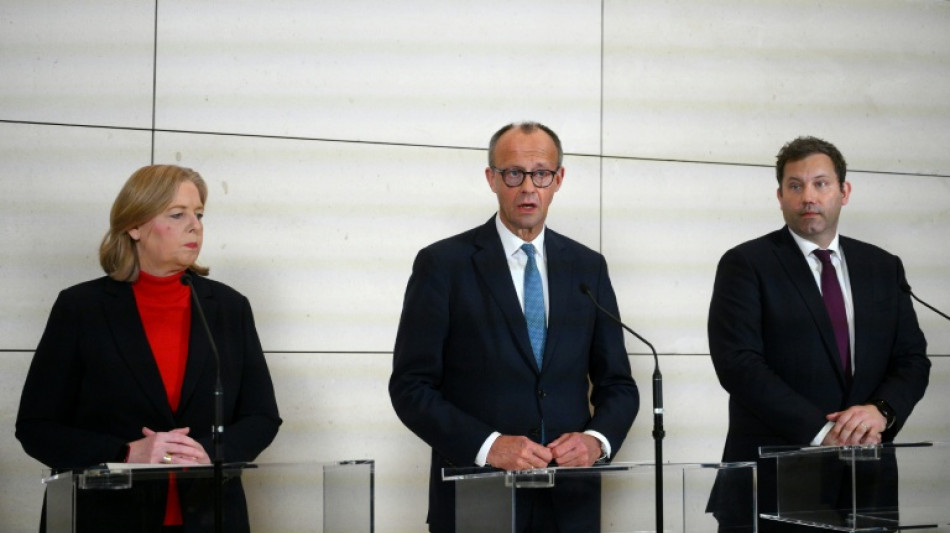
The German parliament's budget committee has approved revised 2026 spending plans that include even higher debts than originally thought, lawmakers said Friday, as the government gears up for an investment splurge.
Chancellor Friedrich Merz and his coalition partners also agreed further measures late Thursday aimed at helping Europe's struggling top economy, chief among them a reduction in industrial power prices.
"A strong Germany needs a strong economy and secure, well-paid jobs," said Merz, as he announced the policies.
Merz has made reviving the eurozone's traditional powerhouse a priority after two years of recession, relaxing strict debt rules to pave the way for a spending blitz on infrastructure and defence.
Late Thursday the budget committee approved the draft spending plans for next year, Sebastian Schaefer, the budget spokesperson for the Greens Party, told AFP.
Total expenditure of 524.5 billion euros ($610 billion) is now planned, with new borrowing expected to amount to just under 98 billion euros. The revised plans should now be passed by parliament in November.
In a draft approved at the end of July, net borrowing was estimated at 89.9 billion euros. In 2025, the figure is expected to be around 82 billion euros.
New borrowing is planned especially to help overhaul the long-underfunded armed forces, as Germany rearms to face any Russian threat.
The coalition's approach has proven divisive however in a country that has long prided itself on relatively low debt levels compared to other industrialised economies.
Some have questioned the wisdom of relying on borrowing to drive a short-term economic boost, saying that efforts are not being made to tackle painful structural reforms.
"The 2026 budget shows that the CDU/CSU (Merz's conservative bloc) and SPD have no plan for the future," said Schaefer, referring to the parties in the ruling coalition.
He accused them of "squandering" a special fund set up to overhaul infrastructure and for climate projects. Critics say some of the fund is being used to cover day-to-day outlays, rather than long-term investments.
Under the power price plans, the cost for key industries, such as chemical and steel production, is set to be reduced to five cents a kilowatt hour from 2026 to 2028.
This is expected to cost the state three to five billion euros, said Finance Minister Lars Klingbeil.
The coalition also agreed to reverse an increase in taxes on the aviation sector, which should bring the industry savings of about 350 million euros.
Ch.Lefebvre--CPN