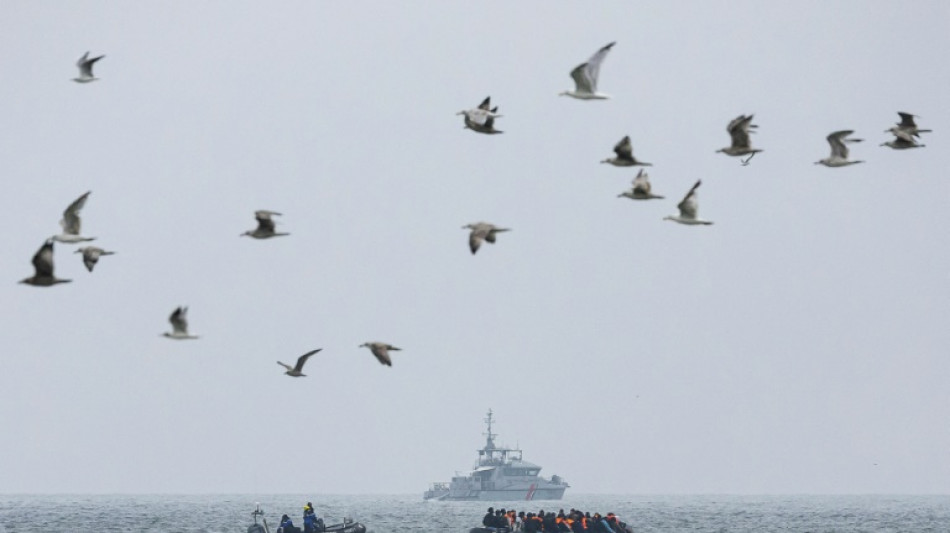
Under pressure? EU states on edge over migrant burden-sharing / Photo: Sameer Al-DOUMY - AFP

 Spanish PM says unregulated AI could be 'devastating'

 From Korean Chipmakers to Leveraged Semiconductor ETFs: STARTRADER Launches 49 New 24/7 Stock and ETF CFDs

 Asia stocks rise on AI, US-China trade talks optimism
 Multi-Asset Trading Venue Monochrome Exchange Announces IEO of Its Native Token, $MCR

 Data centre command hub keeps AI up and running
 Leo XIV, first US pope transcends his restrained style
 France's debt climbs to highest since 1978: ministry
 Thousands protest inaction over climate crisis in Switzerland

 UK actor Naomi Watts honoured at Spain film festival

 Trump signs bill authorizing sweeping Russia sanctions

 Anthropic picks Accenture for in-house AI safety evaluation

 Hushing and hedging: US companies retreat on climate

 Crisis-wracked Volkswagen warns of 10-bn-euro hit to profits

 Shakira to cap off world tour with Madrid 12-gig run

 Isolated Syrian-Druze city shortages

 UNESCO can be 'moderator' in AI debate: chief to AFP

 Russia seizes assets of Nestle, French firms

 Anthropic says AI systems moving towards building themselves

 Asian stocks boosted by falling oil, yen weakens after BoJ rate hike

 Afghan medical students in Pakistan hope court stops college expulsions

 Australia to detain tourists who overstay visa, minister says

 Asian stocks track Wall St rally as oil prices drop

 Prized Mexican relic returns on loan, two centuries on

 'In our lane': Fed's Warsh defies Trump but still fighting for credibility

 Trump admin makes major cut to endangered species protections

Which EU countries face the most pressure from migration? The question is proving deeply divisive as capitals scramble to agree by year-end how to redistribute at least 30,000 asylum seekers across the bloc.
The 27-nation European Union adopted a sweeping overhaul of its migration policies in 2024, soon to come into force.
A key element is a new "solidarity" system for managing asylum seekers, aimed at easing the burden on frontline countries such as Spain, Greece and Italy.
The idea is broadly speaking to sort member states into different categories:
-- Those deemed by Brussels to be under "migratory pressure", based on criteria such as the number of irregular arrivals and sea rescue operations.
-- Other countries, which will be required to either take in a share of asylum seekers from countries under pressure, or provide them with financial support amounting to 20,000 euros ($23,000) per person.
- Feeling the pressure -
There the trouble begins: how to decide who qualifies as "under pressure".
"You can see in the political rhetoric that everyone feels that they are under migratory pressure," said a source within the European Commission, which is tasked with sorting countries into categories.
Member states are lobbying hard to influence the methodology used.
In recent days, for instance, Sweden has pointed to the 300,000 asylum applications it received over the past decade as a high figure for a "medium-size country".
Belgium highlights that its migrant "reception centres are full", while Germany has stressed it has taken in more than a million Ukrainian refugees since Russia's invasion in 2022.
France, meanwhile, has underscored its maritime rescue operations for migrants attempting to cross the Channel to Britain.
The commission is expected to unveil its proposal next week, following nearly a month of delays.
That will form the basis for negotiations among member states on how many additional asylum seekers each is willing to accept -- or how much financial support they are ready to offer.
At least 30,000 migrants will need relocating each year under the new system, with a decision on who goes where required by the end of December.
- 'Tricky balance' -
But with governments across the bloc under pressure to tighten immigration policies, putting a hand up to take in extra asylum seekers is fraught with political risk.
"It's an extremely tricky balance to strike," said Camille Le Coz, head of the Migration Policy Institute Europe think tank.
All the more so because "countries don't trust each other on this question," she told AFP.
Several states -- including Germany, Belgium and The Netherlands -- accuse frontline countries of allowing migrants to move on into the bloc, rather than processing their asylum claims as required under EU law.
Frontline countries tend to reject the charge.
"The Germans are on edge -- there are tensions with the Italians and the Greeks over this file," said an EU diplomat, granted anonymity to discuss the sensitive matter.
"It's not easy, because everyone is watching one another and wondering: 'Will the other member state end up with a better deal?'" he said.
S.F.Lacroix--CPN