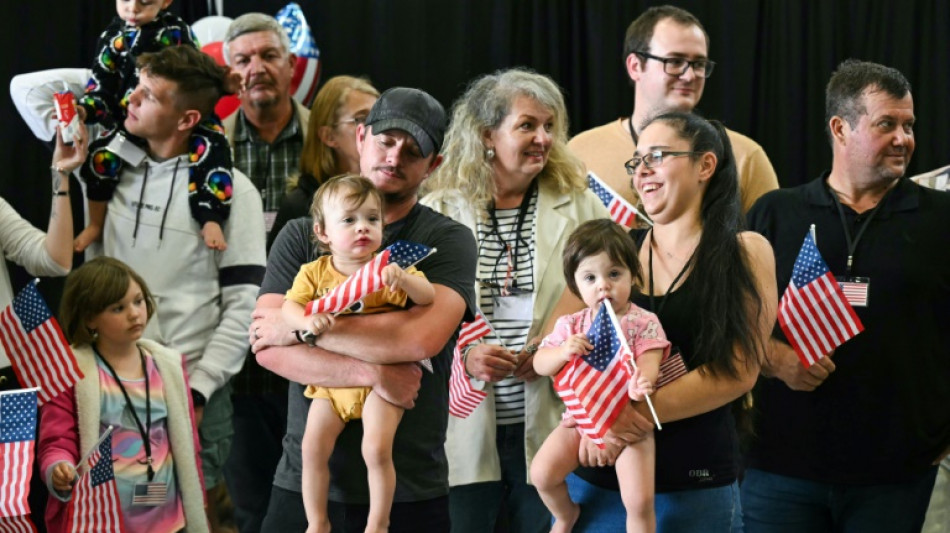
US to limit refugees to record low 7,500, mostly white South Africans / Photo: SAUL LOEB - AFP

 COP31 host says AI's climate footprint to be a summit priority
 EU proposes energy rating for data centres

 TradersYard Shifts Focus to Futures Trading

 Indonesia doing 'everything' but struggling to curb fires
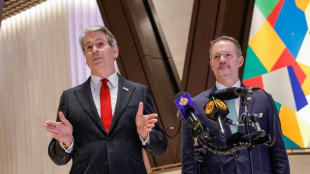
 France's Macron, Canada's Carney announce closer ties

 AI 'warning shots' focus Beijing on national security risks

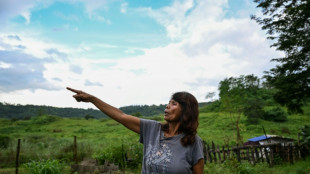 Philippine tribe in limbo over US-led tech hub
 Saudi-led coalition says Houthis fired ballistic missile at Riyadh
 Cuba works to restore power after another blackout
 Brigitte Bardot widower slams sale of star's belongings
 Indonesia accepts Malaysia's help to tackle wildfires
 Nvidia, OpenAI CEOs to attend Xi dinner at White House

 Cuba hit with seventh major blackout of the year
 Nigeria miners struggled to breathe in cell before 37 died: survivors

 Warren Buffett steps down as Berkshire Hathaway chairman

 Isolated Syrian-Druze city blames Damascus for shortages

 Kerry James Marshall: American 'blackness' painter celebrated in Europe

 Infantino 'must go', says German FA vice-president

 Japan's busiest rail station tests robot bins

 Backpackers fret over Australian visa crackdown

 Bank of Japan hikes rates to 31-year high to battle inflation

 AI doomsday warnings unlikely to slow IPOs but questions linger

 In Brazil's Amazon, the hunt for oil fuels hopes and fears

 Baby orangutans in India expose 'frightening' scale of trafficking

 Oversight Board blasts 'inadequate' Meta safeguards for AI deepfakes

The Trump administration announced plans on Thursday to drastically cut back the number of refugees to be accepted annually by the United States to a record low and give priority to white South Africans.
Under the new policy, the United States would welcome 7,500 refugees in fiscal 2026, down from more than 100,000 a year under Democratic president Joe Biden.
The vast majority of those being accepted during the fiscal year which began on October 1 would be white South Africans and "other victims of illegal or unjust discrimination in their respective homelands," according to a White House memo.
"The admissions numbers shall primarily be allocated among Afrikaners from South Africa," it said.
Republican President Donald Trump essentially halted refugee arrivals after taking office in January, but has been making an exception for white South Africans despite Pretoria's insistence that they do not face persecution in their homeland.
A first group of around 50 Afrikaners -- descendants of the first European settlers of South Africa -- arrived for resettlement in the United States in May.
Trump campaigned for the White House on a pledge to deport millions of undocumented migrants and signed an executive order in January suspending the US Refugee Admissions Program.
Aaron Reichlin-Melnick, a senior fellow at the American Immigration Council, said that since 1980 more than two million people fleeing persecution have been admitted into the United States under the program.
"Now it will be used as a pathway for White immigration," Reichlin-Melnick said on X. "What a downfall for a crown jewel of America's international humanitarian programs."
- 'Lifeline' -
Krish O'Mara Vignarajah, president of another immigration-focused group, Global Refuge, also criticized the move by the Trump administration.
"For more than four decades, the US refugee program has been a lifeline for families fleeing war, persecution, and repression," Vignarajah said in a statement.
"At a time of crisis in countries ranging from Afghanistan to Venezuela to Sudan and beyond, concentrating the vast majority of admissions on one group undermines the program's purpose as well as its credibility."
In addition to slashing refugee numbers, the Trump administration has moved to strip Temporary Protected Status (TPS) for Afghans, Haitians, Venezuelans and nationals of several other countries.
The United States grants TPS to foreign citizens who cannot safely return home because of war, natural disasters or other "extraordinary" conditions.
Trump has said the Afrikaners being taken in as refugees by the United States are fleeing a "terrible situation" back home and has even gone so far as to describe it as "genocide," an allegation widely dismissed as absurd.
Whites, who make up 7.3 percent of South Africa's population, generally enjoy a higher standard of living than the Black majority. They still own two-thirds of farmland and on average earn three times as much as Black South Africans.
Mainly Afrikaner-led governments imposed the race-based apartheid system that denied Black people political and economic rights until it was voted out in 1994.
M.P.Jacobs--CPN