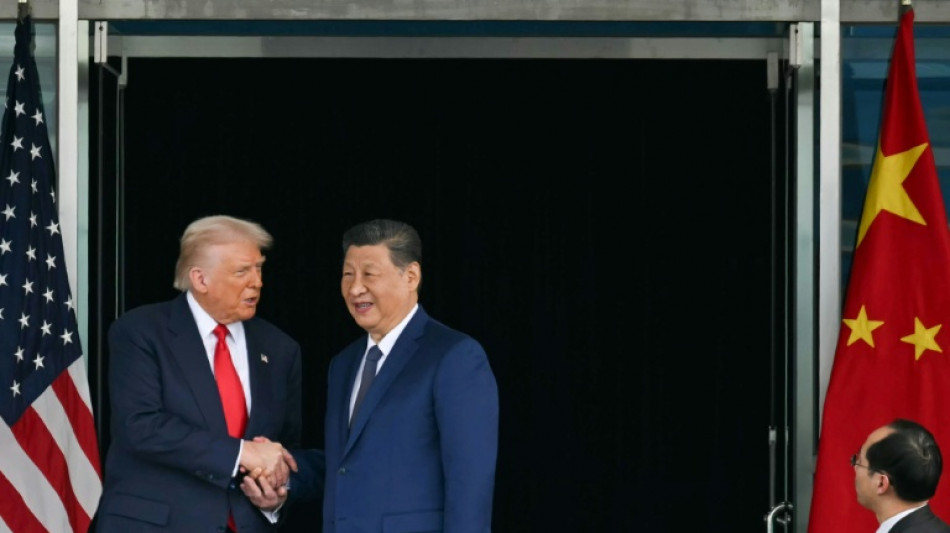
Fentanyl, beans and Ukraine: Trump hails 'success' in talks with Xi / Photo: ANDREW CABALLERO-REYNOLDS - AFP

 COP31 host says AI's climate footprint to be a summit priority
 EU proposes energy rating for data centres

 TradersYard Shifts Focus to Futures Trading

 Indonesia doing 'everything' but struggling to curb fires
 France's Macron, Canada's Carney announce closer ties

 AI 'warning shots' focus Beijing on national security risks
 Philippine tribe in limbo over US-led tech hub

 Saudi-led coalition says Houthis fired ballistic missile at Riyadh

 Cuba works to restore power after another blackout

 Brigitte Bardot widower slams sale of star's belongings

 Indonesia accepts Malaysia's help to tackle wildfires

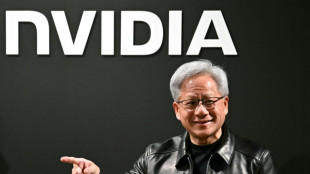 Nvidia, OpenAI CEOs to attend Xi dinner at White House

 Cuba hit with seventh major blackout of the year
 Nigeria miners struggled to breathe in cell before 37 died: survivors

 Warren Buffett steps down as Berkshire Hathaway chairman

 Isolated Syrian-Druze city blames Damascus for shortages

 Kerry James Marshall: American 'blackness' painter celebrated in Europe

 Infantino 'must go', says German FA vice-president

 Japan's busiest rail station tests robot bins

 Backpackers fret over Australian visa crackdown

 Bank of Japan hikes rates to 31-year high to battle inflation

 AI doomsday warnings unlikely to slow IPOs but questions linger

 In Brazil's Amazon, the hunt for oil fuels hopes and fears

 Baby orangutans in India expose 'frightening' scale of trafficking

 Oversight Board blasts 'inadequate' Meta safeguards for AI deepfakes

A beaming US President Donald Trump hailed his "great success" in talks with Chinese President Xi Jinping in the South Korean city of Busan on Thursday.
From a deal to reduce tariffs slapped on China for its role in the fentanyl trade to planned cooperation in ending the war in Ukraine, here's what Trump says he achieved in talks with Xi:
- Fentanyl -
The fentanyl trade has long been a sore point in relations between China and the United States: Washington accuses Beijing of turning a blind eye to the illegal trade in the drug, a charge it denies.
Trump hit China with a 20 percent levy on Chinese imports over complaints about its exports of chemicals used to make fentanyl.
However, he said after the talks in Busan the tariffs would be reduced to 10 percent -- bringing overall US tariffs on Chinese goods to 47 percent.
Trump said Xi "agreed that he was going to work very hard to stop the flow" of the powerful opioid, which has killed thousands of Americans.
"I believe he's going to work very hard to stop the death that's coming in," Trump told reporters on Air Force One.
- Hill of beans -
Beijing retaliated against Trump's fentanyl tariffs with levies against US agricultural products, including soybeans.
More than half of US soybean exports went to China last year, but Beijing halted all orders as the trade dispute deepened.
US farmers have been badly hit by the tariff war and are a key source of domestic political support for Trump.
Trump said China had now agreed to purchase "tremendous" amounts of soybeans, as well as other farm products.
"That was a very nice gesture," he said.
- Rare earths -
A strategic field dominated by China that is essential for manufacturing in defence, automobiles and consumer electronics, rare earths were expected to occupy a central role in the Busan talks.
Beijing imposed sweeping export controls on the materials and related technology this month.
Trump swiftly announced retaliatory tariffs of 100 percent on all Chinese goods, which were originally due to come into effect on Saturday.
But the US leader insisted on Thursday that "that whole situation, that roadblock is gone now".
"There's no roadblock at all on rare earths -- that will hopefully disappear from our vocabulary," he said, without giving details.
- Ukraine -
The United States and China have also reportedly agreed to cooperate more on seeking an end to the war in Ukraine.
China says it is a neutral party in the conflict, but Kyiv and Western governments have long accused Beijing of providing political and economic support to Moscow.
Trump told reporters the subject had come up "very strongly" during his talks with Xi.
"He's going to help us, and we're going to work together on Ukraine," Trump said.
- Chips -
Beijing has ramped up its chip industry to beat Washington's export restrictions on the critical component used to power artificial intelligence systems.
US chip giant Nvidia has been caught in the middle of that geopolitical tussle. Nvidia's chips are currently not sold in China due to a combination of Beijing government bans, US national security concerns and ongoing trade tensions.
CEO Jensen Huang has urged the United States to allow the sale of US-made AI chips in China in order to ensure Silicon Valley companies remain a global powerhouse in providing artificial intelligence.
"We did discuss chips," Trump said after meeting Xi, adding that Huang would speak to Beijing about the dispute.
"We're sort of the arbitrator or the referee," Trump said.
Huang is currently in South Korea for the Asia-Pacific Economic Cooperation (APEC) CEO summit in Gyeongju, which Xi is also expected to attend.
D.Avraham--CPN