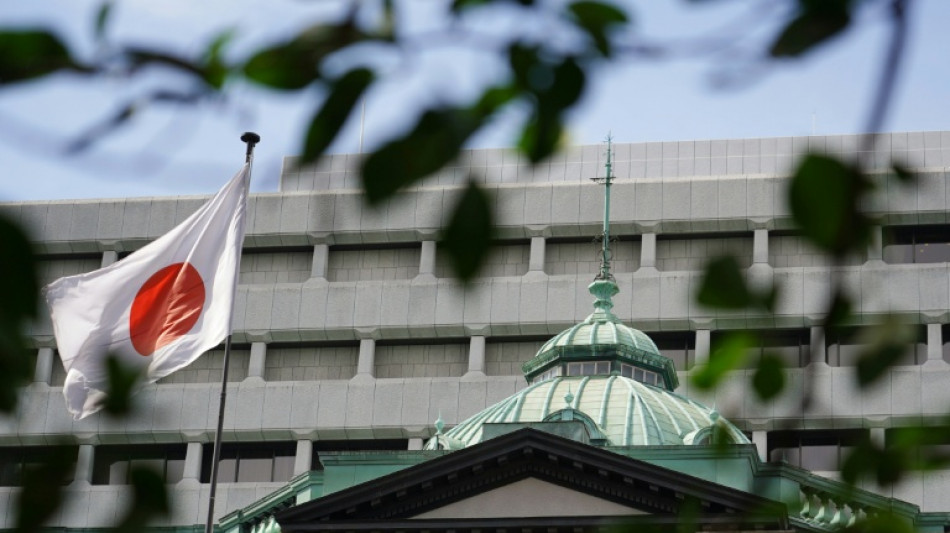
Bank of Japan keeps interest rates unchanged / Photo: Kazuhiro NOGI - AFP

 COP31 host says AI's climate footprint to be a summit priority
 EU proposes energy rating for data centres

 TradersYard Shifts Focus to Futures Trading

 Indonesia doing 'everything' but struggling to curb fires
 France's Macron, Canada's Carney announce closer ties

 AI 'warning shots' focus Beijing on national security risks
 Philippine tribe in limbo over US-led tech hub
 Saudi-led coalition says Houthis fired ballistic missile at Riyadh
 Cuba works to restore power after another blackout
 Brigitte Bardot widower slams sale of star's belongings

 Indonesia accepts Malaysia's help to tackle wildfires

 Nvidia, OpenAI CEOs to attend Xi dinner at White House

 Cuba hit with seventh major blackout of the year
 Nigeria miners struggled to breathe in cell before 37 died: survivors

 Warren Buffett steps down as Berkshire Hathaway chairman

 Isolated Syrian-Druze city blames Damascus for shortages

 Kerry James Marshall: American 'blackness' painter celebrated in Europe

 Infantino 'must go', says German FA vice-president

 Japan's busiest rail station tests robot bins

 Backpackers fret over Australian visa crackdown

 Bank of Japan hikes rates to 31-year high to battle inflation

 AI doomsday warnings unlikely to slow IPOs but questions linger

 In Brazil's Amazon, the hunt for oil fuels hopes and fears

 Baby orangutans in India expose 'frightening' scale of trafficking

 Oversight Board blasts 'inadequate' Meta safeguards for AI deepfakes

The Bank of Japan kept interest rates on hold Thursday at 0.5 percent, warning of lingering economic "high uncertainties" linked to US trade tariffs.
The decision, widely expected by economists, came after the first monetary policy meeting since Sanae Takaichi became Japan's new premier last week.
She is widely seen as in favour of monetary easing and active fiscal spending to boost the economy.
"High uncertainties still remain regarding the impact of trade and other policies on economic activity and prices at home and abroad," the BoJ said in a statement following the decision.
The announcement also came after US Treasury Secretary Scott Bessent told his Japanese counterpart about the importance of "anchoring inflation expectations".
Bessent visited Tokyo along with US President Donald Trump who was meeting Takaichi face-to-face for the first time.
"The message was clear -- Japan's balance sheet can no longer afford the distortions of ultra-low rates, and the global system can no longer run on the assumption that the yen will always absorb excess liquidity," said Stephen Innes, managing partner of SPI Asset Management.
"Crucially, there are few signs that the Bank is becoming less concerned about the impact of higher tariffs," Marcel Thieliant, head of Asia-Pacific for Capital Economics, said in a note.
"The Bank still sees a risk that lower profits could result in a slowdown in wage growth as firms put more effort on cost-cutting," he said, predicting that the next rate hike will come in January.
- Rate pause -
Officials began hiking rates from below zero in March last year as figures signalled an end to the country's "lost decades" of stagnation, with inflation surging.
However, with worries about the global outlook and US tariffs growing, the bank paused its tightening measures at the start of 2025, with the last increase in January, taking rates to their highest level in 17 years.
The yen weakened modestly against the dollar after the BoJ decision, which was carried by seven votes to two.
Takaichi, 64, an acolyte of former premier Shinzo Abe, has advocated her mentor's "Abenomics" economic policies including massive monetary easing and active fiscal spending.
Her ministers however said the BoJ has independence in its monetary decisions.
P.Kolisnyk--CPN