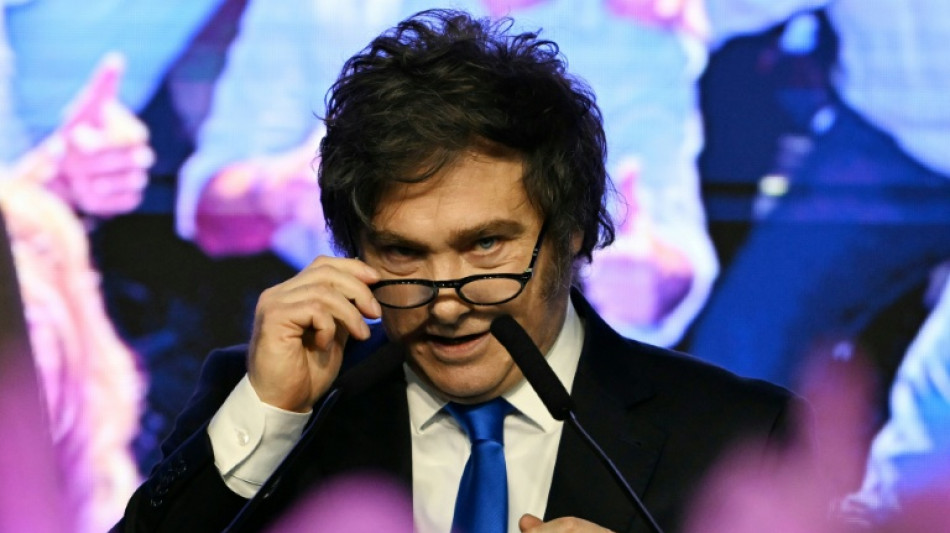
Taxes, labor laws, pensions: what Milei wants to do next / Photo: Luis ROBAYO - AFP

 COP31 host says AI's climate footprint to be a summit priority
 EU proposes energy rating for data centres

 TradersYard Shifts Focus to Futures Trading

 Indonesia doing 'everything' but struggling to curb fires
 France's Macron, Canada's Carney announce closer ties

 AI 'warning shots' focus Beijing on national security risks

 Philippine tribe in limbo over US-led tech hub
 Saudi-led coalition says Houthis fired ballistic missile at Riyadh
 Cuba works to restore power after another blackout
 Brigitte Bardot widower slams sale of star's belongings

 Indonesia accepts Malaysia's help to tackle wildfires

 Nvidia, OpenAI CEOs to attend Xi dinner at White House

 Cuba hit with seventh major blackout of the year

 Nigeria miners struggled to breathe in cell before 37 died: survivors

 Warren Buffett steps down as Berkshire Hathaway chairman

 Isolated Syrian-Druze city blames Damascus for shortages

 Kerry James Marshall: American 'blackness' painter celebrated in Europe

 Infantino 'must go', says German FA vice-president

 Japan's busiest rail station tests robot bins

 Backpackers fret over Australian visa crackdown

 Bank of Japan hikes rates to 31-year high to battle inflation

 AI doomsday warnings unlikely to slow IPOs but questions linger

 In Brazil's Amazon, the hunt for oil fuels hopes and fears

 Baby orangutans in India expose 'frightening' scale of trafficking

 Oversight Board blasts 'inadequate' Meta safeguards for AI deepfakes

Boosted by his victory in mid-term elections, Argentina's libertarian President Javier Milei is preparing to forge ahead with a second wave of reforms, targeting the labor market, taxation system and, down the line, pensions.
But this time the abrasive right-winger, who in the past dismissed his opponents as "rats" and "traitors," is showing signs of being more open to dialogue.
- 'Most reformist Congress' -
His small La Libertad Avanza (LLA) party more than tripled its parliamentary seat tally in Sunday's mid-terms.
While it is still in a minority, LLA and its center-right ally, the PRO party of former president Mauricio Macri, will have a combined 107 seats in the new-look Chamber of Deputies, out of a total 257.
In the Senate, they will have 24 seats out of 72.
Milei has happily proclaimed that the new Congress, which will sit for the first time on December 10, will be "the most reformist... in Argentina's history."
- First: lower taxes -
Milei has made simplifying Argentina's byzantine tax code his top priority.
The 55-year-old economist has in the past branded taxes as "theft" and labelled those who stash their money into offshore accounts as "heroes" for managing to "escape the clutches of the State."
To stem tax evasion, he has proposed to lower 20 taxes and expand the tax bases by bringing more workers into the formal economy to share the burden.
To achieve that he proposes lowering employer payroll taxes, so that companies put workers on their books and hire new staff.
- Then: loosen labor laws -
Milei always wants to shake up Argentina's "anachronistic" labor code, "which is over 70 years old and not designed for today's world."
He argues that the current system is driving informality and wants to make it easier to hire and fire staff.
A bill drafted by a pro-Milei MP congresswoman proposes making working hours more flexible -- up to 12 hours a day -- and allowing a percentage of wages to be paid in non-monetary form, such as with food vouchers or coupons.
Milei also wants to end what he calls the "labor litigation industry" by introducing a fixed severance pay system.
The labor ministry has proposed negotiating wage agreements at the company rather than the sectoral level.
Milei says the proposals, which are being pushed by employers, would be a win-win for companies and employees alike.
But Argentina's famously combative unions have so far categorically rejected them.
As part of his triptych of new reforms, Milei has also floated a shake-up of the country's underfunded pension system, without giving details and making clear it would come last of the three.
- Can he do it? -
A more conciliatory Milei has repeated since Sunday that he is prepared to do deals with other parties to get legislation through Congress.
"The challenge facing the government is to build consensus," said Martin Rappallini, president of the Industrial Organization of Argentina.
Economist Pablo Tigani warned however that Milei's electoral honeymoon could be short-lived.
"When they start cutting pensions and rights, coupled with falling wages and a recession, social protests could accelerate and even explode," he told AFP.
T.Morelli--CPN