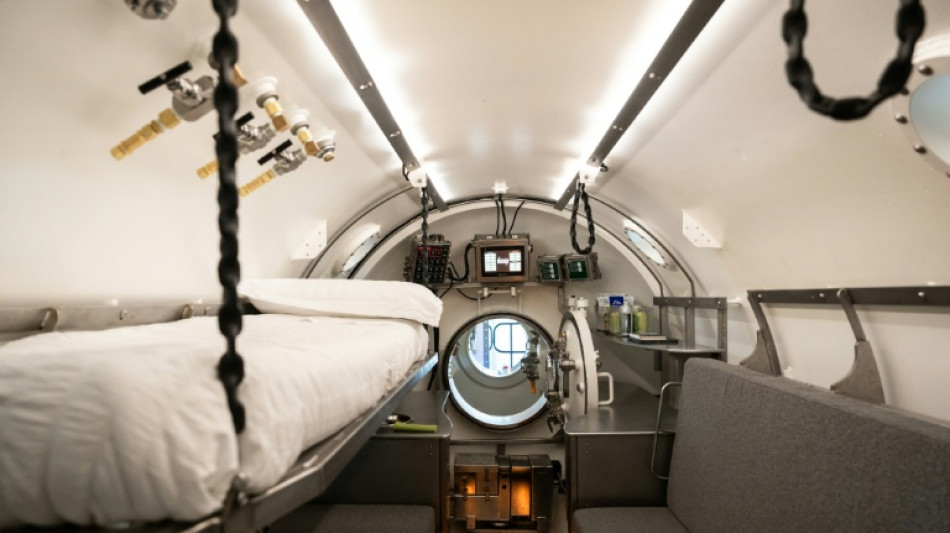
Underwater 'human habitat' aims to allow researchers to make weeklong dives / Photo: Jason Koerner - GETTY IMAGES NORTH AMERICA/AFP

 COP31 host says AI's climate footprint to be a summit priority

 EU proposes energy rating for data centres

 TradersYard Shifts Focus to Futures Trading

 Indonesia doing 'everything' but struggling to curb fires

 France's Macron, Canada's Carney announce closer ties

 AI 'warning shots' focus Beijing on national security risks

 Philippine tribe in limbo over US-led tech hub

 Saudi-led coalition says Houthis fired ballistic missile at Riyadh

 Cuba works to restore power after another blackout

 Brigitte Bardot widower slams sale of star's belongings

 Indonesia accepts Malaysia's help to tackle wildfires

 Nvidia, OpenAI CEOs to attend Xi dinner at White House

 Cuba hit with seventh major blackout of the year
 Nigeria miners struggled to breathe in cell before 37 died: survivors

 Warren Buffett steps down as Berkshire Hathaway chairman

 Isolated Syrian-Druze city blames Damascus for shortages

 Kerry James Marshall: American 'blackness' painter celebrated in Europe

 Infantino 'must go', says German FA vice-president

 Japan's busiest rail station tests robot bins

 Backpackers fret over Australian visa crackdown

 Bank of Japan hikes rates to 31-year high to battle inflation

 AI doomsday warnings unlikely to slow IPOs but questions linger

 In Brazil's Amazon, the hunt for oil fuels hopes and fears

 Baby orangutans in India expose 'frightening' scale of trafficking

 Oversight Board blasts 'inadequate' Meta safeguards for AI deepfakes

To someday allow scientists to stay underwater conducting research for days on end, the UK-based company DEEP has designed Vanguard, a "subsea human habitat."
The company unveiled its prototype Wednesday at a hangar in Miami, Florida, hoping that oceanographers and other researchers can use it to stay underwater in the ocean for at least a week, instead of only a few hours like most expeditions.
"There are zones in oceans around the world that are unexplored at those depths, and making them available and accessible by divers will open up a whole new realm of science," Norman Smith, DEEP's Chief Technology Officer and the lead engineer behind Vanguard, told AFP.
For now, Vanguard is situated only 20 meters (65 feet) underwater, a depth accessible by scuba diving, but DEEP is already working on prototypes that can get down to 200 meters (650 feet).
The vessel consists of three sections: a living chamber, a diving center and a base. The first part, measuring 12 meters (40 feet) long by 3.7 meters (12 feet) wide, is where scientists would eat, sleep and work, designed to resist ocean water pressure to keep up to four occupants safe.
The "diving center" would connect to the underwater base, which would be anchored to the seabed to protect the overall habitat from waves and storms.
Vanguard also will include a floating structure on the surface of the water to transport compressed air, power the vessel, and allow for communication with the outside world.
When DEEP deploys Vanguard for the first time in the coming weeks off the coast of Florida, the company hopes scientists will be able to use it to carry out long-term underwater conservation projects, such as coral restoration.
Ch.Lefebvre--CPN