
Berlin says Rosneft subsidiaries not impacted by US sanctions / Photo: John MACDOUGALL - AFP/File

 US networks halt Trump coverage in revolt over White House ban

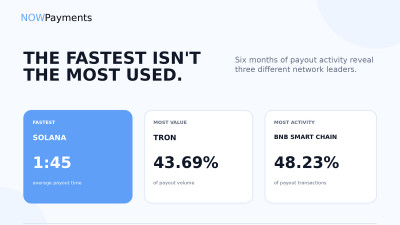 NOWPayments Releases Cross-Chain Payout Data Revealing Key Performance Benchmarks Across TRON, BNB Chain, and Solana

 COP31 host says AI climate footprint to be a summit priority
 Global stocks rally on lower oil prices, US-China hopes
 Spanish PM says unregulated AI could be 'devastating'

 From Korean Chipmakers to Leveraged Semiconductor ETFs: STARTRADER Launches 49 New 24/7 Stock and ETF CFDs

 Asia stocks rise on AI, US-China trade talks optimism

 France's Macron, Canada's Carney announce closer ties
 AI 'warning shots' focus Beijing on national security risks

 Philippine tribe in limbo over US-led tech hub

 Saudi-led coalition says Houthis fired ballistic missile at Riyadh
 Cuba works to restore power after another blackout

 Brigitte Bardot widower slams sale of star's belongings

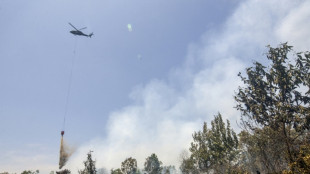 Indonesia accepts Malaysia's help to tackle wildfires
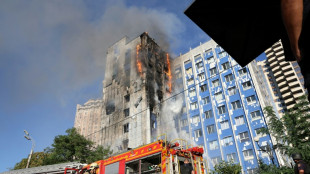
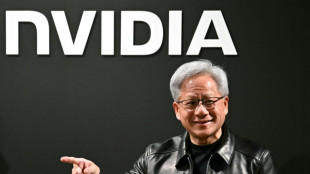 Nvidia, OpenAI CEOs to attend Xi dinner at White House

 Cuba hit with seventh major blackout of the year

 Nigeria miners struggled to breathe in cell before 37 died: survivors

 Warren Buffett steps down as Berkshire Hathaway chairman

 Isolated Syrian-Druze city blames Damascus for shortages

 Kerry James Marshall: American 'blackness' painter celebrated in Europe

 Infantino 'must go', says German FA vice-president

 Japan's busiest rail station tests robot bins

 Backpackers fret over Australian visa crackdown

 Bank of Japan hikes rates to 31-year high to battle inflation

 AI doomsday warnings unlikely to slow IPOs but questions linger

US sanctions targeting Rosneft will not impact the Russian oil giant's German subsidiaries, the German government told AFP Tuesday, downplaying fears their operations could be affected as they were not formally excluded.
Last week US President Donald Trump slapped sanctions on Rosneft and another Russian oil giant, Lukoil, complaining that talks with Vladimir Putin on ending the Ukraine war were going nowhere.
Rosneft's German business operations -- it still holds stakes in three German refineries that account for 12 percent of the country's refining capacity -- were not provided an exemption.
Berlin has placed the assets under state control and insists they are "decoupled" from their Russian parent company, but it has held off from a full nationalisation, instead seeking a buyer for the shares.
Concerns had mounted that Rosneft's German operations might be forced to halt, with reports saying that oil traders and banks were threatening to cut them off.
But the economy ministry said that it had now "received assurances from the relevant US authorities that the sanctions are not intended to target Rosneft's German subsidiaries".
"Business transactions with the subsidiaries can continue" once the sanctions, which will freeze Rosneft's assets and prohibit US companies from doing business with it, come into effect, a spokesman told AFP.
- Ownership limbo -
The US administration had provided a document offering reassurance that the sanctions are not intended to target German subsidiaries, and Berlin expects to soon receive "further clarifications that provide legal certainty", he said.
The spokesman noted that Rosneft's German businesses "cannot be controlled from Russia and do not generate income for the Russian parent company or the Russian state".
Britain also sanctioned Rosneft last week, and provided an exemption to the company's German subsidiaries.
The German government placed Rosneft's German assets under the trusteeship of the federal energy regulator in September 2022, in response to Russia's full-scale invasion of Ukraine.
But Berlin has struggled to find a permanent solution, and has been forced to extend trusteeship every six months while it hunts for a buyer for the assets.
The Financial Times reported the Qatar Investment Authority had expressed interest, but Rosneft was reluctant to sell, arguing they would have been more valuable had Berlin not seized them.
Rosneft's interests in Germany include a stake in the major PCK refinery, which supplies oil to Berlin and the surrounding region.
A spokeswoman for the refinery told AFP that PCK was "in contact with the energy ministry about the ongoing talks with the US sanctions authorities".
After Moscow sent its forces into Ukraine, Germany sought to take control of a swathe of Russian energy assets in the country.
It seized Russian gas firm Gazprom's subsidiary in the country, which had been a key energy supplier to Germany before the war but slashed deliveries in apparent retaliation for Western sanctions on Moscow.
The German government also had to step in to nationalise Uniper after the gas importer was pushed to the brink of bankruptcy when Gazprom halted its deliveries.
X.Wong--CPN