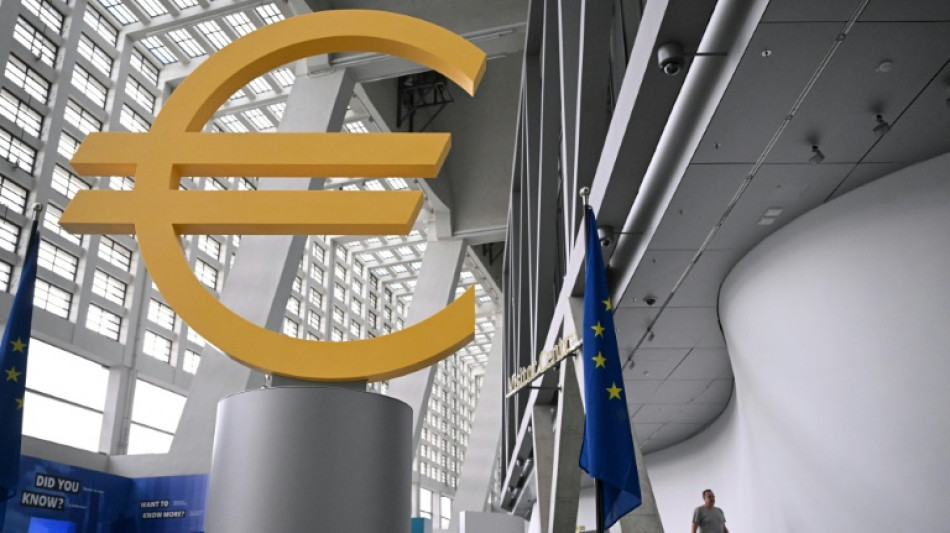
ECB to hold interest rates steady with inflation subdued / Photo: Kirill KUDRYAVTSEV - AFP

 US networks halt Trump coverage in revolt over White House ban

 NOWPayments Releases Cross-Chain Payout Data Revealing Key Performance Benchmarks Across TRON, BNB Chain, and Solana

 COP31 host says AI climate footprint to be a summit priority
 Global stocks rally on lower oil prices, US-China hopes

 Spanish PM says unregulated AI could be 'devastating'

 From Korean Chipmakers to Leveraged Semiconductor ETFs: STARTRADER Launches 49 New 24/7 Stock and ETF CFDs

 Asia stocks rise on AI, US-China trade talks optimism

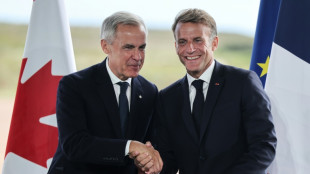 France's Macron, Canada's Carney announce closer ties

 AI 'warning shots' focus Beijing on national security risks

 Philippine tribe in limbo over US-led tech hub

 Saudi-led coalition says Houthis fired ballistic missile at Riyadh
 Cuba works to restore power after another blackout

 Brigitte Bardot widower slams sale of star's belongings

 Indonesia accepts Malaysia's help to tackle wildfires

 Nvidia, OpenAI CEOs to attend Xi dinner at White House

 Cuba hit with seventh major blackout of the year

 Nigeria miners struggled to breathe in cell before 37 died: survivors

 Warren Buffett steps down as Berkshire Hathaway chairman

 Isolated Syrian-Druze city blames Damascus for shortages

 Kerry James Marshall: American 'blackness' painter celebrated in Europe

 Infantino 'must go', says German FA vice-president

 Japan's busiest rail station tests robot bins

 Backpackers fret over Australian visa crackdown

 Bank of Japan hikes rates to 31-year high to battle inflation

 AI doomsday warnings unlikely to slow IPOs but questions linger

The European Central Bank is expected to hold interest rates steady this week for its third straight meeting, with inflation under control and the long-struggling eurozone economy looking healthier.
Following a year-long series of cuts, the ECB has kept its key deposit rate on hold at two percent since July.
Inflation has settled around the central bank's two-percent target in recent months, as Europe has weathered US President Donald Trump's tariff onslaught better than initially feared.
ECB officials still face many headwinds: France's political crisis has pushed up borrowing costs in the eurozone's second-biggest economy, and the risk of a flare-up in trade tensions lingers.
But for now, the central bank is "in a good place", ECB President Christine Lagarde said in a September speech in Helsinki, bolstering expectations of no change to borrowing costs at Thursday's meeting.
"With policy rates now at two percent, we are well placed to respond if the risks to inflation shift, or if new shocks emerge that threaten our target," Lagarde said.
In contrast to the ECB, the US Federal Reserve is expected to make its second straight rate cut when it meets on Wednesday as concerns grow over the labour market amid layoffs and signs that businesses are reluctant to hire.
The eurozone economy has long been treading water, dragged down in particular by a poor performance in Germany, with growth rates lagging far behind those of China and the United States.
But the picture for the 20 countries that use the euro looks a little brighter than in the first half of the year.
The ECB raised eurozone growth forecasts for this year and next at their last meeting.
- More cuts to come? -
Rate-setters will gather in Florence, Italy, for this week's meeting, one of their regular tours away from the institution's Frankfurt headquarters.
Investors will be closely watching Lagarde's post-rate call press conference for clues about the path forward.
Thursday's decision seems a done deal, economist Michel Martinez of French bank Societe Generale told AFP, calling the meeting "a moment to take stock rather than to take action".
But debate is already brewing about whether to push on with cuts later.
Pointing to a strong euro that makes imports cheaper as well as slowing eurozone wage growth, Lithuania's Gediminas Simkus, a member of the ECB's governing council, made a case for a cut at the next meeting in December.
"From a risk-management perspective, it's better to cut than not," he said in a September interview with Bloomberg, warning of the risk that inflation rates could fall too far.
Carsten Brzeski of Dutch bank ING said there were "some valid dovish arguments that could still force the central bank to cut once again at the December meeting".
The risks range from a possible adverse impact of US tariffs down the line to delays to Germany's planned defence spending splurge and a deepening of France's political crisis, Brzeski said.
"If any of these downside risks materialise, we can expect the ECB to engage in one or two more rate cuts," he said.
Andrew Kenningham, an economist at Capital Economics, told AFP he expected the ECB to cut rates further in 2026 as inflation and wage growth cool.
"There are now very few reasons to fear a resurgence of inflation -- The economy remains so weak, the labour market is loosening," he said.
A.Agostinelli--CPN