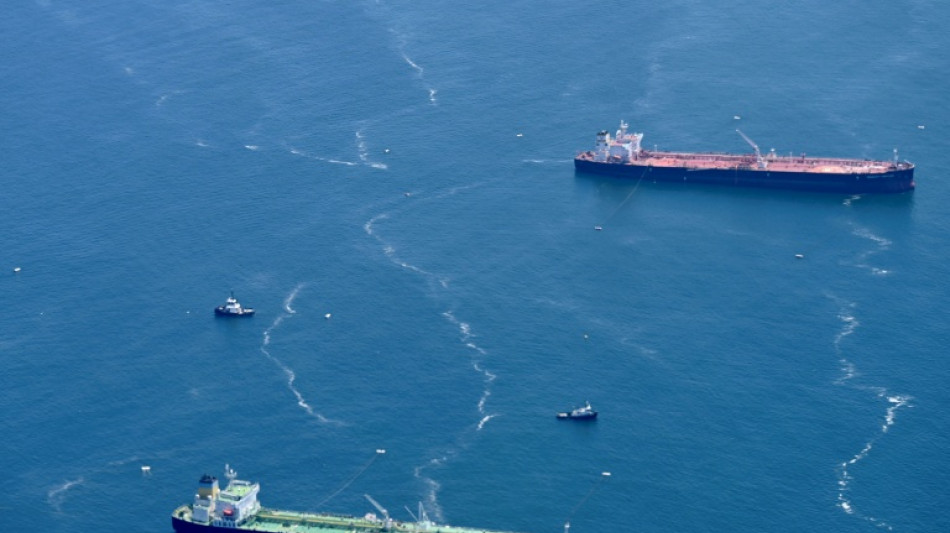
US puts plan to cut ship emissions in troubled waters / Photo: Daniel SLIM - AFP/File

 Infantino proposes consulting federations to reform FIFA

 South Africa arrests three more suspects, after nine women murdered
 Paramount settles with US states to clear Warner Bros. mega-merger
 Climate crisis a job for world leaders, not just activists: UK FM
 COP31 host says AI's climate footprint to be a summit priority
 EU proposes energy rating for data centres

 TradersYard Shifts Focus to Futures Trading

 Indonesia doing 'everything' but struggling to curb fires
 FQ-42 Vengeance Finds New Home at Creech Air Force Base
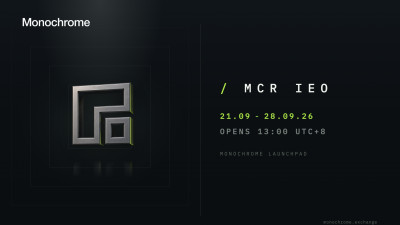 Multi-Asset Trading Venue Monochrome Exchange Announces IEO of Its Native Token, $MCR

 Data centre command hub keeps AI up and running

 Leo XIV, first US pope transcends his restrained style

 France's debt climbs to highest since 1978: ministry

 Thousands protest inaction over climate crisis in Switzerland

 UK actor Naomi Watts honoured at Spain film festival

 Trump signs bill authorizing sweeping Russia sanctions

 Anthropic picks Accenture for in-house AI safety evaluation

 Hushing and hedging: US companies retreat on climate

 Crisis-wracked Volkswagen warns of 10-bn-euro hit to profits

 Shakira to cap off world tour with Madrid 12-gig run

 Isolated Syrian-Druze city shortages

 UNESCO can be 'moderator' in AI debate: chief to AFP

 Russia seizes assets of Nestle, French firms

 Anthropic says AI systems moving towards building themselves

 Asian stocks boosted by falling oil, yen weakens after BoJ rate hike

An international plan to cut emissions from ships hung in the balance on Friday as the United States urged countries to reject it and oil producers pushed for a delay.
The London-based International Maritime Organization (IMO), which is the shipping body of the United Nations, voted in April for a global pricing system to help curb greenhouse gases.
But increased divisions have emerged this week at meetings leading up to Friday's follow-up vote.
President Donald Trump on Thursday said the proposed global carbon tax on shipping was a "scam" after the United States withdrew from IMO negotiations in April.
A Russian delegate described current proceedings as "chaos" as he addressed the plenary Friday after talks had lasted until the early hours.
Russia joined major oil producers Saudi Arabia and the United Arab Emirates in voting against the carbon-reduction measure in April, arguing it would harm the economy and food security.
IMO Secretary-General Arsenio Dominguez, representing 176 member states, said Friday that he hoped there would be no repeat of how the week's discussions had gone.
- Trump 'outraged' -
Since returning to power in January, Trump has reversed Washington's course on climate change, denouncing it as a "scam" and encouraging fossil fuel use by deregulation.
"I am outraged that the International Maritime Organization is voting in London this week to pass a global Carbon Tax," Trump wrote on his Truth Social platform Thursday.
"The United States will NOT stand for this Global Green New Scam Tax on Shipping," he added, urging countries to vote against it.
The United States this week advocated changing the voting process to give more weight to abstentions, a proposal that was being considered Friday.
Washington also threatened to impose sanctions, visa restrictions and port levies on those supporting the Net Zero Framework (NZF), the first global carbon-pricing system.
Liberia and Saudi Arabia called for Friday's vote to be postponed.
"We agree with the United States that it's important that these conversations are brought to light," a Saudi representative said.
Ahead of this week's London gathering, a majority 63 IMO members that in April voted for the plan had been expected to maintain their support and to be joined by others to formally approve the NZF.
Argentina, which in April abstained from the vote, has said it will now oppose the deal.
Leading up to Friday's decision -- China, the European Union, Brazil, Britain and several other members of the IMO -- reaffirmed their support.
The NZF requires ships to progressively reduce carbon emissions from 2028, or face financial penalties.
Shipping accounts for nearly three percent of global greenhouse gas emissions, according to the IMO, while the CO2 pricing plan should encourage the sector to use less polluting fuels.
The Philippines, which provides the most seafarers of any country, and Caribbean islands focused on the cruise industry, would be particularly impacted by visa restrictions and sanctions.
In order to be adopted, the framework needs the backing of two-thirds of 108 voting IMO members who belong to a long-standing international convention for the prevention of pollution from ships, known as MARPOL.
The plan would charge ships for emissions exceeding a certain threshold, with proceeds used to reward low-emission vessels and support countries vulnerable to climate change.
Pacific Island states, which abstained in the initial vote over concerns the proposal was not ambitious enough, are now expected to support it.
If the global emissions pricing system was adopted, it would become difficult to evade, even for the United States.
IMO conventions allow signatories to inspect foreign ships during stopovers and even detain non-compliant vessels.
burs-pml/bcp/ajb/lth
H.Cho--CPN