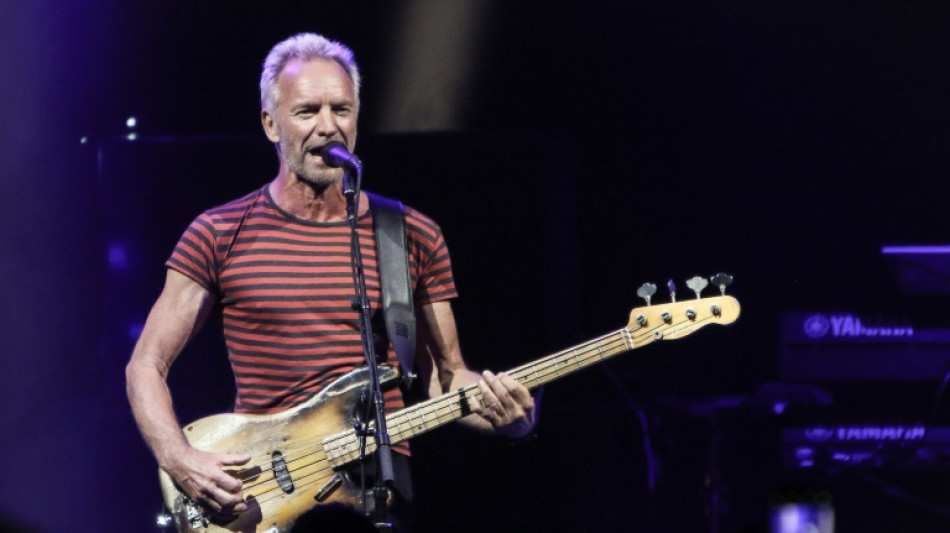
Sting finds fractured modern music scene 'quite odd' / Photo: John Parra - GETTY IMAGES NORTH AMERICA/AFP

 Infantino proposes consulting federations to reform FIFA

 South Africa arrests three more suspects, after nine women murdered
 Paramount settles with US states to clear Warner Bros. mega-merger
 Climate crisis a job for world leaders, not just activists: UK FM
 COP31 host says AI's climate footprint to be a summit priority
 EU proposes energy rating for data centres

 TradersYard Shifts Focus to Futures Trading

 Indonesia doing 'everything' but struggling to curb fires
 FQ-42 Vengeance Finds New Home at Creech Air Force Base

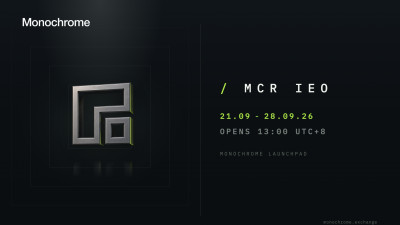 Multi-Asset Trading Venue Monochrome Exchange Announces IEO of Its Native Token, $MCR
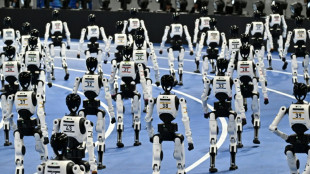
 Data centre command hub keeps AI up and running

 Leo XIV, first US pope transcends his restrained style

 France's debt climbs to highest since 1978: ministry
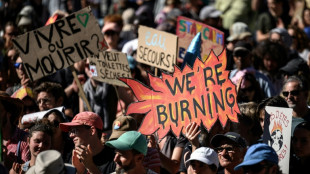 Thousands protest inaction over climate crisis in Switzerland

 UK actor Naomi Watts honoured at Spain film festival

 Trump signs bill authorizing sweeping Russia sanctions
 Anthropic picks Accenture for in-house AI safety evaluation
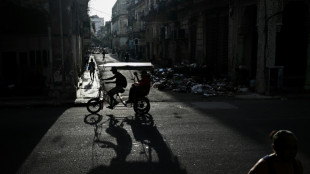
 Hushing and hedging: US companies retreat on climate

 Crisis-wracked Volkswagen warns of 10-bn-euro hit to profits

 Shakira to cap off world tour with Madrid 12-gig run

 Isolated Syrian-Druze city shortages

 UNESCO can be 'moderator' in AI debate: chief to AFP

 Russia seizes assets of Nestle, French firms

 Anthropic says AI systems moving towards building themselves

 Asian stocks boosted by falling oil, yen weakens after BoJ rate hike

British singer-songwriting legend Sting finds the multiple genres and streaming platforms of the modern music scene "quite odd", but still believes in the power of song to unite people.
In an interview with AFP, the 74-year-old with 17 Grammy Awards and sales of over 100 million albums also spoke about his worries about Artificial Intelligence (AI) as a tool for repression, as well as politicians "whose idea is to separate us all".
The former frontman of The Police was speaking in Paris ahead of the French debut of his partly biographical musical "The Last Ship", which is set in his hometown of Wallsend in northeast England.
It tells the story of the decline of shipbuilding in Wallsend's naval yards on the river Tyne and is intended as a tribute to the working class area that Sting left to pursue his music career.
- Why did you got back to your roots for this show? -
My entire life has been about escaping from what was offered to me. At a certain point, I realised that what I was given as a child was very valuable: a community, a family, a town with a purpose, and that had been taken away.
My way of repaying the debt to my community was to tell a story of an industry that was shut down by the government, and the betrayal, but also to weave in a love story.
I also think it's about many universal problems we face in society. Many communities are losing work because of technology, AI, and so I think it's highly relevant to what's going on politically.
It's an act of resistance for people, and I think we need to resist what's happening. So the play is a kind of political statement.
- Can music and art be a form of resistance? -
I think art is a machine for empathy, where we can see the world through other people's eyes, you can step into someone else's shoes and see their point of view. That is very valuable because there are politicians in the world at the moment whose idea is to separate us all, to say: 'You belong to this club and you can't come in here.'
That separation is not useful for society. It's certainly not good for peace. So I think art has a place in fighting against that trend. This is why these politicians want to get rid of art, and education, and science, and diplomacy. All of these things I personally value, and I think art is my way of contributing to that feeling.
- Why do you place so much value on work? -
Human beings need to do something with their hands. I'm very lucky. I use my hands every day to play the bass. I think human beings need to build things, to make things, to feel dignity, the sense of self.
I'm lucky that I'm just enjoying myself. But it's work. It's hard work. But I would do it for nothing. I would do it for no money. Like a fish has to swim, I have to sing.
- How do you feel about what the music industry has become? -
What I believe now is that there are separate ecologies in music. Whereas before, the number one song in France or England, everybody knew it. Now there are so many genres and so many different streaming systems. It's quite odd.
I'm lucky in that I came up at a time when it was a monoculture. Everybody knows The Police. So I still trade on that. I'm famous because of that. But now you can be successful in a niche and nowhere else. It's not better or worse, it's just different.
- Are you worried about AI and the music industry? -
I'm not afraid, yet. I think it produces an interesting facsimile, but it does not feel emotion. So what can it really give us? It can give us a trick. A mirror. I think there's a way of using it for medical research. But to actually produce art that we'd want to see or listen to, I'm not sure.
I'm worried more politically about what AI can do, the harm, in the wrong hands. Leaders who will use it for increased surveillance of society. It's a very useful tool to keep people observed and controlled. I fear that more than I fear an artistic invasion of my life.
M.Davis--CPN