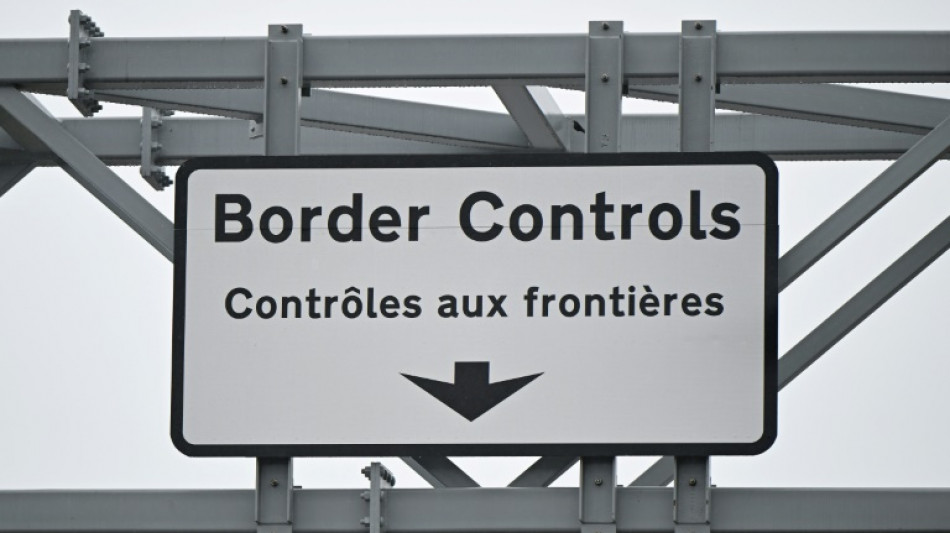
Automated border checks start in Europe / Photo: Justin TALLIS - AFP/File

 Infantino proposes consulting federations to reform FIFA
 South Africa arrests three more suspects, after nine women murdered
 Paramount settles with US states to clear Warner Bros. mega-merger
 Climate crisis a job for world leaders, not just activists: UK FM
 COP31 host says AI's climate footprint to be a summit priority
 EU proposes energy rating for data centres

 TradersYard Shifts Focus to Futures Trading

 Indonesia doing 'everything' but struggling to curb fires
 FQ-42 Vengeance Finds New Home at Creech Air Force Base
 Multi-Asset Trading Venue Monochrome Exchange Announces IEO of Its Native Token, $MCR
 Data centre command hub keeps AI up and running
 Leo XIV, first US pope transcends his restrained style
 France's debt climbs to highest since 1978: ministry
 Thousands protest inaction over climate crisis in Switzerland
 UK actor Naomi Watts honoured at Spain film festival
 Trump signs bill authorizing sweeping Russia sanctions
 Anthropic picks Accenture for in-house AI safety evaluation

 Hushing and hedging: US companies retreat on climate

 Crisis-wracked Volkswagen warns of 10-bn-euro hit to profits

 Shakira to cap off world tour with Madrid 12-gig run

 Isolated Syrian-Druze city shortages

 UNESCO can be 'moderator' in AI debate: chief to AFP

 Russia seizes assets of Nestle, French firms

 Anthropic says AI systems moving towards building themselves

 Asian stocks boosted by falling oil, yen weakens after BoJ rate hike

From Sunday, non-EU travellers entering Europe's Schengen open-borders zone will be photographed and fingerprinted at border crossings, as the European Union rolls out its much-delayed automated border checks.
The aim of the new system is to eventually replace the manual stamp on passports and secure better information-sharing between the bloc's 27 states.
The border-check system will allow authorities to know when people entered and exited a country, with the goal of better detecting anyone overstaying and people refused entry.
Hotly debated for nearly a decade, the system has raised concerns among transport providers and passengers, who fear it could lead to longer queues at airports and train stations.
To limit disruptions, there will be a phased rollout.
The first phase begins on Sunday.
Non-EU nationals arriving for short stays in EU countries -- except Cyprus and Ireland -- will be asked for their passport number, to provide fingerprints and have their photo taken at automated kiosks.
The same requirements will apply in Iceland, Liechtenstein, Norway -- members of the European Economic Area including the EU -- and Switzerland.
- Phased-in -
The bloc's biggest countries, including France and Germany, will initially carry out only limited checks in a bid to avoid huge queues at airports.
Some smaller member states have the system fully in place from Sunday.
The member states will have until mid-April to use automated checks for all passengers at their borders.
All eyes will be on the UK border as British nationals -- no longer EU citizens after Brexit -- will also be subject to the new checks.
UK authorities have already warned Britons each passenger will have to wait a few extra minutes before they can enter Schengen territory.
The Channel Tunnel's operator Getlink and train service Eurostar had expressed confidence they were ready and the system would run smoothly.
Checks were being carried out for passengers in Britain before they cross the border, especially at London's St Pancras station and the port of Dover. Terminals had already been installed.
- ETIAS scheme coming -
The EU executive has said there will be information campaigns to streamline the implementation of the Entry/Exit System (EES).
"EES will contribute to prevent irregular migration and help protect the security of everyone living in or travelling to Europe," it said.
The next phase in the EU's border overhaul will be the launch of an electronic travel authorisation document, known by its acronym ETIAS, similar to the United States' ESTA or its British equivalent.
Under ETIAS, citizens of visa-exempt countries travelling to the EU would have to complete an online form and pay a small fee -- whose amount is still under discussion.
M.P.Jacobs--CPN