
Child protection vs privacy: decision time for EU / Photo: Damien MEYER - AFP

 Green policies just good politics, says UK minister

 El Nino weather pattern enters record territory: scientist

 US networks halt Trump coverage in revolt over White House ban

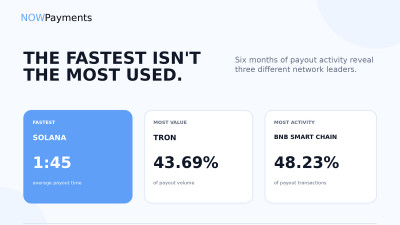 NOWPayments Releases Cross-Chain Payout Data Revealing Key Performance Benchmarks Across TRON, BNB Chain, and Solana

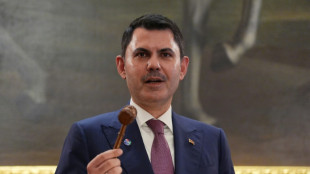 COP31 host says AI climate footprint to be a summit priority
 Global stocks rally on lower oil prices, US-China hopes

 Spanish PM says unregulated AI could be 'devastating'

 From Korean Chipmakers to Leveraged Semiconductor ETFs: STARTRADER Launches 49 New 24/7 Stock and ETF CFDs

 Asia stocks rise on AI, US-China trade talks optimism

 France's Macron, Canada's Carney announce closer ties
 AI 'warning shots' focus Beijing on national security risks

 Philippine tribe in limbo over US-led tech hub

 Saudi-led coalition says Houthis fired ballistic missile at Riyadh

 Cuba works to restore power after another blackout

 Brigitte Bardot widower slams sale of star's belongings

 Indonesia accepts Malaysia's help to tackle wildfires

 Nvidia, OpenAI CEOs to attend Xi dinner at White House

 Cuba hit with seventh major blackout of the year

 Nigeria miners struggled to breathe in cell before 37 died: survivors

 Warren Buffett steps down as Berkshire Hathaway chairman

 Isolated Syrian-Druze city blames Damascus for shortages

 Kerry James Marshall: American 'blackness' painter celebrated in Europe

 Infantino 'must go', says German FA vice-president

 Japan's busiest rail station tests robot bins

 Backpackers fret over Australian visa crackdown

Does protecting children justify snooping on private messages? That is the sensitive question facing EU countries Wednesday as they wrangle over a push to combat child sexual abuse material online.
The meeting in Brussels could seal the fate of a legislative initiative that has stirred fierce debate since it was put forward by the European Commission in May 2022.
Backed by multiple child protection groups, the proposal would require online platforms and messaging services to detect and report images and videos of abuse, as well as attempts by predators to contact minors.
But critics -- including the EU's own data protection authorities, lawmakers, and countries such as Germany -- warn it poses a "disproportionate" threat to privacy.
They are particularly alarmed by the use of technology that would scan private conversations, including on encrypted apps like Signal and WhatsApp.
"This would spell the end of secrecy of correspondence, which is essential for whistleblowers," the German activist and former EU lawmaker Patrick Breyer told AFP.
His big fear? That such legislation could eventually be exploited by authoritarian regimes to "crack down on political opponents" by monitoring their conversations.
Messaging platforms themselves staunchly oppose the plans.
- Mass surveillance? -
Opponents have been flooding EU officials with messages aimed at swaying the debate as part of a campaign dubbed "Stop Chat Control" -- their nickname for the proposal.
"I've never seen anything like it, on any other file," one EU diplomat told AFP, speaking on condition of anonymity. "We're receiving thousands of emails every day."
Denmark, which currently holds the rotating EU presidency and drafted the latest version of the proposal, insists it includes the necessary safeguards.
Firstly, only images and links -- not text messages -- would be subject to scanning.
Second, the system would only be activated following a decision by an independent judicial or administrative authority.
"We have to be very clear: under this proposal, there is no general monitoring of online communications. There will be no such thing as 'chat control'," said European Commission spokesperson Markus Lammert.
"This is about protecting our children against a terrible crime, a crime that happens more and more online."
- Germany holds key -
A report by the UK-based Internet Watch Foundation found that 62 percent of the child sexual abuse material identified internationally last year was hosted on servers within the EU.
Under the bloc's current rules, platforms detect such content on a voluntary basis, which Brussels considers inadequate given the scale and rapid growth of the problem.
The existing legal framework remains in place until April 2026 -- pending adoption of the commission's new proposal making detection mandatory.
What happens next will hinge largely on Germany, with two possible scenarios following Wednesday's meeting:
-- If Berlin backs the proposal, that would likely push it past the post under the EU's qualified majority voting rules. Member states could then formally adopt the measure at a meeting in Luxembourg next week.
-- If Berlin abstains or remains opposed, that would send negotiators back to the drawing board, with no certainty the text will eventually become law.
Several EU officials involved in the talks said Germany could make its stance known in the coming hours.
Ng.A.Adebayo--CPN