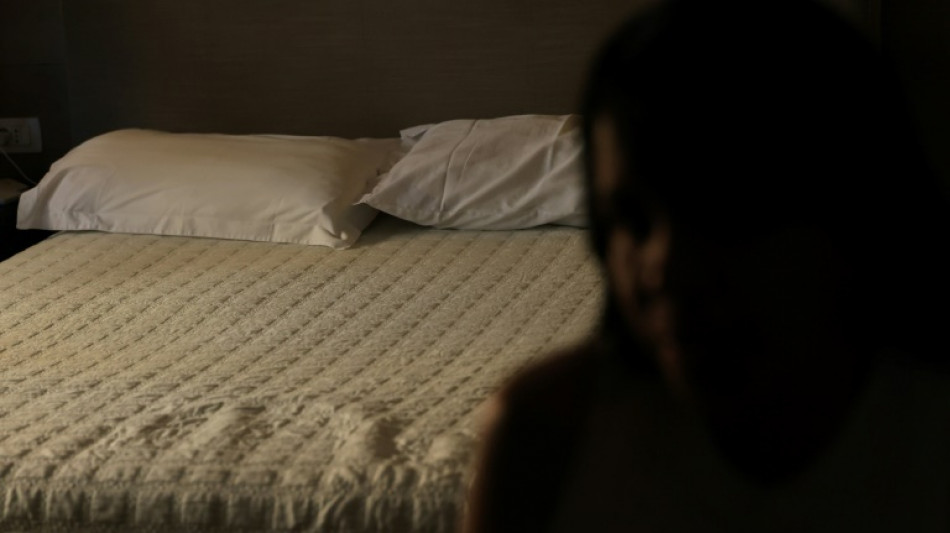
'I found hell': the women ensnared in Albania's global sex trade / Photo: Adnan Beci - AFP

 In Bangladesh, Pakistan's Jinnah photo stirs anger

 China's robot dancers limber up for America's Got Talent final
 Green policies just good politics, says UK minister

 El Nino weather pattern enters record territory: scientist
 US networks halt Trump coverage in revolt over White House ban

 NOWPayments Releases Cross-Chain Payout Data Revealing Key Performance Benchmarks Across TRON, BNB Chain, and Solana

 COP31 host says AI climate footprint to be a summit priority
 Global stocks rally on lower oil prices, US-China hopes

 Spanish PM says unregulated AI could be 'devastating'

 From Korean Chipmakers to Leveraged Semiconductor ETFs: STARTRADER Launches 49 New 24/7 Stock and ETF CFDs
 Asia stocks rise on AI, US-China trade talks optimism

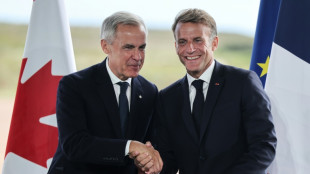 France's Macron, Canada's Carney announce closer ties
 AI 'warning shots' focus Beijing on national security risks
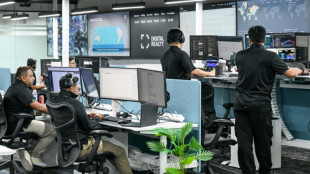
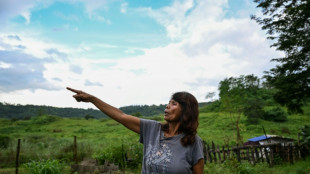 Philippine tribe in limbo over US-led tech hub

 Saudi-led coalition says Houthis fired ballistic missile at Riyadh
 Cuba works to restore power after another blackout
 Brigitte Bardot widower slams sale of star's belongings
 Indonesia accepts Malaysia's help to tackle wildfires
 Nvidia, OpenAI CEOs to attend Xi dinner at White House

 Cuba hit with seventh major blackout of the year

 Nigeria miners struggled to breathe in cell before 37 died: survivors

 Warren Buffett steps down as Berkshire Hathaway chairman

 Isolated Syrian-Druze city blames Damascus for shortages

 Kerry James Marshall: American 'blackness' painter celebrated in Europe

 Infantino 'must go', says German FA vice-president

From Venezuela, Maria travelled halfway around the world in search of a better life. Instead, the mother of two was trapped in Albanian detention for months after being lured into illegal sex work.
Maria, 38, is among a growing number of women drawn by international criminal networks into the Balkan nation from impoverished countries on the promise of lucrative sex work and a potential gateway to Europe.
She is just one victim of a criminal web that spans continents.
Earlier this week, international police busted a "highly organised" network that exploited over 50 women similar to Maria, whose name AFP has changed to protect her.
According to Europol, police arrested 17 alleged traffickers on Wednesday, who had brought women from Latin America to Albania and Croatia.
The women were either trapped in illegal sex work in Albania or exploited in other European countries.
"They promised me paradise but I found hell," Maria told AFP, in a Tirana apartment rented by an association that helps victims of human trafficking.
- 'Digital and international' -
Albania's economic and social collapse in the 1990s, following decades of isolation under a communist dictatorship, allowed the emergence of one of the most notorious mafias in the world, according to organised crime expert Fabrice Rizzoli.
Albanian clans, specialising in human trafficking and heroin smuggling, capitalised on an alliance with the Calabrian mafia "to spread prostitutes on the streets of Milan and its region", he said.
Since branching into cocaine supply in the 2000s, the Albanian mafia has been well established in Latin America, he said.
But as tourism booms, Albania, once a country of origin for sex trafficking, has now become a destination country for various criminal groups that bring women to the Balkan country, where prostitution is illegal.
Empowered by the global reach of cybercrime, criminal networks are using Albania as a transit point to exploit women from other nations around the world.
According to Europol, Wednesday's raids uncovered the model many of these "agencies" use, to control every detail "from recruitment to money collection", including call centres that negotiate directly with prostitution clients.
"The women have no say and no rights in deciding the price or saying no to certain practices," said Nenad Naca, from Europol's human trafficking taskforce.
Investigators also arrested a man in Colombia; they allege he led the network and took almost half of all its criminal earnings, thousands of miles away from where most women were being exploited.
"As all other organised crime networks, it has turned digital and international. These call centres can be anywhere," Naca said.
- A 'less visible violence' -
For women trapped in Albania's illegal prostitution, many are too afraid to turn to the authorities, under threats from the criminals who manipulate them.
Anyone engaging in prostitution in Albania, if not considered a trafficking victim, can be sentenced to up to three years in prison.
Some, like Maria, are unaware that sex work is illegal when they come to the country.
But after they arrive, criminal pimps abuse them, taking a substantial cut of their earnings and forcing them to stay.
"There is less visible violence now than before. The criminals have understood that the humans they traffic –- who for them are not human beings, just a commodity –- lose some value if they are visibly hurt," Naca said.
Often, criminals threaten family back in the women's home country or show videos of others being beaten as a warning "if they disobey", he said.
Maria travelled to Albania in late November, convinced by friends that it would finally help pay the bills for her young family.
She was arrested five days later with six other Latin American women.
"We didn't know it was illegal," she said, still visibly shaken after seven months of pre-trial detention.
"Otherwise, we wouldn't have come here."
- 'Prey to scams and threats' -
Among erotic photos, dating apps and client messages on Maria's and the other women's seized phones, investigators found the recurring number of a woman who allegedly acted as a pimp.
According to one of the women, Ana -- whose name AFP has also changed for her safety -- it was the number of the person who brought her from Colombia.
The 32-year-old said the woman handled clients, assigned appointments, and organised apartments, in exchange for half of her earnings supposedly to repay travel costs to Albania.
In the first six months of 2025, Albanian police opened 108 investigations into suspected prostitution, leading to operations targeting massage parlours, bars, or hotels.
At least 37 foreign nationals suspected of trafficking-related crimes and about 10 potential victims of sexual exploitation were identified.
These women, often from very poor backgrounds, are persuaded into travelling to Albania by criminals who promise quick cash, Tirana's anti–human trafficking unit commissioner Geranda Gjeta said.
"They fall prey to scams and threats from these criminals, who send videos of their families or death threats," Gjeta said.
Under that pressure, most women take full responsibility when caught instead of risking retribution from their pimps, said Brikena Puka, who leads the victims' aid centre Vatra.
"For several months, the number of foreign victims of trafficking for sexual exploitation needing our help has been increasing," Puka said.
Nenad said police have also seen an increase in Latin American victims and suspects.
- 'We do it out of need' -
Ana and Maria have been released from prison and are in secure housing supplied by Vatra, waiting for the police to return their passports so they can finally leave Albania.
Ana came to the country via Spain after struggling to support her children and family back in the Dominican Republic.
She had been approached by a network while living in Barcelona and offered a job as an escort by a woman, who has since been arrested and accused of pimping.
"Prostitution — we do it out of need," Ana said.
"We see it as something quick and easy. But it's not true. Not only are we mistreated, but we're also forced to give 50 percent of what we earn with our bodies to our pimps," she said, struggling to hold back tears.
In early September, 11 foreign nationals, including six women, were held in pre-trial detention in Albania, suspected of human trafficking and pimping, according to prison authorities.
- 'International pimp' -
"Albania was once a country of origin for Albanian girls and women who were trafficked," Gjeta said.
"Today we face another situation: an international criminal phenomenon whose victims are women from Africa, Asia, and Latin America."
According to Albanian police, well-organised criminal groups run the network from abroad, supported by local contacts who handle on-the-ground logistics.
The challenge is a "transnational" one for law enforcement, as victims often arrive on visas --sometimes with forged documents -- before relocating to other European countries, Gjeta said.
Albania was also probing several foreign-hosted websites that are used to shield prostitution clients from law enforcement.
As part of a major international operation in June, Albanian police rescued three Chinese women recruited in Dubai and exploited by a Chinese company in a local massage parlour.
A British man and two Albanians accused of trafficking people for sexual exploitation were also arrested and remain in pre-trial detention.
Malka Marcovich, a women's rights activist and consultant, said technology was allowing for the emergence of an "international pimp".
"Moving from country to country, from continent to continent, it becomes increasingly difficult to prosecute traffickers," Marcovich said.
"The large-scale sale of women's bodies is far more lucrative than drug trafficking," Marcovich said.
T.Morelli--CPN