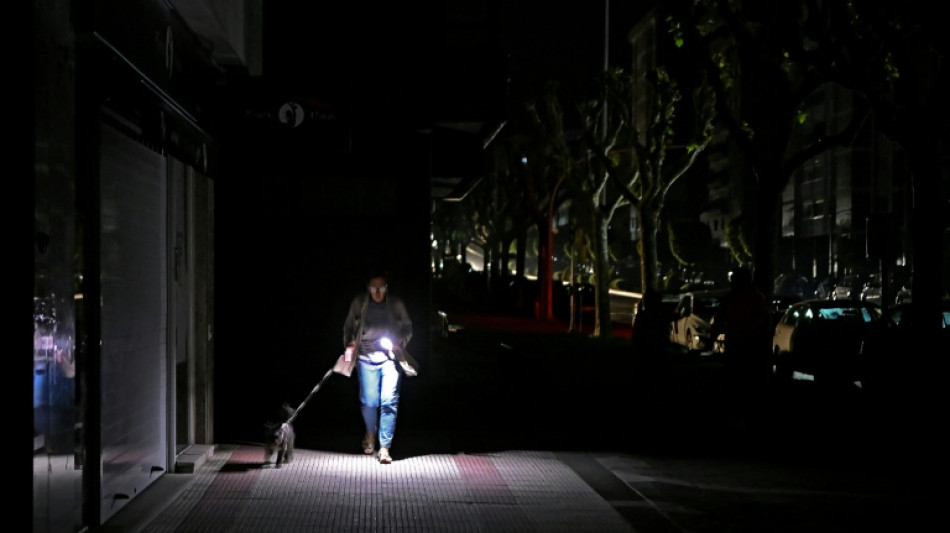
'First of its kind' power surge behind Iberia blackout: experts / Photo: MIGUEL RIOPA - AFP/File

 In Bangladesh, Pakistan's Jinnah photo stirs anger

 China's robot dancers limber up for America's Got Talent final

 Green policies just good politics, says UK minister
 El Nino weather pattern enters record territory: scientist
 US networks halt Trump coverage in revolt over White House ban

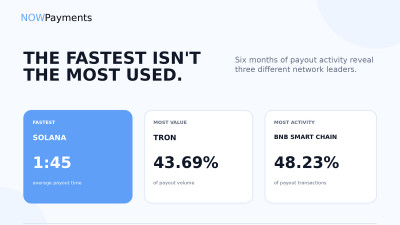 NOWPayments Releases Cross-Chain Payout Data Revealing Key Performance Benchmarks Across TRON, BNB Chain, and Solana

 COP31 host says AI climate footprint to be a summit priority
 Global stocks rally on lower oil prices, US-China hopes
 Spanish PM says unregulated AI could be 'devastating'

 From Korean Chipmakers to Leveraged Semiconductor ETFs: STARTRADER Launches 49 New 24/7 Stock and ETF CFDs
 Asia stocks rise on AI, US-China trade talks optimism

 France's Macron, Canada's Carney announce closer ties

 AI 'warning shots' focus Beijing on national security risks

 Philippine tribe in limbo over US-led tech hub
 Saudi-led coalition says Houthis fired ballistic missile at Riyadh
 Cuba works to restore power after another blackout
 Brigitte Bardot widower slams sale of star's belongings

 Indonesia accepts Malaysia's help to tackle wildfires
 Nvidia, OpenAI CEOs to attend Xi dinner at White House

 Cuba hit with seventh major blackout of the year

 Nigeria miners struggled to breathe in cell before 37 died: survivors

 Warren Buffett steps down as Berkshire Hathaway chairman

 Isolated Syrian-Druze city blames Damascus for shortages

 Kerry James Marshall: American 'blackness' painter celebrated in Europe

 Infantino 'must go', says German FA vice-president

A power surge that caused a paralysing blackout across all of Spain and Portugal in April was an unprecedented event in Europe and possibly the world, but the root cause remains unknown, an expert panel said Friday.
"This was the most severe blackout incident in Europe in the last 20 years," Damian Cortinas, president of the association of electricity grid operators ENTSO-E, said during a presentation of the panel's preliminary report into the incident.
He said "cascading overvoltages" were behind the blackout, which he called a "first of its kind" on the continent.
Cortinas added that "we think (it is unprecedented) in the world as well", but cautioned that the experts did not have information from every country.
The April 28 outage cut internet and telephone connections, halted trains, shut businesses and plunged cities into darkness across Spain and Portugal. It also briefly affected southwestern France.
A Spanish government report had previously blamed the massive outage on overvoltage in June.
Overvoltage occurs when there is too much electrical voltage in a network, overloading equipment. It can be caused by surges in networks due to oversupply or lightning strikes, or when protective equipment is insufficient or fails.
- 'New territory' -
Friday's "factual" report, produced by a panel of 45 European experts mandated to carry out technical investigations, describes the sequence of events that led to the uncontrolled, widespread outage.
But it does not yet provide the primary causes of the initial incidents.
"This is new territory. This is also why we need a bit of time to be sure that we analyse what's going on and what would happen," Cortinas said.
The expert group will publish its final report in the first quarter of 2026, ENTSO-E said in a statement
"It will include a detailed root cause analysis and recommendations on how to prevent similar events happening across the European power system in the future," it added.
The factual report was based on a massive quantity of data, which took a lot of time to collect as experts from power generators and their users as well as third parties.
Some of the third parties "did not give the consent to the Spanish TSO (transmission system operator) to forward the data. So it took us a long time to collect to collect all the needed data," said Klaus Kaschnitz, the expert panel's co-lead.
"We sent out about 150 letters and, at the end, we received the last data in August," he said.
Some data is still missing.
- Blame game -
The blackout struck the Iberian Peninsula at 12:33 pm local time.
According to the report, two episodes of oscillations -- power, voltage, and frequency swings -- were observed during the half hours that preceded the incident.
Operators in control rooms took measures to mitigate the issue, such as reducing the export of power from Spain to France, the report said.
"While these measures mitigated the oscillations, their nature led to an increase of voltage in the Iberian power system," it said.
This was followed by losses of output at wind and solar plants, then a chain disconnection of several power generation centres, causing voltages to spike.
Investigators have yet to determine why systems to mitigate overvoltage failed.
Advocates for nuclear energy had blamed the supposed instability of renewable energy sources.
The head of Spanish grid operator REE, Beatriz Corredor, had instead pointed to certain "conventional energy" producers -- gas, nuclear or hydro -- with voltage control thresholds set too low.
In June, Spain's Ecological Transition Minister Sara Aagesen blamed REE, saying that the system "lacked sufficient voltage control capacity" that day.
P.Gonzales--CPN