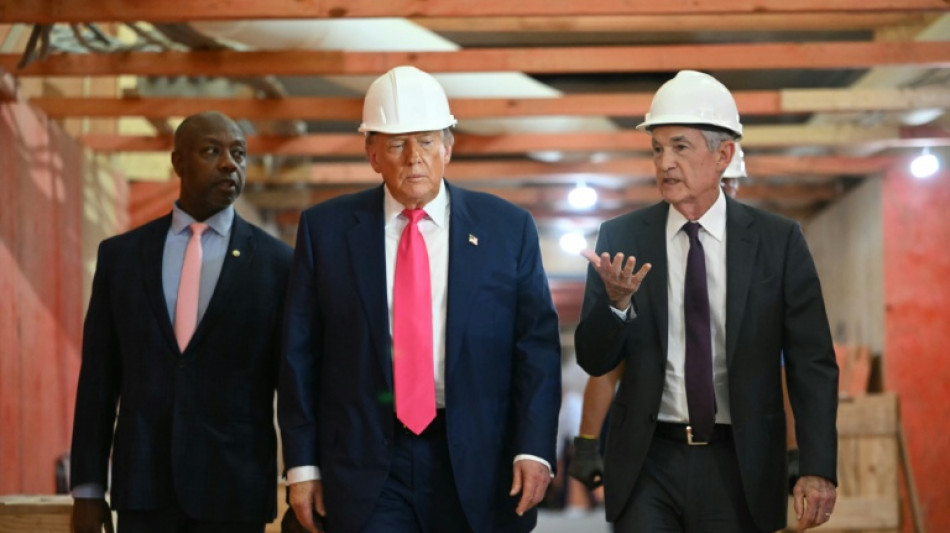
Independence of central banks tested by Trump attacks on US Fed / Photo: ANDREW CABALLERO-REYNOLDS - AFP

 Typhoon Dujuan leaves four dead in Japan, 45,000 houses without power

 Stocks rise on AI buzz, drop in oil prices

 UK king braces as memoir by Diana's brother goes on sale

 Infantino proposes consulting federations to reform FIFA

 South Africa arrests three more suspects, after nine women murdered
 Paramount settles with US states to clear Warner Bros. mega-merger
 Climate crisis a job for world leaders, not just activists: UK FM
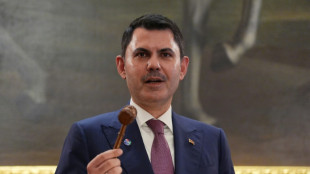
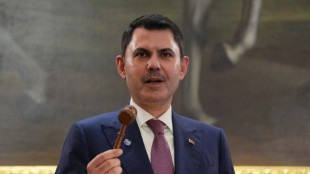 COP31 host says AI's climate footprint to be a summit priority

 EU proposes energy rating for data centres

 TradersYard Shifts Focus to Futures Trading

 Indonesia doing 'everything' but struggling to curb fires

 FQ-42 Vengeance Finds New Home at Creech Air Force Base
 Multi-Asset Trading Venue Monochrome Exchange Announces IEO of Its Native Token, $MCR

 Data centre command hub keeps AI up and running

 Leo XIV, first US pope transcends his restrained style

 France's debt climbs to highest since 1978: ministry

 Thousands protest inaction over climate crisis in Switzerland

 UK actor Naomi Watts honoured at Spain film festival

 Trump signs bill authorizing sweeping Russia sanctions

 Anthropic picks Accenture for in-house AI safety evaluation

 Hushing and hedging: US companies retreat on climate

 Crisis-wracked Volkswagen warns of 10-bn-euro hit to profits

 Shakira to cap off world tour with Madrid 12-gig run

 Isolated Syrian-Druze city shortages

 UNESCO can be 'moderator' in AI debate: chief to AFP

For months, US President Donald Trump has been piling pressure on the Federal Reserve over delayed cuts to interest rates, casting the institution's independence into doubt.
Trump's recent attacks have caused quite a stir as central bank independence is considered a key factor in protecting price stability and investor confidence in a country's economy.
– What does Trump want? -
Trump has repeatedly called out Fed chair Jerome Powell for not lowering interest rates quickly enough to support the weakening US economy.
While rates were lowered on Wednesday for the first time this year, the cuts were deemed too small by Stephen Miran, the new Fed governor appointed by Trump.
Cutting interest rates helps households borrow for consumption and businesses for investment, promoting growth but at the risk of spurring inflation.
Low rates would also make it less expensive for the US government to borrow.
Public debt has been rising for years, and with the recently extended Trump tax cuts, the deficit is expected to grow further.
Under Powell, the Fed has maintained a policy guided by data and resisted political pressure.
However, Trump is attempting to stack the Fed's leadership with loyalists and is trying to remove Governor Lisa Cook, with that case going before the Supreme Court.
In 2026, several seats, including Jerome Powell's, will be up for appointment.
– Why central bank independence? –
Christine Lagarde, president of the European Central Bank, said that a takeover of US monetary policy by Trump would be "a very serious danger" for the global economy.
Undermining the autonomy of the Fed constitutes "a very dangerous road," echoed Andrew Bailey, Governor of the Bank of England.
The Fed's institutional independence is "not a technical detail but a cornerstone of economic stability," stressed Stephan Bales, author of a study for the German public bank KfW.
More broadly, "if I can no longer rely on the fact that interest rate developments genuinely reflect, in good faith and conscience, the economic reality, then I obviously have a problem," Ingrid Hengster, head of the German branch of Barclays bank told AFP.
"I can no longer properly invest in that country," she added.
The "credibility" of a central bank, whichever it may be, is an "anchor" that prevents "a spiral of rising inflation expectations," Bales said.
– Any other examples? -
"Less independent central banks are unable to ensure price stability. Just think of Turkey," said Carsten Brzeski from ING bank.
Turkey has one of the highest annual inflation rates in the world, exceeding 30 percent in August.
Capital Economics said that central banks in emerging countries "sporadically face political pressure," as recently seen in Brazil.
However, countries with independent central banks show lower inflation rates, according to several studies.
Bales warned 2026 will be a "stress test" for the Fed's independence and consequently "for the stability of the global financial system."
"There is clearly a risk that President Trump's pressure on the Fed could motivate politicians in EMs (emerging markets)to follow suit," Capital Economics said.
The ECB also faces "indirect attacks but not against its independence," noted Brzeski.
However, he warned that "the high level of public debt" in the eurozone, particularly in France, "could increase pressure on the ECB to steer its policy toward financing states."
Countries must therefore take measures to "contain this debt," which "the ECB is fully aware of," Ingrid Hengster said.
M.García--CPN