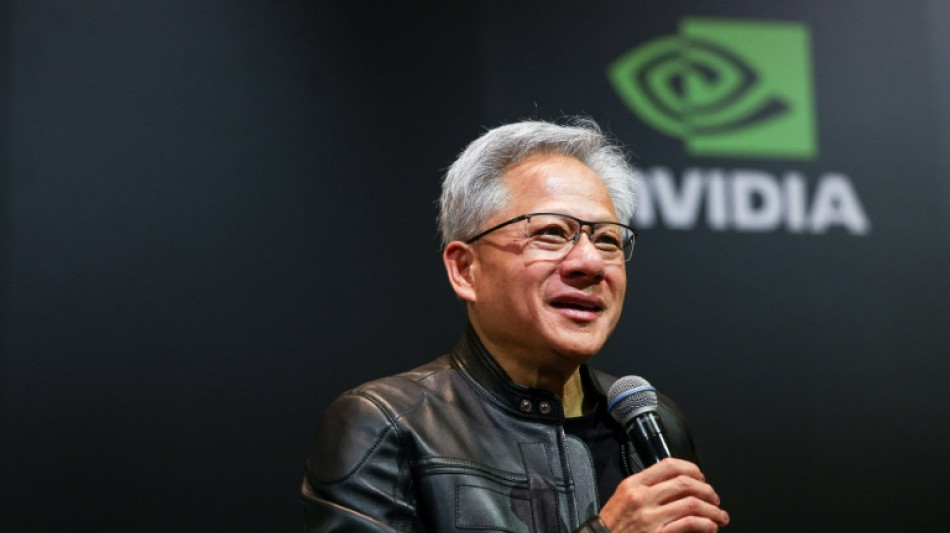
Nvidia CEO disappointed over China chip ban report / Photo: I-Hwa Cheng - AFP/File

 Oil falls, stocks steady as Trump hails 'good' Iran talks

 Canada judge to decide prison term for suicide poison seller

 Meta leans into AI, smart glasses amid privacy pushback

 Oil prices fall after Trump hails 'good' talks with Iran
 AI political ads warp reality ahead of US midterms
 Chile's Atacama Desert blossoms with life after El Nino rains

 Drug cocktail killed former child star Hayden Panettiere: coroner
 Trump rejects international regulation of AI

 Oil prices slide, AI stock buzz fades

 Quoin Pharmaceuticals Announces FDA Fast Track Designation for QRX003 for the Treatment of Peeling Skin Syndrome

 Tunisia says 2026 summer hottest on record

 Houthis accuse Saudi Arabia of deadly strikes as thousands flee

 STARTRADER Expands Its Chinese Equity CFD Range with CXMT and Unitree Robotics

 MEXC Expands Opportunity Compass with Stock Trading Handbook to Help Crypto Users Build Investment Knowledge

 Typhoon Dujuan leaves four dead in Japan, 45,000 houses without power

 Stocks rise on AI buzz, drop in oil prices

 UK king braces as memoir by Diana's brother goes on sale

 Infantino proposes consulting federations to reform FIFA

 South Africa arrests three more suspects, after nine women murdered
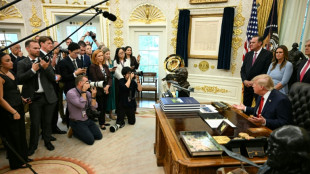
 Paramount settles with US states to clear Warner Bros. mega-merger
 Climate crisis a job for world leaders, not just activists: UK FM

 COP31 host says AI's climate footprint to be a summit priority

 EU proposes energy rating for data centres

 TradersYard Shifts Focus to Futures Trading

 Indonesia doing 'everything' but struggling to curb fires

Nvidia chief executive Jensen Huang on Wednesday said he was disappointed by a report that Beijing has barred major Chinese tech companies from buying his company's world-leading chips, a crucial component in the generative AI revolution.
California-based Nvidia's specially designed chips have catapulted the company to become the world's biggest by market capitalisation, with China seen as a crucial market.
But geopolitical tensions between the United States and China have seen Nvidia caught up in relations between the superpowers.
Washington restricts Nvidia from exporting its most advanced products to China and last month confirmed the company would pay the US government 15 percent of revenue from certain AI chip sales in the country.
Beijing has responded by expressing national security concerns about Nvidia chips and urging Chinese businesses to rely on local semiconductor suppliers instead.
In the latest development, the Financial Times reported on Wednesday that China's internet regulator has instructed companies including Alibaba and ByteDance to terminate orders for Nvidia's RTX Pro 6000D chips, state-of-the-art processors made especially for the country.
"We can only be in service of a market if a country wants us to be," Huang said at a press briefing in London, responding to a question about the FT report.
"I'm disappointed with what I see, but they have larger agendas to work out between China and the United States. And I'm patient about it. We'll continue to be supportive of the Chinese government and Chinese companies as they wish."
According to the FT, citing unnamed sources, the Cyberspace Administration of China ordered companies to end all testing and purchase plans for Nvidia's restricted chips.
The ban would follow a decision by Chinese regulators on Monday finding that Nvidia had run afoul of the country's antitrust rules.
Observers believe that Beijing's moves to wean Chinese tech companies off Nvidia's offerings are part of its effort to accelerate domestic production from companies like Huawei.
Y.Ibrahim--CPN