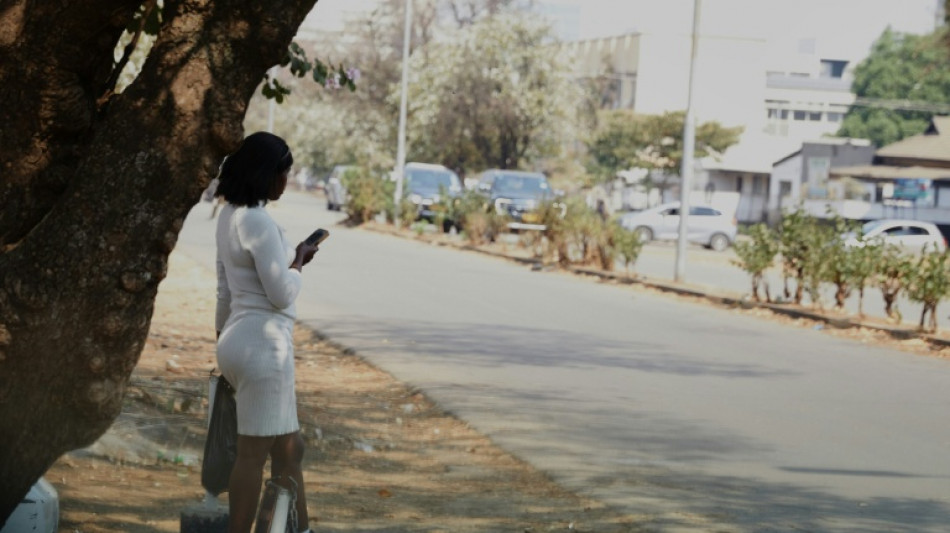
US cuts leave Zimbabwe sex workers scrambling for alternatives / Photo: Jekesai NJIKIZANA - AFP

 Blueberry Strengthens MENA Presence with CMA Category 5 License and Dubai Office Launch

 In first, French presidential candidate gives birth during campaign

 A Full Moon for Every Child: STARTRADER's STARCARES Brings Support to SOS Children's Village Ho Chi Minh City

 Mongolian herders enlist new tech against harsher, drier climate

 Tata turmoil shines light on India succession woes
 OMP and PwC Alliance Moves Process Manufacturers from Siloed Supply Chain Planning to Unified Decisions
 Chile's Atacama Desert blossoms with life after El Nino rains
 Drug cocktail killed former child star Hayden Panettiere: coroner
 Trump rejects international regulation of AI

 Oil prices slide, AI stock buzz fades
 Quoin Pharmaceuticals Announces FDA Fast Track Designation for QRX003 for the Treatment of Peeling Skin Syndrome
 Tunisia says 2026 summer hottest on record

 Houthis accuse Saudi Arabia of deadly strikes as thousands flee

 STARTRADER Expands Its Chinese Equity CFD Range with CXMT and Unitree Robotics

 MEXC Expands Opportunity Compass with Stock Trading Handbook to Help Crypto Users Build Investment Knowledge

 Typhoon Dujuan leaves four dead in Japan, 45,000 houses without power

 Stocks rise on AI buzz, drop in oil prices

 UK king braces as memoir by Diana's brother goes on sale

 Infantino proposes consulting federations to reform FIFA
 South Africa arrests three more suspects, after nine women murdered
 Paramount settles with US states to clear Warner Bros. mega-merger

 Climate crisis a job for world leaders, not just activists: UK FM
 COP31 host says AI's climate footprint to be a summit priority

 EU proposes energy rating for data centres

 TradersYard Shifts Focus to Futures Trading

In a cramped room with blistered walls on the edge of Harare, three sex workers sat pressed together on a frayed mattress spread across bare concrete.
This was the work station for the women, who say their trade turned perilous after US President Donald Trump abruptly cut foreign health aid earlier this year.
One of them, Sharon Mukakanhanga, reached into her bag and pulled out a pair of baby socks she used when there was nothing else between her and risk.
"These little socks served as condoms when I became so desperate after the American government withdrew its support from my all-time go-to safe haven," the 43-year-old told AFP, referring to her preferred clinic.
Mukakanhanga is among thousands of sex workers in Zimbabwe who have struggled to access HIV prevention tools since the US cuts gutted centres that once provided free condoms, antiretrovirals and basic care.
For nearly two decades, the US programmes including PEPFAR, the world's largest HIV initiative, formed a critical safety net for Zimbabwe's fragile health system.
The first half of 2025 has seen 5,932 AIDS-related deaths, a rise from 5,712 in the same period last year, according to official government figures.
- 'Lost my mind' -
The impact of the withdrawals was immediate, said 47-year-old HIV-positive sex worker Cecilia Ruzvidzo.
"It was a very difficult period. I literally lost my mind," said the mother of four who has been in the trade for nearly two decades.
She recalled leaving her most recent visit to the clinic with only 10 days' worth of antiretrovirals.
"I could not get condoms, which are a necessity for my work. I was at risk of contracting more infections. My clients were also exposed," she said quickly.
With US-funded facilities shuttered or empty, the few remaining providers say they are buckling under the pressure.
Medical charity Doctors Without Borders (MSF), which operates independently of US government funding, said its clinics in Harare suburbs like Epworth and Mbare were stretched thin.
"They don't know where to go. They don't know where to seek services," said project lead Charlotte Pignon, referring to patients and especially sex workers.
While she did not directly link the rising deaths to the funding cuts, she said the impact of the withdrawal could not be ignored.
"It is difficult to know all the factors that are impacting those numbers but it's impossible to say that it’s not impacted by the US cuts either," she said.
- 'Serious disruption' -
The scale of the fallout was still coming into focus, said Wonder Mufunda, chief executive of the Harare-headquartered think-tank Centre for Humanitarian Analytics (CHA).
Mufunda said US support had previously amounted to about $522 million, with roughly $90 million directed to HIV programmes.
"You wake up and you have lost such funding, there were serious disruptions," he said, warning that deaths could rise.
"It's quite a big blow we are talking about," he told AFP.
Beyond overstretched clinics, Zimbabwe's economic freefall is pushing more people into sex work with an estimated 40,500 women already engaged in sex work nationwide, according to CHA.
Competition had eroded the power to insist on safer sex, said 20-year-old Cleopatra Katsande. Some workers were charging as little as 50 US cents per client, far less than the cost of a box of condoms, she said.
For veteran Ruzvidzo, there was no real choice.
"We knew it wasn't safe," she said of using baby socks as condoms. "But I had to feed my children."
The clients did not seem to mind, she said. "When it comes to this moment, men don't think straight."
L.Peeters--CPN