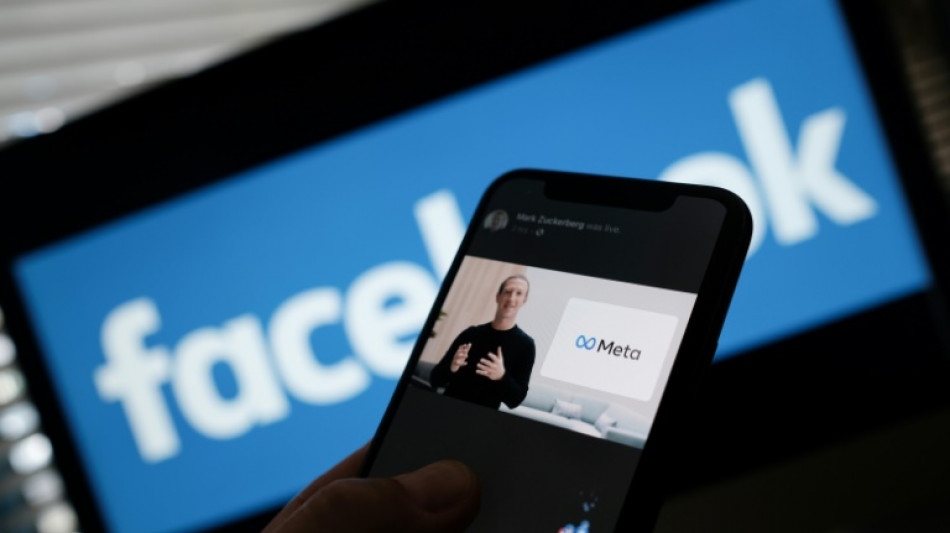
Facebook slump reignites debate over attracting younger audiences

 Lights out in Laos as electricity exports surge

 Steven Strogatz weighs AI mathematics advances and their consequences for researchers

 Anthropic boss calls for AI slowdown, Altman and Musk agree

 French IT giant Capgemini sells subsidiary after row over ICE links

 Quebec Brokerage Qubit Insurance Announces New Data on Coverage Shortfalls as Rebuilding Costs Rise

 Lady Gaga welcomes first child with fiance: US media

 Bhutan business bets on hazelnuts for farming future

 'Widow's Bay' and 'The Pitt' are favorites for Emmys night

 Coastal erosion forces cancellation of California music festival

 Argentina's Dirty War rears its head in Venice film

 UK lawmakers throw out bill to legalise assisted dying

 US inflation steady in August, fueling Fed rate hike expectations

 New York marks 25th anniversary of 9/11 attacks

 Nepal flood reconstruction bill to be $4.78 bn: foreign ministry

 JUMO and Standard Bank launch Social Finance Framework to scale inclusive finance in Africa

 Doomsday tech: could AI really kill us all?

 French comedy show 'Call my agent' makes film comeback

 It's all coming back: Celine Dion fans gear up for Paris return

 Researchers eye AI revolution in natural disaster forecasts

 US braces for inflation report that may push Fed to hike rates

 Musk threatens legal action over documentary

 Latin America fact-check group asks Meta not to replace verification practice

 AI Risks to Enter 60–80% of Liability and Cyber Insurance Underwriting by 2028, ScienceSoft Predicts

 Tribal Launches Campfire, Letting Business and Technical Teams Build on Salesforce Together

 Stocks fall as fresh oil surge fans inflation fears

Facebook announced on Thursday that its daily user numbers had fallen for the first time in its history, reopening the debate around its problem with attracting new, younger subscribers.
The firm's founder, Mark Zuckerberg, was in no doubt who was to blame.
"People have a lot of choices for how they want to spend their time, and apps like TikTok are growing very quickly," he told investors, according to US media.
TikTok has continued its soaring growth, particularly among younger audiences attracted by its user-friendly controls and upbeat content of mostly very short, self-made videos.
"TikTok from the beginning has focused on a younger audience -- the style of the content, the music, the dancing," says Flavilla Fongang, who runs London-based branding agency 3 Colours Rule.
"Their moment has really come in the pandemic, where people were desperately looking for ways to stay connected."
In the same time period, Facebook -- whose parent company has been renamed Meta -- has been battling regulatory issues, negative headlines around bullying and disinformation, and on Wednesday faced a huge slide in its share price.
That said, Facebook remains the world's most popular social media network by far.
It lost one million daily users in the last quarter of last year but still has almost 1.9 billion, figures that dwarf every other platform.
So does Facebook need to worry about attracting younger audiences, and can it do anything to remedy its image as a platform for the older generation?
- 'Boring, misleading, negative' -
The company itself clearly thinks so.
It has been focused on the question for almost a decade, according to papers released last year by whistleblower Frances Haugen, some of which detailed the platform's concerns about losing young audiences.
"Young adults perceive content as boring, misleading, and negative," data scientists told Facebook bosses, according to an account from Haugen's documents reported on The Verge website.
Yet up until this year, the platform had been able to post impressive growth figures.
Analysts say this was papering over the cracks.
"It's not something that's new, this migration of younger users away from the core Facebook platform," says analyst Matt Bailey from London-based Omdia group.
"It was making up for those lost users with older demographics... but it's reached a bit of a saturation point among those older audiences."
- Bet on the metaverse -
Facebook has been looking at TikTok's rise with alarm and some jealousy.
The upstart app added 650,000 new users every day in the final quarter of last year, according to the We Are Social communications agency.
"This change in dynamics between the two firms can be explained by Facebook's inability to get subscribers among the 'Gen Z' group of 15 to 25-year-olds," says Vincent Reynaud-Lacroze of the agency's French branch.
"It's become a bit of a platform for the 'boomers'."
The firm has already tried to replicate the success of TikTok through its short-video Reels function, and borrowed inspiration from its own Instagram platform for its picture-led Stories function.
But neither addition has stopped the slump.
For branding expert Fongang, the bottom line is that TikTok and other platforms have the kind of functions that young people want.
"The young generation, they're fickle, they want content to move fast, with streaming and this ability to connect with strangers very quickly," she says.
"If you think about Facebook and Instagram it's about who you know in your space. Whether it's Twitch or TikTok, you can have interaction with strangers and create something magical even if you don't know them."
The stagnation with its Facebook platform at least partially explains the company's decision to rebrand as Meta late last year, tying its future to the concept of the metaverse -- a 3-D internet fuelled by virtual reality technology.
"The metaverse is their core bet on the future," says analyst Bailey. "They're probably leading that race at the moment in terms of ad-based monetisation.
"If they can translate that success into this new area then what happened over the past couple of days will be of less concern for them."
P.Gonzales--CPN