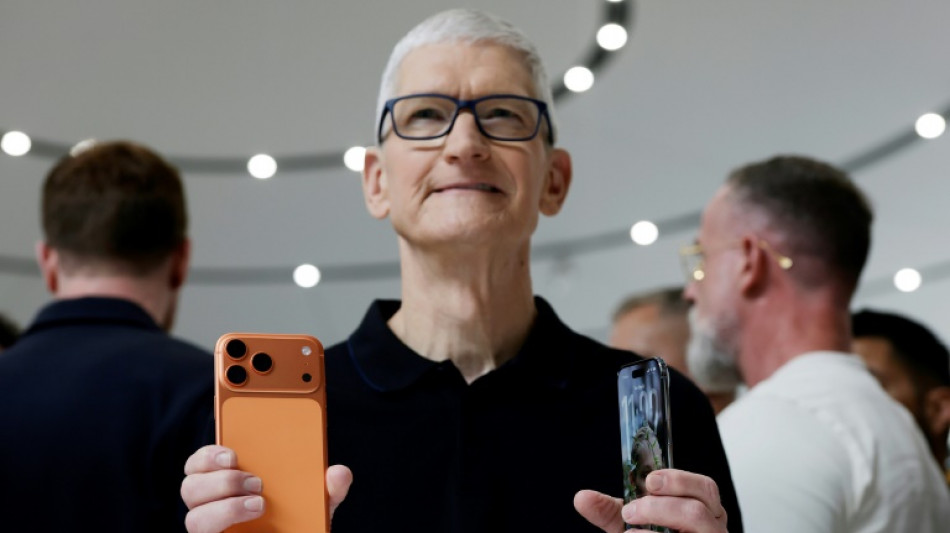
Apple's move to eSIM-only strengthens global trend / Photo: JUSTIN SULLIVAN - GETTY IMAGES NORTH AMERICA/AFP

 أليكس بودي والبروفيسور الدكتور شتيفان هاوبت يتفقان على التعاون من أجل مجموعة فنية أسطورية في رومانيا

 Alex Bodi și prof. dr. Stefan Haupt încheie un acord de cooperare pentru o colecție de artă legendară în România
 Blueberry Strengthens MENA Presence with CMA Category 5 License and Dubai Office Launch
 In first, French presidential candidate gives birth during campaign

 A Full Moon for Every Child: STARTRADER's STARCARES Brings Support to SOS Children's Village Ho Chi Minh City

 Mongolian herders enlist new tech against harsher, drier climate
 Tata turmoil shines light on India succession woes
 OMP and PwC Alliance Moves Process Manufacturers from Siloed Supply Chain Planning to Unified Decisions
 Chile's Atacama Desert blossoms with life after El Nino rains

 Drug cocktail killed former child star Hayden Panettiere: coroner

 Trump rejects international regulation of AI

 Oil prices slide, AI stock buzz fades

 Quoin Pharmaceuticals Announces FDA Fast Track Designation for QRX003 for the Treatment of Peeling Skin Syndrome

 Tunisia says 2026 summer hottest on record

 Houthis accuse Saudi Arabia of deadly strikes as thousands flee

 STARTRADER Expands Its Chinese Equity CFD Range with CXMT and Unitree Robotics

 MEXC Expands Opportunity Compass with Stock Trading Handbook to Help Crypto Users Build Investment Knowledge

 Typhoon Dujuan leaves four dead in Japan, 45,000 houses without power

 Stocks rise on AI buzz, drop in oil prices

 UK king braces as memoir by Diana's brother goes on sale

 Infantino proposes consulting federations to reform FIFA

 South Africa arrests three more suspects, after nine women murdered
 Paramount settles with US states to clear Warner Bros. mega-merger
 Climate crisis a job for world leaders, not just activists: UK FM
 COP31 host says AI's climate footprint to be a summit priority

Apple's Tuesday announcement that the new iPhone 17 Air will only be available around the world without physical SIM cards marks a new advance for the virtual eSIM technology the firm has relied on in the US for years.
- What is an eSIM? -
Physical SIM cards contain all the information a phone needs to connect to a mobile network using the contract and number of a specific subscriber.
Users have been slotting the fingernail-sized plastic cards into their phones for decades when setting up a new handset, switching providers, or traveling.
eSIMs contain digital data with the same information as physical SIM cards, providing a "secure means for authenticating devices onto networks," the GSMA global standards-setting body says.
Most handsets released in recent years are capable of working with eSIMs, although many still offer a physical SIM slot as well.
Users can set up a new device or transfer eSIMs between phones through methods including scanning an operator-provided QR code, requesting a notification or text message from their network, or selecting the option to transfer an eSIM in their old phone's settings.
- How is using an eSIM different? -
Purely digital eSIMs can be downloaded remotely, simplifying tasks like signing up with a new network provider or switching operators—for example, to connect to a cheaper local network when traveling.
Using them also saves on plastic waste and distribution costs.
But setting up eSIMs in the first place requires internet access—meaning users firing up a new phone might need to connect to their home Wi-Fi network to activate their connection.
And travelers should activate their local eSIM in advance if they want service from the moment the plane lands at their destination.
Just like with physical SIMs, eSIMs can be activated or deactivated by the user on the handset—meaning that in theory they are no more or less trackable by operators or governments.
- Why has Apple pushed for eSIMs? -
Apple dropped physical SIM cards in the US starting with 2022's iPhone 14.
The tech giant's website promises "greater flexibility, enhanced convenience, better security, and seamless connectivity" for eSIM users.
Fewer physical parts "fits in with the vision of a slimmer, easier-to-use phone" long pursued by Apple, CCS Insight analyst Kester Mann told AFP.
On the business side, "perhaps they want a little bit more control over the journey to connect customers" to mobile operators when setting up a new phone, he added.
Consultancy Roland Berger agreed, suggesting in a report last year that eSIMs allow manufacturers to get between mobile operators and end users, "causing [operators] to lose control."
- What about other manufacturers? -
While competitors like Samsung have yet to release an eSIM-only phone, "the expectation is that they'll also go down that route as well," Mann said.
Google's latest Pixel 10 phones come in an eSIM-only version in the US.
"eSIM adoption is expected to gain traction... in the short-to-mid-term," Roland Berger predicted, forecasting 75 percent of all smartphone connections via eSIM in 2030, up from 10 percent in 2023.
CCS predicts the number of eSIM-capable handsets will grow from 1.3 billion currently to 3 billion in 2030.
- What impact have eSIMs had so far? -
In a survey of mobile network managers, Roland Berger found little sign of higher customer "churn" from the greater ease of switching providers.
Future uses of eSIM could include mobile operators offering subscribers more individually tailored services, the consultancy suggested.
For tourism, CCS Insight predicts local eSIM sales will rise from 70 million in 2024 to 280 million by 2030.
Providers such as Airalo and Holafly have sprung up to sell cheap foreign connectivity to tourists—although big incumbents like airlines and mobile operators are beginning to offer their own alternatives.
eSIMs also simplify machine-to-machine (M2M) communication, allowing remote setup or reconfiguration of connected devices—from watches to cars or smart electricity meters.
Y.Ibrahim--CPN