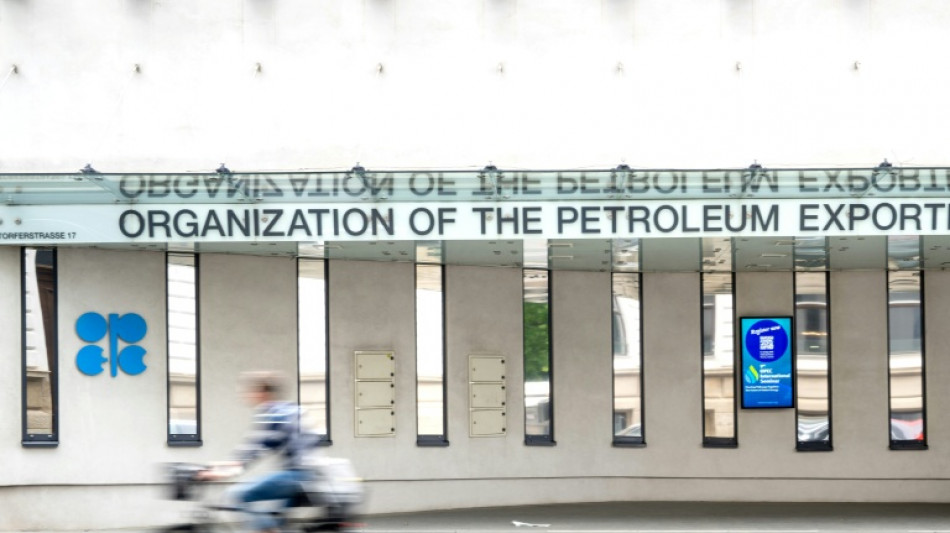
Tough negotiations and uncertainty ahead of OPEC+ meeting / Photo: JOE KLAMAR - AFP/File

 Archaelogical 'breakthrough' could confirm origins of Paris
 Fendi brings disco bling, Italian style, to Milan Fashion Week

 アレックス・ボディ氏とシュテファン・ハウプト教授、ルーマニアの伝説的な美術コレクションをめぐり提携に合意

 Stocks dip, oil rises as traders eye chances of Iran deal

 Oil falls, stocks steady as Trump hails 'good' Iran talks
 Canada judge to decide prison term for suicide poison seller

 Meta leans into AI, smart glasses amid privacy pushback
 Oil prices fall after Trump hails 'good' talks with Iran
 AI political ads warp reality ahead of US midterms

 Oil prices retreat as markets welcome US-Iran talks
 French prosecutors probe secret filming of women with smart glasses
 Trump renames AI "super intelligence," rejects international oversight
 How is the EU approaching record fuel prices?

 11 hurt as teen opens fire outside school in western Turkey

 UN chief says 'Big Oil' treats atmosphere as open sewer
 Memoir by Diana's brother goes on sale after rocking UK monarchy
 Stocks climb as oil slides, AI buzz returns

 MEXC Launches “Real Stocks, Real Friends” with Rewards for Bringing Friends to Wall Street

 Stocks rise on AI buzz, oil prices cool
 In Bangladesh, Pakistan's Jinnah photo stirs anger

 China's robot dancers limber up for America's Got Talent final
 Green policies just good politics, says UK minister
 El Nino weather pattern enters record territory: scientist
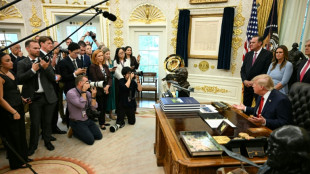 US networks halt Trump coverage in revolt over White House ban

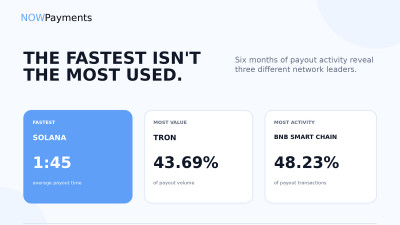 NOWPayments Releases Cross-Chain Payout Data Revealing Key Performance Benchmarks Across TRON, BNB Chain, and Solana

Uncertainty loomed over what Saudi Arabia, Russia and six other key members of the OPEC+ alliance would decide on crude output in their meeting on Sunday, with analysts saying a production boost was also being considered.
The meeting by the group of eight oil-producing countries known as the "Voluntary Eight" (V8) comes as oil prices extended losses in anticipation of excess supply in the coming months.
In a bid to prop up prices, the wider OPEC+ group -- comprising the 12-nation Organization of the Petroleum Exporting Countries (OPEC) and its allies -- had agreed in recent years to several output cuts that amounted to almost six million barrels per day (bpd) in total.
Since April, the V8 group -- namely Saudi Arabia, Russia, Iraq, United Arab Emirates, Kuwait, Kazakhstan, Algeria and Oman -- has made a marked policy shift, placing increased focus on regaining market share and agreeing on a series of output hikes.
A week ago, analysts said the V8 nations were likely to maintain their current output levels in October.
Oil prices have hovered around a low $65-$70 per barrel, tumbling 12 percent this year as global producers outside OPEC+ ramp up supply and tariffs curb demand.
According to Jorge Leon, an analyst at Rystad Energy, demand for oil is expected to fall in the fourth quarter, with "seasonal demand tending to be lower" than during the northern hemisphere's summer months.
Even if the group does not boost production, excess supply will gradually lead to lower prices, he told AFP.
- Market surplus -
But since Wednesday, "some market chatter suggested the group may opt for another quota adjustment for October", said Ole Hansen, an analyst at Saxo Bank.
Such a decision "would mean that (the group is) really serious about regaining market share", said Leon, even if it means seeing prices fall below $60 a barrel.
Moreover, "OPEC's own analysis actually indicates that there is room for more oil in the market in the coming quarters", said analyst Arne Lohmann Rasmussen of Global Risk Management.
"That fact alone may have encouraged the cartel to consider (reintroducing into the market) a second layer of voluntary production cuts," he said, referring to reductions of 1.66 million bpd that were agreed in spring 2023.
So far, crude prices have held up better than most analysts had predicted since the production increases began, due in particular to looming geopolitical risks that have supported prices.
- Geopolitical turmoil -
Meanwhile, oil specialists are keeping a close eye on Moscow's war in Ukraine as well as developments regarding US-Russia relations.
US President Donald Trump, whose efforts to mediate between Russia and Ukraine have failed to produce a breakthrough, has recently targeted Russian oil and those who buy it.
In August, he imposed higher tariffs on India as punishment for its purchases of Russian oil.
In a meeting with allies of Ukraine who gathered in Paris on Thursday, Trump told leaders via a video conference that he was frustrated with EU purchases of Russian oil, particularly by Hungary and Slovakia.
A senior White House official told AFP on condition of anonymity that Trump had insisted "Europe must stop purchasing Russian oil that is funding the war".
He also called on European countries to put economic pressure on China for its support of Russia's war effort, as Beijing is the largest importer of Russian oil.
Curbing Russian exports could free up market space for OPEC+ nations.
But Russia, the second-largest producer after Saudi Arabia, would probably find it difficult to take advantage of a further increase in quotas due to its interest in maintaining "high oil prices to finance its war in Ukraine", Lohmann Rasmussen said.
D.Avraham--CPN