'Restoring dignity': Kenya slum exchange offers water for plastic / Photo: Tony KARUMBA - AFP

 Australian PM says OpenAI hacked government health website

 Rio breaks record for rainiest September amid powerful El Nino
 Mandela Digital Extends Early Access Programme to 11 February 2027 Following Strong Response

 McDonald's to boost franchisees as inflation weighs on consumers

 Archaelogical 'breakthrough' could confirm origins of Paris

 Fendi brings disco bling, Italian style, to Milan Fashion Week
 アレックス・ボディ氏とシュテファン・ハウプト教授、ルーマニアの伝説的な美術コレクションをめぐり提携に合意
 Stocks dip, oil rises as traders eye chances of Iran deal

 Oil falls, stocks steady as Trump hails 'good' Iran talks

 Canada judge to decide prison term for suicide poison seller

 Meta leans into AI, smart glasses amid privacy pushback
 Oil prices fall after Trump hails 'good' talks with Iran

 AI political ads warp reality ahead of US midterms

 Oil prices retreat as markets welcome US-Iran talks
 French prosecutors probe secret filming of women with smart glasses

 Trump renames AI "super intelligence," rejects international oversight
 How is the EU approaching record fuel prices?

 11 hurt as teen opens fire outside school in western Turkey

 UN chief says 'Big Oil' treats atmosphere as open sewer
 Memoir by Diana's brother goes on sale after rocking UK monarchy
 Stocks climb as oil slides, AI buzz returns

 MEXC Launches “Real Stocks, Real Friends” with Rewards for Bringing Friends to Wall Street

 Stocks rise on AI buzz, oil prices cool
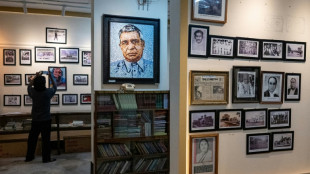 In Bangladesh, Pakistan's Jinnah photo stirs anger

 China's robot dancers limber up for America's Got Talent final

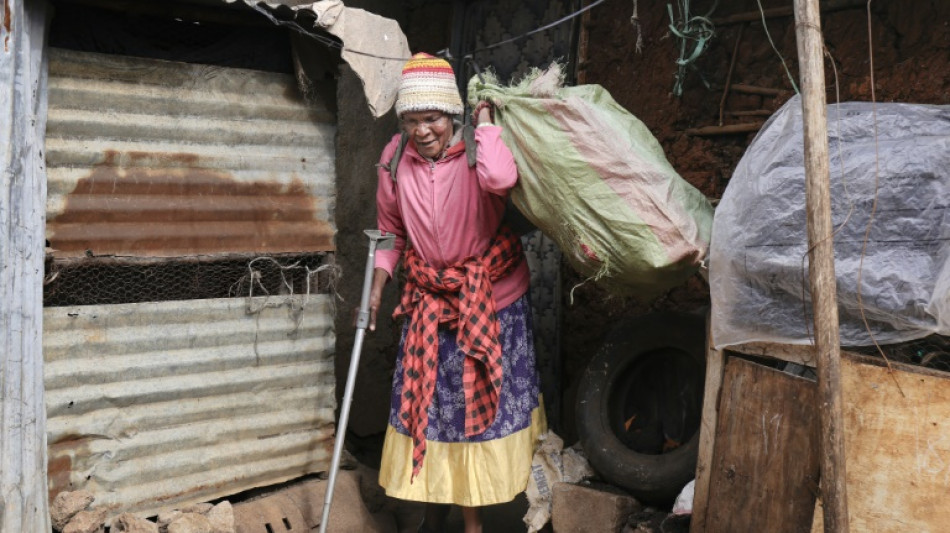
Using a crutch to bear her weight, 85-year-old Molly Aluoch trudges from her mud-walled room on the outskirts of a sprawling Nairobi slum, shouldering a sack of used plastic to exchange for a shower or a safe toilet.
For the 31 years she has lived in Kibera, Kenya's largest informal settlement, water and sanitation have remained scarce and costly -- often controlled by cartels who charge residents prices beyond their means.
The Human Needs Project (HNP) seeks to mitigate that. Residents can trade discarded plastic for "green points", or credits, they can redeem for services such as drinking water, toilets, showers, laundries and even meals.
"With my green points, I can now access a comfortable and clean toilet and bathroom any time of the day," Aluoch said.
Before, she would spend 10 shillings (eight US cents) to use a toilet and another 10 for a bathroom, a significant chunk from the residents' average daily income, 200 to 400 shillings, before food and housing costs.
"It meant that without money, I would not use a toilet," she said.
Unable to use Kibera's pit latrines owing to her frailty meant she would have to resort to "unhygienic means".
Now, that money goes towards food for her three grandchildren.
Aluoch, a traditional birth attendant, is among some 100 women who collect plastics for green points, helping them access water, sanitation, and hygiene services.
She takes her plastic to a centre 200 metres (yards) from her home, where one kilogramme of recyclable plastics earns 15 green points, equivalent to 15 shillings.
The project serves some 800 residents daily, allowing them access to modern bathrooms, clean water and menstrual hygiene facilities -- services that are out of reach for many Kibera households.
Since 2015, the project has distributed more than 50 million litres (13 million gallons) of water and more than one million toilet and shower uses.
In 2024 alone, it distributed 11 million litres of water and enabled 124,000 bathroom and toilet uses.
- 'Days without water' -
With water a scarce commodity in Kibera, it is common for vendors to create artificial shortages to inflate prices, forcing residents to pay more than 10 times the normal price.
The city's water service charges between $0.60 and $0.70 per cubic metre for connected households, but by comparison, Kibera residents have to stump up as much as $8 to $19 for the same amount.
"Getting water was hard. We could go several days without water," said Magret John, 50, a mother of three.
Today, her reality is different.
"The water point is at my doorstep. The supply is steady and the water is clean. All I need is to collect plastics, get points, redeem and get water," she said.
John, who has lived in Kibera for nine years, says the project has been a game changer, especially for women and girls.
"Access to proper sanitation services guarantees women and girls their dignity during menstruation."
Now, with 10 water points spread across Kibera -- pulled from a borehole with a daily capacity of half a million litres -- NHP shields some residents from informal vendors' exploitative pricing.
The project's dual mission is to meet basic human needs while tackling Kibera's mounting waste problem.
HNP's director of strategic partnerships Peter Muthaura said it helps to improve health and the daily living conditions in Kibera.
"When people cannot access dignified toilets and bathrooms, the environment bears the impact," he said.
It also fosters development, he said.
In the first quarter of 2025 alone, Kibera residents delivered two tonnes of recyclable plastic, with around 250 women directly engaged in daily collection and delivery.
For Aluoch, every sack of plastics and every green point earned goes beyond clean water and sanitation: it restores a sense of dignity.
"My prayer is that this project spreads to every corner of Kibera, and reaches thousands of women whose dignity has been robbed by a lack of sanitation services," she said.
D.Goldberg--CPN