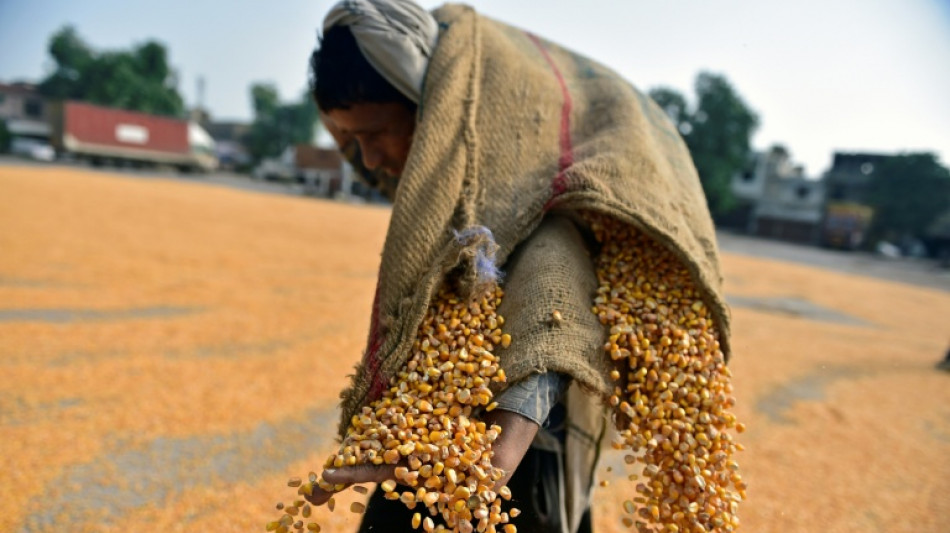
India exporters say 50% Trump levy a 'severe setback' / Photo: Shammi MEHRA - AFP

 As Moscow steps up attacks, Kyiv residents brace for harsh winter

 Markets mixed as China's Xi arrives for US talks
 Archaeological 'breakthrough' could confirm origins of Paris

 Australian PM says OpenAI hacked government health website

 Rio breaks record for rainiest September amid powerful El Nino
 Mandela Digital Extends Early Access Programme to 11 February 2027 Following Strong Response

 McDonald's to boost franchisees as inflation weighs on consumers
 Archaelogical 'breakthrough' could confirm origins of Paris
 Fendi brings disco bling, Italian style, to Milan Fashion Week

 アレックス・ボディ氏とシュテファン・ハウプト教授、ルーマニアの伝説的な美術コレクションをめぐり提携に合意

 Stocks dip, oil rises as traders eye chances of Iran deal

 Oil falls, stocks steady as Trump hails 'good' Iran talks

 Canada judge to decide prison term for suicide poison seller

 Meta leans into AI, smart glasses amid privacy pushback
 Oil prices fall after Trump hails 'good' talks with Iran
 AI political ads warp reality ahead of US midterms

 Oil prices retreat as markets welcome US-Iran talks
 French prosecutors probe secret filming of women with smart glasses

 Trump renames AI "super intelligence," rejects international oversight
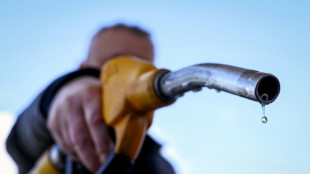 How is the EU approaching record fuel prices?

 11 hurt as teen opens fire outside school in western Turkey

 UN chief says 'Big Oil' treats atmosphere as open sewer
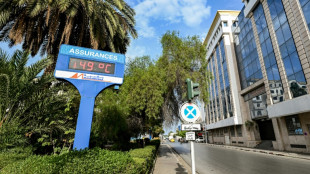
 Memoir by Diana's brother goes on sale after rocking UK monarchy

 Stocks climb as oil slides, AI buzz returns

 MEXC Launches “Real Stocks, Real Friends” with Rewards for Bringing Friends to Wall Street

Indian exporters warned on Thursday that the cost of additional US tariffs risked making businesses "not viable" after President Donald Trump ordered steeper levies totalling 50 percent on imported Indian goods.
Prime Minister Narendra Modi said he was willing to "pay a great personal price", while opposition Congress party leader Rahul Gandhi called the levies "economic blackmail" and "an attempt to bully India into an unfair trade deal".
Stocks opened marginally lower on Thursday, with the benchmark Nifty index down 0.31 percent after an initial 25 percent US tariff came into effect.
That levy will be doubled in three weeks after Trump signed an order on Wednesday to impose an additional 25 percent tariff because of New Delhi's continued purchases of Russian oil, a key revenue source for Moscow's war in Ukraine.
India is the second-largest buyer of Russian oil, saving itself billions of dollars on discounted crude.
India's foreign ministry condemned Trump's announcement of further tariffs, calling the move "unfair, unjustified and unreasonable".
S.C. Ralhan, president of the Federation of Indian Export Organisations, said he feared a troubling impact.
"This move is a severe setback for Indian exports, with nearly 55 percent of our shipments to the US market directly affected," he said in a statement.
"The 50 percent reciprocal tariff effectively imposes a cost burden, placing our exporters at a 30–35 percent competitive disadvantage compared to peers from countries with lesser reciprocal tariff."
Ralhan said "many export orders have already been put on hold" as buyers reassess sourcing decisions.
Profit margins for "a large number" of small- to medium-sized enterprises profit "are already thin", he said.
"Absorbing this sudden cost escalation is simply not viable," he said.
India, the world's fifth-largest economy and most populous nation, is bracing for a bumpy ride because the United States is its largest trading partner, with New Delhi shipping goods worth $87.4 billion in 2024.
"If the extra 25 percent tariff that President Trump has announced on imports from India remains in place, India's attractiveness as an emerging manufacturing hub will be hugely undermined," Shilan Shah of Capital Economics said in a note.
US spending drives around 2.5 percent of India's GDP, Shah said.
A 50 percent tariff is "large enough to have a material impact", he said, with the resulting drop in exports meaning the economy would grow by closer to six percent this year and next, down from the seven percent they currently forecast.
- Drug, gems, seafood -
India's top exports include smart phones, drugs, gems, textiles and industrial machinery, with some of the most labour-intensive goods -- including jewellery and seafood -- under threat.
The Seafood Exporters Association of India said on Wednesday that the 50 percent tariff "imperils" its $3 billion business.
India's jewellery sector, which exported goods worth more than $10 billion last year, had already warned of job losses potentially hitting "thousands" at lower levy levels. It called the higher rate "devastating".
A key sticking point for India has been its reluctance to fully open its agriculture, a sector that employs vast numbers of people, to US imports.
Modi said in a speech on Thursday that "India will never compromise on the interests of its farmers".
He said he would "have to pay a great personal price, but I am ready for it", without giving further details.
It seemed a far cry from India's early hopes for special tariff treatment. Trump said in February he found a "special bond" with Modi when the Indian leader visited Washington.
Successive US administrations have seen India as a key partner that has like-minded interests with regard to China.
India and China are intense rivals competing for strategic influence across South Asia.
Indian media has reported that Modi might visit long-time rival China in late August. The trip has not been confirmed by officials but it would be his first visit to China since 2018.
Modi and China's President Xi Jinping last met in Russia in October 2024.
H.Müller--CPN