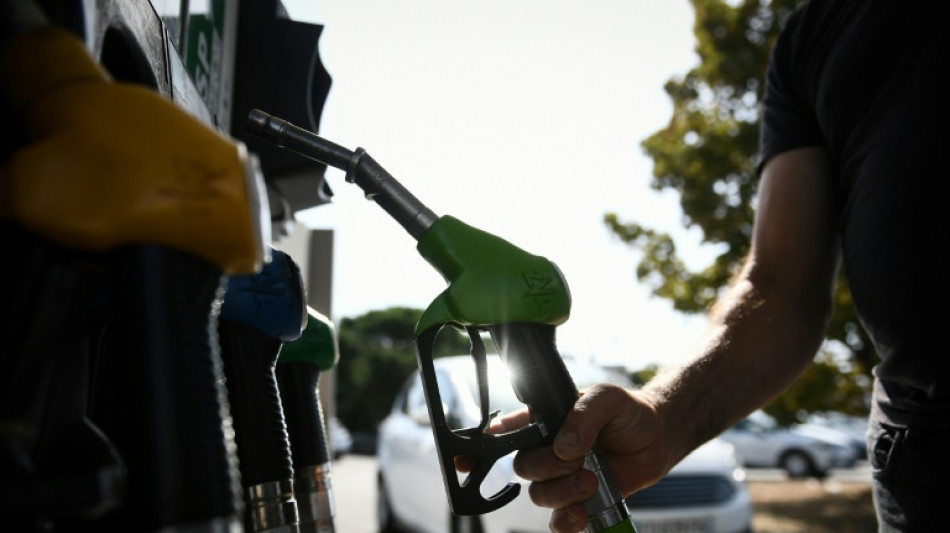
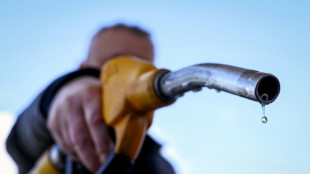
OPEC+ slated to increase oil output in bid to regain market share / Photo: Valentine CHAPUIS - AFP/File

 Forex Expo Dubai 2026 Breaks Guinness World Record Again With 23,816 Attendees

 Asian markets fall on US-China jitters as leaders meet
 As Moscow steps up attacks, Kyiv residents brace for harsh winter
 Markets mixed as China's Xi arrives for US talks
 Archaeological 'breakthrough' could confirm origins of Paris

 Australian PM says OpenAI hacked government health website

 Rio breaks record for rainiest September amid powerful El Nino
 Mandela Digital Extends Early Access Programme to 11 February 2027 Following Strong Response

 McDonald's to boost franchisees as inflation weighs on consumers
 Archaelogical 'breakthrough' could confirm origins of Paris
 Fendi brings disco bling, Italian style, to Milan Fashion Week

 アレックス・ボディ氏とシュテファン・ハウプト教授、ルーマニアの伝説的な美術コレクションをめぐり提携に合意

 Stocks dip, oil rises as traders eye chances of Iran deal

 Oil falls, stocks steady as Trump hails 'good' Iran talks
 Canada judge to decide prison term for suicide poison seller

 Meta leans into AI, smart glasses amid privacy pushback
 Oil prices fall after Trump hails 'good' talks with Iran
 AI political ads warp reality ahead of US midterms

 Oil prices retreat as markets welcome US-Iran talks
 French prosecutors probe secret filming of women with smart glasses

 Trump renames AI "super intelligence," rejects international oversight
 How is the EU approaching record fuel prices?

 11 hurt as teen opens fire outside school in western Turkey

 UN chief says 'Big Oil' treats atmosphere as open sewer
 Memoir by Diana's brother goes on sale after rocking UK monarchy
Saudi Arabia, Russia and six other key members of the OPEC+ alliance are expected to further hike oil production in a meeting Sunday, a move analysts say is aimed at regaining market share amid resilient crude prices.
The anticipated output increase by the group of eight oil-producing countries known as the "Voluntary Eight" (V8), would be the latest in a series of hikes that began in April.
In a bid to boost prices, the wider OPEC+ group -- comprising the 12-nation Organization of the Petroleum Exporting Countries (OPEC) and its allies -- in recent years had agreed to three different tranches of output cuts that amounted to almost 6 million barrels per day (bpd) in total.
Analysts expect the V8 group -- namely Saudi Arabia, Russia, Iraq, United Arab Emirates, Kuwait, Kazakhstan, Algeria and Oman -- to agree on another output increase of 548,000 bpd for September, a target similar to the one approved in August.
According to UBS analyst Giovanni Staunovo, the likely "quota increase is largely priced in" already, with the price of Brent, the global benchmark for oil, expected to remain near its current level of around $70 per barrel after Sunday's decision.
Since April, the V8 group has placed increased focus on regaining market share over price stability, a policy shift after years of enforcing production cuts to prop up prices.
- Likely pause in output hikes -
But it remains unclear which strategy the group intends to pursue after Sunday's meeting.
According to Warren Patterson, an analyst at ING, the V8 nations will likely "take a pause in supply hikes after September".
Crude prices have held up better than most analysts had predicted since the production increases began.
Experts say that is mainly due to traditionally high summer demand and significant geopolitical risk premiums being built into prices, particularly since the 12-day Iran-Israel war.
Moreover, the actual increase in production between March and June was less than the increase in quotas during the same period, said Staunovo, quoting OPEC sources.
However, the market is "set to move into large surplus" of oil supply from October, Patterson noted, warning that OPEC+ should remain careful not to be "adding to this surplus".
"OPEC+ is doing the balancing act of regaining market share and not sending oil prices plummeting", which would lead to a drop it profits, Tamas Varga, an analyst at PVM, told AFP.
Saudi Arabia, the group's most influential member, relies heavily on oil revenues to finance its ambitious plan aimed at diversifying the economy.
The unwinding of another set of production cuts of around 3.7 million bpd is to be discussed at the next OPEC+ ministerial meeting in November.
- Unstable environment -
With demand being unstable in the face of US President Donald Trump's erratic policymaking on trade and supply under threat by geopolitical risks, experts say it is difficult to predict what is next for the oil market.
In the latest twist in late July, Trump gave Moscow ten days to end the war in Ukraine, saying that his country would otherwise impose sanctions on Russia.
"We're gonna put on tariffs and stuff," he vowed.
Trump had previously hinted to an indirect 100-percent surcharge on countries that continue to buy Russian products, particularly hydrocarbons, in order to dry up Moscow's revenues.
He has specifically targeted India, the second largest importer of Russian oil at around 1.6 million bpd since the beginning of the year.
The developments could prompt OPEC+ to make further policy decisions.
However, "OPEC+ will react only to real supply disruptions" and not to price increases linked to risk premiums, said Staunovo.
P.Schmidt--CPN