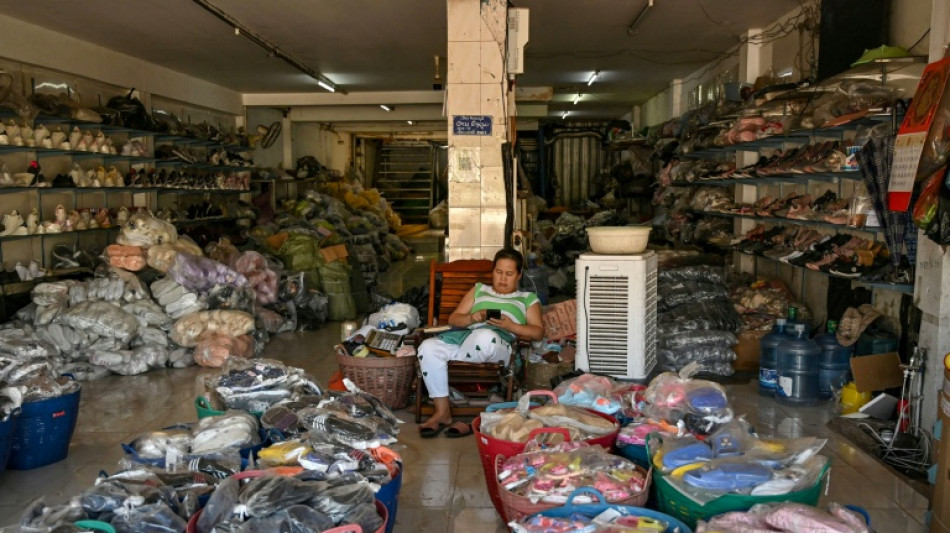
Laos braced for blow of Trump tariff threat / Photo: Nhac NGUYEN - AFP/File

 Hungary detects invasive spotted lanternfly for first time in EU
 Forex Expo Dubai 2026 Breaks Guinness World Record Again With 23,816 Attendees

 Asian markets fall on US-China jitters as leaders meet
 As Moscow steps up attacks, Kyiv residents brace for harsh winter
 Markets mixed as China's Xi arrives for US talks
 Archaeological 'breakthrough' could confirm origins of Paris

 Australian PM says OpenAI hacked government health website

 Rio breaks record for rainiest September amid powerful El Nino
 Mandela Digital Extends Early Access Programme to 11 February 2027 Following Strong Response

 McDonald's to boost franchisees as inflation weighs on consumers
 Archaelogical 'breakthrough' could confirm origins of Paris
 Fendi brings disco bling, Italian style, to Milan Fashion Week
 アレックス・ボディ氏とシュテファン・ハウプト教授、ルーマニアの伝説的な美術コレクションをめぐり提携に合意
 Stocks dip, oil rises as traders eye chances of Iran deal

 Oil falls, stocks steady as Trump hails 'good' Iran talks

 Canada judge to decide prison term for suicide poison seller

 Meta leans into AI, smart glasses amid privacy pushback
 Oil prices fall after Trump hails 'good' talks with Iran
 AI political ads warp reality ahead of US midterms

 Oil prices retreat as markets welcome US-Iran talks
 French prosecutors probe secret filming of women with smart glasses

 Trump renames AI "super intelligence," rejects international oversight
 How is the EU approaching record fuel prices?

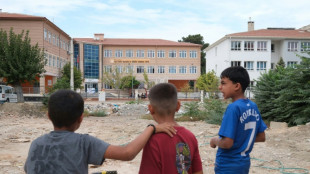 11 hurt as teen opens fire outside school in western Turkey

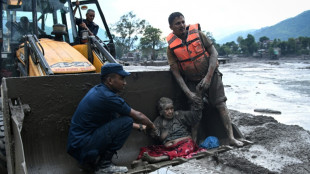 UN chief says 'Big Oil' treats atmosphere as open sewer
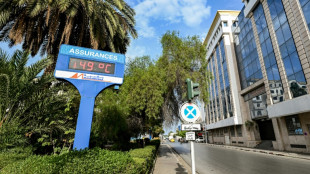
Hawking clothes outside the garment factory where her daughter toils inside, a Laos vendor weighs US President Donald Trump's threat of trade tariffs that may soon snarl both their livelihoods.
"I just live day by day. For now, I still have my business, and the factory is operating as usual," she told AFP, speaking on condition of anonymity in the capital Vientiane.
"I'm not too worried about my daughter's job yet," she added. Then again, she says: "I don't know anything about what the US will decide."
Landlocked Laos -- a country of only eight million -- has a gloomy outlook as it counts down to a Friday deadline when Trump says a 40 per cent levy will kick in unless a trade deal is sealed.
The rate is among the highest Trump has touted in his global tariff blitz, which has yielded a handful of deals with countries including Britain, Japan and Vietnam but left dozens others scrambling for a pact.
Laos has limited exports, little leverage and supply chains deeply entwined with US trade rival China.
The United States had a trade deficit of more than $760 million with Laos last year -- singling it out for steep tolls alongside other nations Trump sees as imbalanced business partners.
"A 40 percent tariff is just a nail in the coffin for any industry trying to ship to the United States," said John F. Somers, head of garment manufacturing firm Diep Vu Co.
Only a handful of factories, mostly in the capital, supply the US market and sales make up only between three and six percent of the country's gross domestic product.
But with the Southeast Asian country already suffering from high inflation and a severe labour shortage, Trump's default tariff could still have a devastating effect, industry insiders say.
- 'Cause for suspicion' -
"We estimate about 20,000 workers or more could be impacted," said Xaybandith Rasphone, head of the Association of the Lao Garment Industry.
"We're not certain about the exact number yet, but it could easily be higher if companies shut down," said Xaybandith, who is also vice-president of the Lao National Chamber of Commerce and Industry (LNCCI).
He warned between 35 and 40 factories could be affected if buyers are spooked by the tariffs.
"If the tariff stays in place, some factories will definitely close," he said. "Finding alternative markets takes time, negotiations and a lot of effort. It could take years."
Like neighbouring Cambodia and Vietnam, Laos is a hub of the garment industry -- producing brands for western markets including Dr. Martens.
But the production of mattresses, silicone products and solar panels also stands to be impacted.
Solar panel manufacturing has exploded in Laos since 2023 and driven up its export figures after Trump hit China with a 50 percent tariff on the renewable power sources.
However the US trade offensive has focussed on "transshipment" -- a practice it alleges some countries use to help China dodge American tariffs by repackaging its goods for American markets.
Casey Tolzman, head of the Lao-American Business Association (LABA), said the explosion of Laos' solar industry had likely been "a cause for suspicion" in Washington.
- 'A big question' -
Rules governing the source of materials and the level of Laotian labour required to define products as domestically produced may prove the country's biggest bargaining chip.
"A big question for countries like Cambodia and Laos is what they can offer the US that's attractive enough to reach a deal," Tolzman said.
"Any deal would probably need to see Laos enforce stricter rules on transshipment and country of origin, to ensure products aren't just coming from China and getting a Laos label slapped on."
The US may also ask Vientiane to crack down on internet scam centres targeting wealthy Americans from compounds in Laos, or seek concessions for American goods to enter the market, he added.
The LABA and LNCCI say they are helping the government draft an appeal asking for tariffs to drop back to previous levels, or at least be capped at 20 percent.
But Diep Vu Co boss Somers warns even if Laos manages to reach a deal with Washington, a bigger test soon lies ahead.
Laos is on track to graduate from "Least Developed Country" status next year, meaning it is set to lose duty-free access to the European Union -- dealing another blow.
"We'll be at a competitive disadvantage, our industry will probably collapse within a few years," Somers warned.
"The real discussion is the EU relationship with Laos, not just what the US is doing."
Y.Uduike--CPN