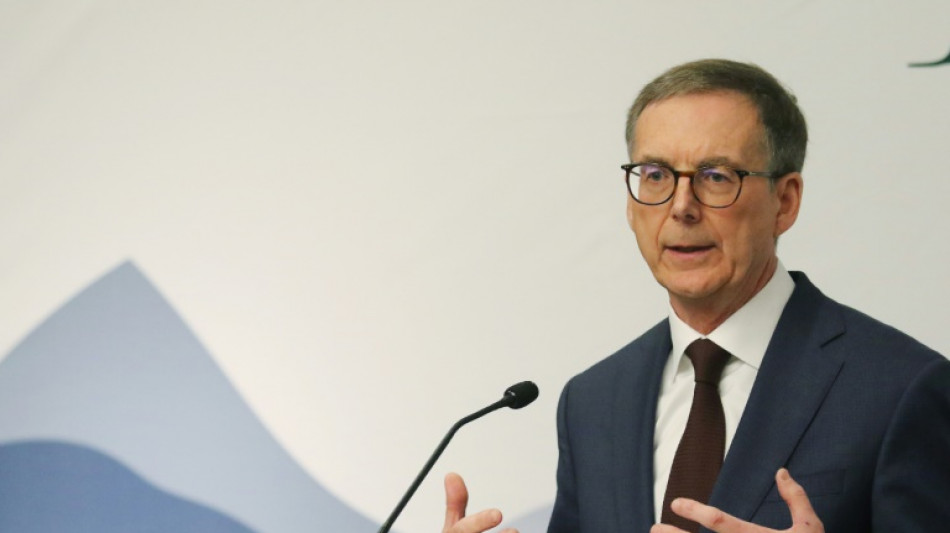
Canada central bank holds rate steady citing US tariff 'threats' / Photo: Dave Chidley - AFP

 Hungary detects invasive spotted lanternfly for first time in EU

 Forex Expo Dubai 2026 Breaks Guinness World Record Again With 23,816 Attendees

 Asian markets fall on US-China jitters as leaders meet
 As Moscow steps up attacks, Kyiv residents brace for harsh winter

 Markets mixed as China's Xi arrives for US talks

 Archaeological 'breakthrough' could confirm origins of Paris

 Australian PM says OpenAI hacked government health website

 Rio breaks record for rainiest September amid powerful El Nino
 Mandela Digital Extends Early Access Programme to 11 February 2027 Following Strong Response

 McDonald's to boost franchisees as inflation weighs on consumers
 Archaelogical 'breakthrough' could confirm origins of Paris
 Fendi brings disco bling, Italian style, to Milan Fashion Week

 アレックス・ボディ氏とシュテファン・ハウプト教授、ルーマニアの伝説的な美術コレクションをめぐり提携に合意

 Stocks dip, oil rises as traders eye chances of Iran deal

 Oil falls, stocks steady as Trump hails 'good' Iran talks

 Canada judge to decide prison term for suicide poison seller

 Meta leans into AI, smart glasses amid privacy pushback
 Oil prices fall after Trump hails 'good' talks with Iran

 AI political ads warp reality ahead of US midterms

 Oil prices retreat as markets welcome US-Iran talks

 French prosecutors probe secret filming of women with smart glasses

 Trump renames AI "super intelligence," rejects international oversight
 How is the EU approaching record fuel prices?

 11 hurt as teen opens fire outside school in western Turkey

 UN chief says 'Big Oil' treats atmosphere as open sewer
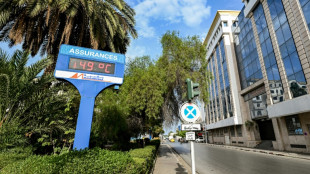
Canada's central bank held its key lending rate at 2.75 percent on Wednesday, as the major US trading partner confronts economic uncertainty two days before President Donald Trump's latest tariff deadline.
Canada remains uniquely vulnerable to Trump's trade war given the deep, broad ties between the neighboring economies.
Trump's threat to hike tariffs to 35 percent on certain goods if no new trade deal is reached by Friday could wreak further havoc across a Canadian economy already strained by US protectionism.
"Let's hope there's an agreement between Canada and the United States. Let's hope it's a good agreement," Bank of Canada Governor Tiff Macklem told reporters after announcing the rate pause.
He conceded, however, that "there is a sense that US policy may well remain unpredictable."
"There's a sense that...it's going to be hard to restore that trust," in the United States as an economic partner, he added.
A statement from the bank said that "while some elements of US trade policy have started to become more concrete in recent weeks, trade negotiations are fluid (and) threats of new sectoral tariffs continue."
- Tariffs unknown -
Canada was the first G7 country to begin cutting rates last year, following several hikes to tame pandemic-fuelled inflation.
But Wednesday marked the bank's third consecutive pause, caution largely driven by Trump's policies.
"It's hard to be as forward-looking as usual when you've got an unusual amount of uncertainty," Macklem said.
A central bank forecast released Wednesday outlined a scenario where the impact of new US tariffs could be relatively muted, if new levies do not apply to goods compliant with an existing trade deal Trump signed -- and praised -- during his first term.
The bank said 100 percent of energy exports and 95 percent of all other exports, excluding auto parts, could be compliant with the United-States-Mexico-Canada-Agreement (USMCA).
But Trump's auto tariffs are expected to remain in place, bringing further pain to a Canadian sector that has already seen layoffs and shift cuts triggered by the president's push to have more cars made entirely in the United States.
Canada's auto plants are highly integrated with US production sites, with parts crossing back and forth across the border multiple times during assembly.
- Carney cautious -
Canadian Prime Minister Mark Carney has in recent days tried to temper expectations about the prospect of a comprehensive trade deal with the United States.
He has said a tariff-free deal with Washington may not be possible, and that he would not sign an agreement that did not benefit Canada.
The prime minister, who previously led the Bank of Canada and the Bank of England, has also said a recently agreed US-EU pact should not be viewed as a template for Canada.
"There are differences. One is geographic proximity," Carney said this week.
The Bank of Canada did not rule out more rate cuts later this year to help struggling borrowers.
"The Bank appears to be getting a little more comfortable with the notion that the Canadian economy will need the support from further interest rate cuts in the future," CIBC economist Andrew Grantham said in statement, reacting to Wednesday's announcement.
But Macklem stressed the bank would act if it sees tariffs driving inflation.
"We are going to make sure that a tariff problem does not become an inflation problem," he told reporters.
H.Müller--CPN