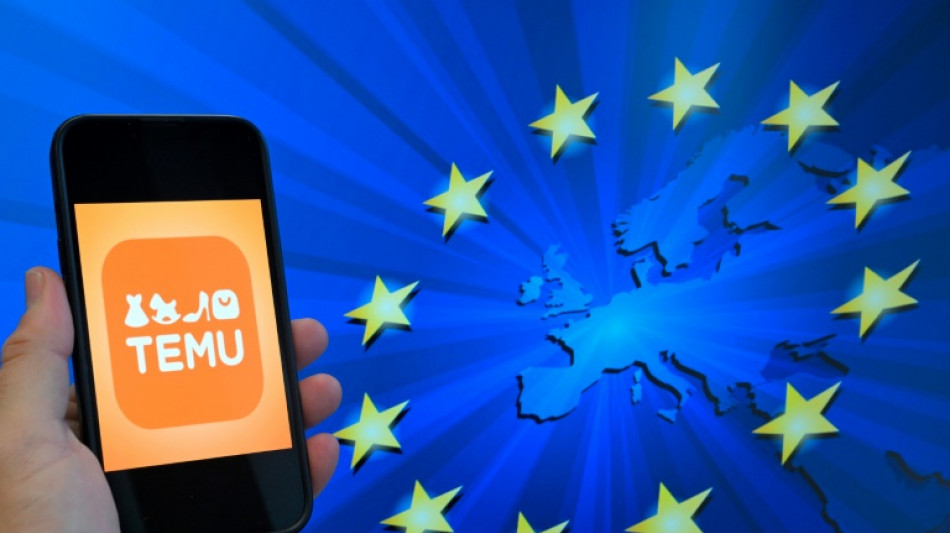
EU accuses online giant Temu over sale of 'illegal' products / Photo: Nicolas TUCAT - AFP/File

 South Lebanon children return to school destroyed by Israel strike

 European stock markets climb as oil prices drop

 Asian markets mixed after recent oil surge

 Cash for nature protection: hotelier's offer to Principe islanders

 India rape cases turn focus back onto women's safety

 Rich nations should foot climate bill, says Nepal minister
 Italy bans burqas in schools, caps numbers of foreign students per class

 Napoli hoping to build new stadium, says owner
 What happens if the US bans diesel exports

 Oscar-winner Cotillard fears being moved by AI actor

 Stocks fall, oil prices rise as global bonds back under pressure

 Streamex Converts Interest Into Capital as GLDY Investment Strategy Secures $1M+ Institutional Allocation

 STARTRADER Named Best Fintech Forex Broker at Forex Expo Dubai 2026
 German think tanks urge Merz to stick with reforms after election defeats

 France's top-selling newspaper to slash jobs

 BaazEX Enters the Asian Trading Market With a New Approach to Online Forex Trading.
 Sao Tome voters want to stop exodus of 'neglected' youth

 Mexican cartels target Australia with their African meth
 Rapper-turned-PM faces first big test after Nepal disaster

 Meta launches camera-free AI glasses amid privacy pushback

 Anthropic touts AI-led biology discovery

 Stocks fall on soaring bond yields, higher oil prices

 ArcPoint Expands Globally with Institutional Intelligence Platform for Modern Investors

 Outgoing UN chief makes final climate push at New York summit

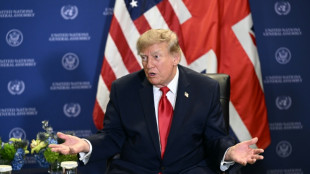 Stocks dip, oil soars despite Trump hailing "productive" Iran talks

The European Union accused Chinese-founded online shopping giant Temu on Monday of breaking the bloc's digital rules by not "properly" assessing the risks of illegal products.
EU regulators believe Temu is not doing enough to protect European consumers from dangerous products and that it may not be acting sufficiently to mitigate risks to users.
"Evidence showed that there is a high risk for consumers in the EU to encounter illegal products on the platform," the European Commission said in its preliminary finding.
It pointed to a mystery shopping exercise that found consumers were "very likely to find non-compliant products among the offer, such as baby toys and small electronics".
Temu said only it would "continue to cooperate fully with the commission".
Wildly popular in the European Union despite only having entered the continent's market in 2023, Temu has 93.7 million average monthly active users in the 27-country bloc.
The EU said Temu's October 2024 risk assessment was "inaccurate and relying on general industry information rather than on specific details about its own marketplace".
Temu is under investigation as part of a mammoth law known as the Digital Services Act (DSA) that forces the world's largest tech firms to do more to protect European consumers online and better police content online.
Temu will now be able to respond to the EU regulators' findings and defend itself, but there is no time limit on how long an investigation may last.
If confirmed to be in breach, the EU can slap a fine on Temu.
Fines under the DSA can go as high as six percent of a company's total worldwide annual turnover and force it to make changes to address violations.
Launched in October, the EU probe continues to investigate other suspected breaches including the use of addictive design features that could hurt users' physical and mental well-being and how Temu's systems recommend content and products.
- EU law under attack -
The DSA is part of the EU's reinforced legal weaponry to curb the excesses of Big Tech, with stricter rules for the world's biggest platforms.
It has faced criticism from the US administration under President Donald Trump.
The Republican-dominated judiciary committee of the US House of Representatives described the DSA in a scathing report as a "foreign censorship threat" on Friday.
Staunch President Donald Trump ally Jim Jordan, committee chair, met EU tech sovereignty chief Henna Virkkunen in Brussels as part of a bipartisan delegation on Monday.
"We had a constructive discussion on how to promote digital innovation, AI and regulate this field smartly," she said on X after the meeting.
There are currently other DSA probes into Chinese online retailer AliExpress, social media platforms Facebook and Instagram and X as well as TikTok.
The EU also wants to crack down on cheap packages that flood into the bloc each year, with a proposal under discussion for a two-euro flat fee per parcel.
Last year, 4.6 billion such packages entered the EU -- more than 145 per second -- with 91 percent originating in China. The EU expects the numbers to increase.
Y.Uduike--CPN