
-
 South Lebanon children return to school destroyed by Israel strike
-
French literary prize removes novel from longlist after AI claims
-
 European stock markets climb as oil prices drop
-
Trump accuser E. Jean Carroll finally has her damages

-
 Asian markets mixed after recent oil surge
-
Heavy fighting, internet disruption as Ethiopia conflict rages

-
 Cash for nature protection: hotelier's offer to Principe islanders
-
Asian markets mixed after oil gains
-
 India rape cases turn focus back onto women's safety
-
UN approves resolution on dealing with rising sea levels

-
 Rich nations should foot climate bill, says Nepal minister
-
Global stocks mostly fall as oil prices and bond yields rise
-
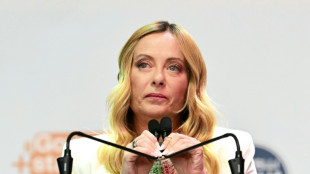 Italy bans burqas in schools, caps numbers of foreign students per class
-
Starbucks to close 250 more cafes in North America
-
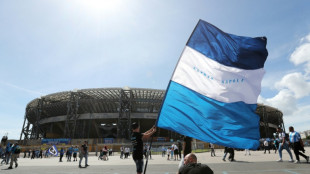 Napoli hoping to build new stadium, says owner
-
Stocks fall as oil prices rise and bonds back under pressure
-
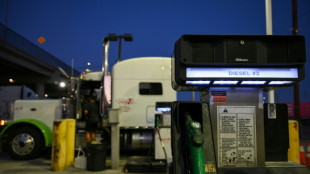 What happens if the US bans diesel exports
-
Top ECB official to resign to take up IMF role
-
 Oscar-winner Cotillard fears being moved by AI actor
-
Eviction of pensioner puts Spain housing crisis in spotlight
-
 Stocks fall, oil prices rise as global bonds back under pressure
-
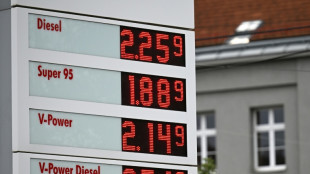
Average EU diesel price hits record 2.23 euros a litre: AFP analysis
-
 Streamex Converts Interest Into Capital as GLDY Investment Strategy Secures $1M+ Institutional Allocation
-
Whitetip Investments Marks 10 Years of Regulation, Transparency & Responsible Trading

-
 STARTRADER Named Best Fintech Forex Broker at Forex Expo Dubai 2026
-
Stocks fall, oil prices rise as global bonds under pressure
-
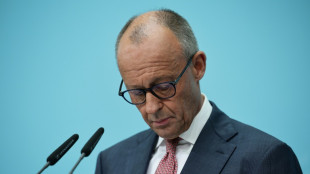 German think tanks urge Merz to stick with reforms after election defeats
-
Hungary detects invasive spotted lanternfly for first time in EU

-
 France's top-selling newspaper to slash jobs
-
Forex Expo Dubai 2026 Breaks Guinness World Record Again With 23,816 Attendees

-
 BaazEX Enters the Asian Trading Market With a New Approach to Online Forex Trading.
-
Asian markets fall on US-China jitters as leaders meet
-
 Sao Tome voters want to stop exodus of 'neglected' youth
-
As Moscow steps up attacks, Kyiv residents brace for harsh winter
-
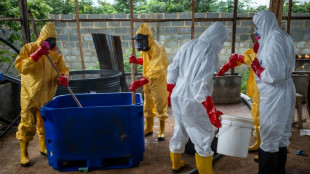 Mexican cartels target Australia with their African meth
-
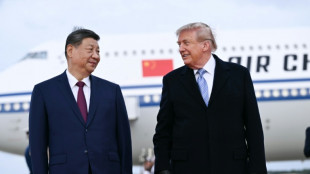
Markets mixed as China's Xi arrives for US talks
-
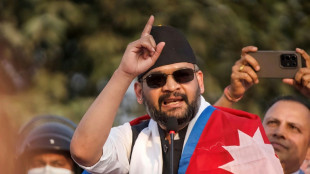 Rapper-turned-PM faces first big test after Nepal disaster
-
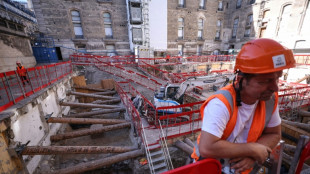
Archaeological 'breakthrough' could confirm origins of Paris
-
 Meta launches camera-free AI glasses amid privacy pushback
-
Australian PM says OpenAI hacked government health website
-
 Anthropic touts AI-led biology discovery
-
Rio breaks record for rainiest September amid powerful El Nino
-
 Stocks fall on soaring bond yields, higher oil prices
-
Mandela Digital Extends Early Access Programme to 11 February 2027 Following Strong Response

-
 ArcPoint Expands Globally with Institutional Intelligence Platform for Modern Investors
-
McDonald's to boost franchisees as inflation weighs on consumers
-
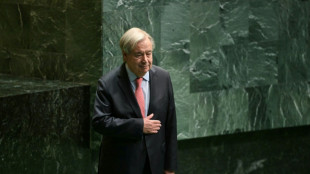 Outgoing UN chief makes final climate push at New York summit
-
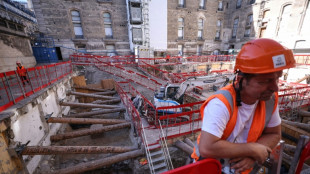
Archaelogical 'breakthrough' could confirm origins of Paris
-
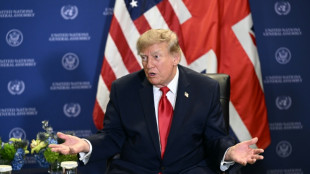 Stocks dip, oil soars despite Trump hailing "productive" Iran talks
-
Fendi brings disco bling, Italian style, to Milan Fashion Week

European Union resigned to 15 pecent US tariff
The United States and European Union clinched a trade agreement on Sunday that will see EU exports taxed at 15 percent, in a bid to resolve a transatlantic tariff stand-off that threatened to explode into a full-blown trade war.
US President Donald Trump emerged from a high-stakes meeting with European Commission President Ursula von der Leyen at his golf resort in Scotland, describing the deal as the "biggest-ever".
The deal, which the leaders struck in around an hour, came as the clock ticked down on an August 1 deadline to avoid an across-the-board US levy of 30 percent on European goods.
"We've reached a deal. It's a good deal for everybody. This is probably the biggest deal ever reached in any capacity," said Trump.
Trump said a baseline tariff of 15 percent would apply across the board, including for Europe's crucial automobile sector, pharmaceuticals and semiconductors.
As part of the deal, Trump said the 27-nation EU bloc had agreed to purchase "$750 billion worth of energy" from the United States, as well as make $600 billion in additional investments.
Von der Leyen said the "significant" purchases of US liquefied natural gas, oil and nuclear fuels would come over three years, as part of the bloc's bid to diversify away from Russian sources.
Negotiating on behalf of the EU's 27 countries, von der Leyen had been pushing hard to salvage a trading relationship worth an annual $1.9 trillion in goods and services.
"It's a good deal," the EU chief told reporters.
"It will bring stability. It will bring predictability. That's very important for our businesses on both sides of the Atlantic," she said.
She added that bilateral tariff exemptions had been agreed on a number of "strategic products", notably aircraft, certain chemicals, some agricultural products and critical raw materials.
Von der Leyen said the EU still hoped to secure further so-called "zero-for-zero" agreements, notably for alcohol, which she hoped to be "sorted out" in coming days.
Trump also said EU countries -- which recently pledged to ramp up their defence spending within NATO -- would be purchasing "hundreds of billions of dollars worth of military equipment."
- 'Best we could get' -
The EU has been hit by multiple waves of tariffs since Trump reclaimed the White House.
It is currently subject to a 25-percent levy on cars, 50 percent on steel and aluminium, and an across-the-board tariff of 10 percent, which Washington threatened to hike to 30 percent in a no-deal scenario.
The bloc had been pushing hard for tariff carve-outs for critical industries from aircraft to spirits, and its auto industry, crucial for France and Germany, is already reeling from the levies imposed so far.
"Fifteen percent is not to be underestimated, but it is the best we could get," acknowledged von der Leyen.
Any deal will need to be approved by EU member states -- whose ambassadors, on a visit to Greenland, were updated by the commission Sunday morning. They were set to meet again after the deal struck in Scotland.
German Chancellor Friedrich Merz rapidly hailed the deal, saying it avoided "needless escalation in transatlantic trade relations".
But German exporters were less enthusiastic. The powerful BDI federation of industrial groups said the accord would have "considerable negative repercussions" while the country's VCI chemical trade association said the accord left rates "too high".
Ireland, one of the EU's top exporters to the United States, said Sunday it welcomed the deal for bringing "a measure of much-needed certainty", but that it "regrets" the baseline tariff, in a statement by its Department of Foreign Affairs and Trade.
The EU had pushed for a compromise on steel that could allow a certain quota into the United States before tariffs would apply.
Trump appeared to rule that out, saying steel was "staying the way it is", but the EU chief insisted later that "tariffs will be cut and a quota system will be put in place" for steel.
- 'The big one' -
While 15 percent is much higher than pre-existing US tariffs on European goods, which average around 4.8 percent, it mirrors the status quo, with companies currently facing an additional flat rate of 10 percent.
Had the talks failed, EU states had greenlit counter tariffs on $109 billion (93 billion euros) of US goods, including aircraft and cars to take effect in stages from August 7.
Trump has embarked on a campaign to reshape US trade with the world, and has vowed to hit dozens of countries with punitive tariffs if they do not reach a pact with Washington by August 1.
Asked what the next deal would be, Trump replied: "This was the big one. This is the biggest of them all."
burs-gv/tc/lb
M.Mendoza--CPN