Some Europeans still travel to Iran, ignoring dire warnings / Photo: ATTA KENARE - AFP

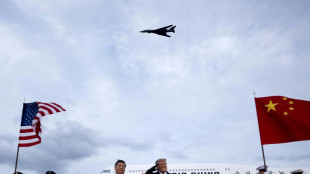 Trump's photo of Xi greeting carries signs of AI

 First US trial against TikTok to open Monday

 French literary prize removes novel from longlist after AI claims
 Trump accuser E. Jean Carroll finally has her damages
 Heavy fighting, internet disruption as Ethiopia conflict rages
 Asian markets mixed after oil gains
 UN approves resolution on dealing with rising sea levels

 Global stocks mostly fall as oil prices and bond yields rise

 Starbucks to close 250 more cafes in North America

 Stocks fall as oil prices rise and bonds back under pressure
 Top ECB official to resign to take up IMF role

 Eviction of pensioner puts Spain housing crisis in spotlight

 Average EU diesel price hits record 2.23 euros a litre: AFP analysis

 Whitetip Investments Marks 10 Years of Regulation, Transparency & Responsible Trading

 Stocks fall, oil prices rise as global bonds under pressure
 Hungary detects invasive spotted lanternfly for first time in EU
 Forex Expo Dubai 2026 Breaks Guinness World Record Again With 23,816 Attendees

 Asian markets fall on US-China jitters as leaders meet
 As Moscow steps up attacks, Kyiv residents brace for harsh winter

 Markets mixed as China's Xi arrives for US talks
 Archaeological 'breakthrough' could confirm origins of Paris

 Australian PM says OpenAI hacked government health website

 Rio breaks record for rainiest September amid powerful El Nino
 Mandela Digital Extends Early Access Programme to 11 February 2027 Following Strong Response

 McDonald's to boost franchisees as inflation weighs on consumers
Brushing aside increasingly urgent official warnings to stay clear of Iran, some European tourists still head to the Islamic Republic, which is accused by Western governments of practicing "hostage diplomacy".
Lennart Monterlos, an 18-year-old French-German national who disappeared while biking across the country on a tour from Europe to Asia last month, is the latest possible target of unwarranted Iranian arrests.
The French foreign ministry called the case "worrying", and government minister Laurent Saint-Martin, whose portfolio includes French nationals living abroad, said "Iran pursues a deliberate policy of taking Western hostages".
The minister did not say whether Monterlos had indeed been arrested by the Iranian authorities, who are believed currently to hold around 20 European nationals.
The French foreign ministry's list of French or French-Iranian nationals registered to be in Iran either as residents or visitors has about 1,000 names, but the real number is likely higher, given that there is no obligation to check in with the consulate.
Ingrid, who is in her 50s and asked for her last name to be withheld, said she had been to Iran three times already without notifying the foreign ministry.
"I was aware of the ministry's travel warnings but I didn't pay attention," she told AFP, saying she did not believe her "profile" exposed her to arrest.
- 'I don't care' -
She said she always has a valid visa on her trips, told the Iranian authorities where she would stay and wore a headscarf, in line with Iran's strict dress code for women.
She was always under heavy surveillance in Iran, she said, "but I don't care".
Aymeric, a 25-year-old Frenchman who also declined to have his last name published, has a "special affinity" with Iran because one of his best friends is from there. In 2023, he went cycling there for a month.
"I wasn't worried, although I knew that French people were being held in Iran," he told AFP.
Aymeric says he took some precautions, using his mobile phone and his camera as little as possible, staying off social media, making no comment on politics and avoiding striking up friendships with women.
Since, however, he has come to see it as "very naive" to assume he could avoid all dangers.
"At the end of the day, it is not just about how you yourself behave," he said.
Francois-Henri Deserable, a French writer, said he visited Iran in late 2022 "to bear witness to what was going on out there" during protests following the death in custody of Mahsa Amini, an Iranian Kurd detained for an alleged breach of the dress code for women.
"I think it would be reckless to take such risks just to take selfies in the Persepolis ruins," he said.
Jean-Francois Rial, CEO of travel company Voyageurs du Monde, said it stopped sending clients to Iran "months or even years ago", adding it would be "irresponsible" to organise trips there.
Most people still visiting Iran did so "on their own initiative" and were "uncontrollable", Rial said.
In stark contrast to current risks of arrest, Iran is widely considered an attractive destination when it comes to personal safety, including for women and solo travellers, and interactions with ordinary Iranians are mostly friendly.
"The hospitality is extraordinary, there'll always be someone to take care of you," said Aymeric, adding that this could create the impression "that there's nothing to fear" when travelling in Iran.
That sentiment is shared by Ingrid.
"I feel safer in any big Iranian city than in Paris," she said.
H.Meyer--CPN