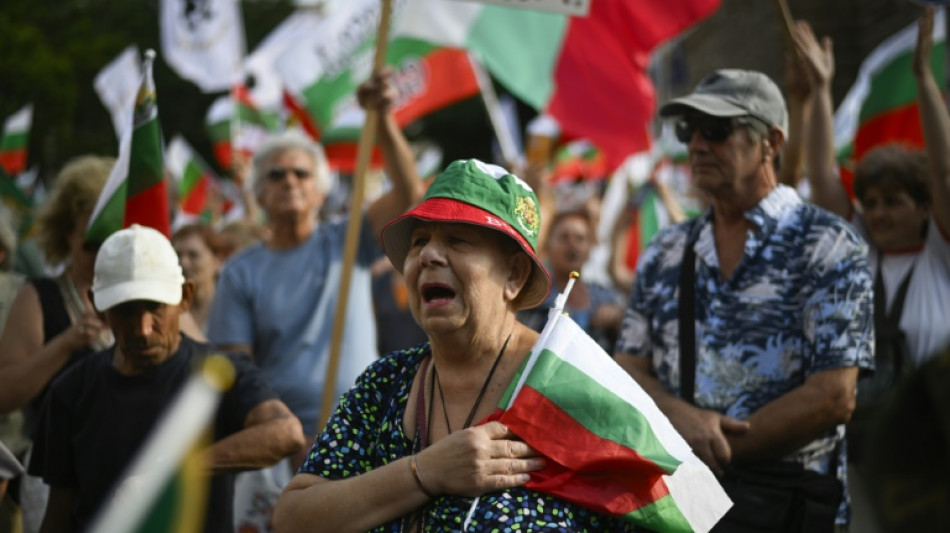
Bulgaria becomes 21st member to adopt euro after EU green light / Photo: Nikolay DOYCHINOV - AFP

 Trump's photo of Xi greeting carries signs of AI

 First US trial against TikTok to open Monday

 French literary prize removes novel from longlist after AI claims
 Trump accuser E. Jean Carroll finally has her damages
 Heavy fighting, internet disruption as Ethiopia conflict rages

 Asian markets mixed after oil gains

 UN approves resolution on dealing with rising sea levels

 Global stocks mostly fall as oil prices and bond yields rise
 Starbucks to close 250 more cafes in North America
 Stocks fall as oil prices rise and bonds back under pressure
 Top ECB official to resign to take up IMF role

 Eviction of pensioner puts Spain housing crisis in spotlight
 Average EU diesel price hits record 2.23 euros a litre: AFP analysis

 Whitetip Investments Marks 10 Years of Regulation, Transparency & Responsible Trading

 Stocks fall, oil prices rise as global bonds under pressure
 Hungary detects invasive spotted lanternfly for first time in EU
 Forex Expo Dubai 2026 Breaks Guinness World Record Again With 23,816 Attendees

 Asian markets fall on US-China jitters as leaders meet
 As Moscow steps up attacks, Kyiv residents brace for harsh winter

 Markets mixed as China's Xi arrives for US talks
 Archaeological 'breakthrough' could confirm origins of Paris
 Australian PM says OpenAI hacked government health website

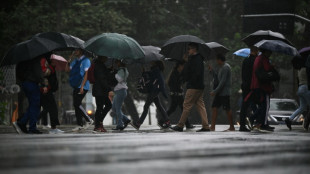 Rio breaks record for rainiest September amid powerful El Nino
 Mandela Digital Extends Early Access Programme to 11 February 2027 Following Strong Response

 McDonald's to boost franchisees as inflation weighs on consumers
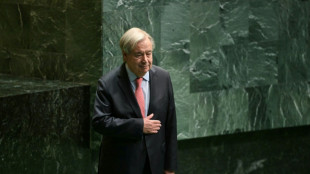
EU ministers gave the final green light on Tuesday for Bulgaria to adopt the euro on January 1, 2026, making it the single currency area's 21st member.
Bulgaria's switch from the lev to the euro comes nearly 19 years after the country of 6.4 million people joined the European Union.
"We did it!" Bulgarian Prime Minister Rossen Jeliazkov said.
"We thank all institutions, partners and everyone whose efforts made this landmark moment possible. The government remains committed to a smooth and effective transition to the euro in the interest of all citizens," Jeliazkov said on X.
In adopting the legal texts necessary for the move, EU finance ministers officially set the euro at 1.95583 Bulgarian lev.
"Joining the euro area is much more than just about replacing lev with euro. It is about building a brighter and more prosperous future for Bulgaria and its citizens at the heart of Europe," EU economy chief Valdis Dombrovskis said after the approval.
"The euro will bring new opportunities, investments, jobs and growth," he said.
The European Commission last month said the EU's poorest country had fulfilled the strict conditions to adopt the euro, while the European Central Bank (ECB) also gave a positive opinion.
Bulgaria's journey to joining the eurozone has had a stormy political backdrop with seven elections in three years -- the last in October 2024.
But recent polls show Bulgarian society remains divided on the euro, with experts attributing the scepticism largely to fears of rising prices and declining purchasing power.
President Rumen Radev shocked many when he proposed holding a referendum on the matter but that was given short shrift by the Bulgarian parliament.
Since June, protesters have gathered in Sofia to call for "keeping the Bulgarian lev". A symbolic protest camp with several tents has been set up near the presidency and the Bulgarian National Bank in the capital.
Far-right opposition parties have used the issue to promote anti-EU narratives.
Proponents in Bulgaria, however, insist the move will help improve the country's economy, and reinforce its ties to the West and protect against Russia's influence.
"The political benefits are becoming increasingly significant, as the protests against the euro seem to bear the mark of the Kremlin," 43-year-old musician Veselin Dimitrov told AFP in Sofia.
- Euro club gets bigger -
The green light comes as the euro has been gaining in value against the US dollar as President Donald Trump's protectionist trade policies shake trust in the US currency.
Only 12 countries were part of the single currency area -- including France, Germany, Italy, Spain, and Greece -- when the first euro bills and coins were rolled out on January 1, 2002.
It gradually widened with Slovenia joining in 2007, Cyprus and Malta in 2008, Slovakia in 2009, Estonia in 2011, Latvia in 2014 then Lithuania in 2015.
Croatia was the last country to join in 2023, bringing the total to 20.
Bulgaria wanted to adopt the euro sooner but Brussels judged its inflation was too high to meet the necessary criteria.
EU states that want to join the single currency must demonstrate that their economy has converged with other eurozone countries and that they have their finances under control.
The conditions include holding inflation to no more than 1.5 percentage points higher than the rate of the three best-performing EU countries.
When Brussels gave its backing in June, it said Bulgaria's average inflation rate during the 12 months to April 2025 was 2.7 percent, just below the needed level.
S.F.Lacroix--CPN