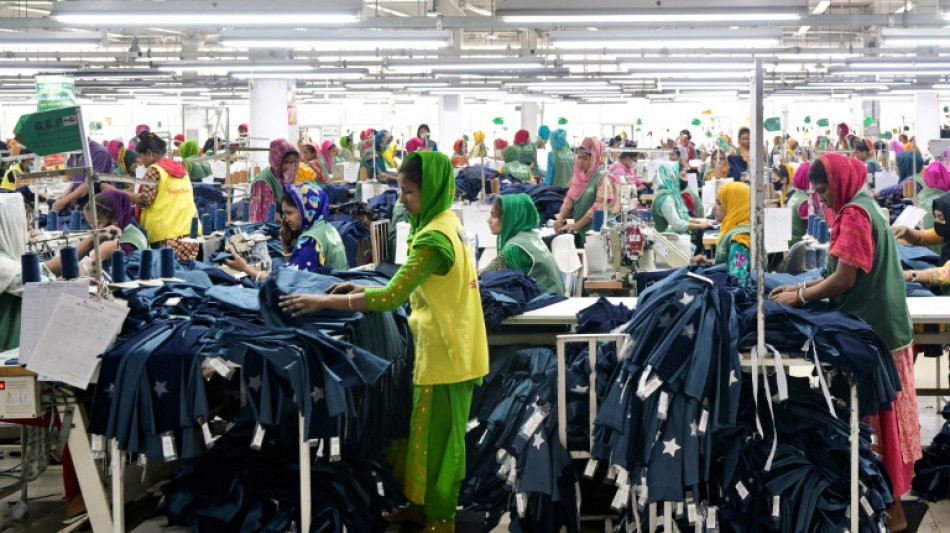
Major garment producer Bangladesh seeks deal after 35% US tariff / Photo: Munir UZ ZAMAN - AFP/File

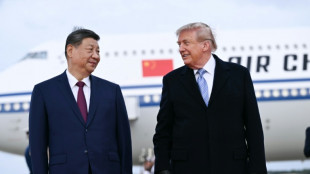
 Trump's photo of Xi greeting carries signs of AI

 First US trial against TikTok to open Monday
 French literary prize removes novel from longlist after AI claims
 Trump accuser E. Jean Carroll finally has her damages
 Heavy fighting, internet disruption as Ethiopia conflict rages
 Asian markets mixed after oil gains
 UN approves resolution on dealing with rising sea levels
 Global stocks mostly fall as oil prices and bond yields rise
 Starbucks to close 250 more cafes in North America
 Stocks fall as oil prices rise and bonds back under pressure
 Top ECB official to resign to take up IMF role

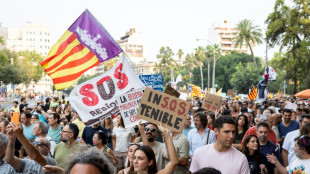 Eviction of pensioner puts Spain housing crisis in spotlight
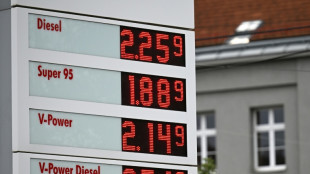 Average EU diesel price hits record 2.23 euros a litre: AFP analysis

 Whitetip Investments Marks 10 Years of Regulation, Transparency & Responsible Trading

 Stocks fall, oil prices rise as global bonds under pressure
 Hungary detects invasive spotted lanternfly for first time in EU
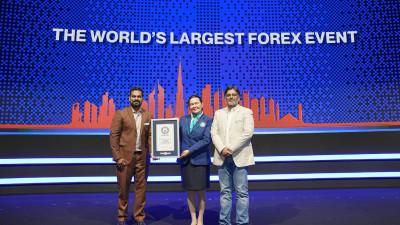 Forex Expo Dubai 2026 Breaks Guinness World Record Again With 23,816 Attendees

 Asian markets fall on US-China jitters as leaders meet
 As Moscow steps up attacks, Kyiv residents brace for harsh winter
 Markets mixed as China's Xi arrives for US talks
 Archaeological 'breakthrough' could confirm origins of Paris

 Australian PM says OpenAI hacked government health website

 Rio breaks record for rainiest September amid powerful El Nino
 Mandela Digital Extends Early Access Programme to 11 February 2027 Following Strong Response

 McDonald's to boost franchisees as inflation weighs on consumers
Bangladesh, the world's second-biggest garment manufacturer, holds hope to reduce the 35 percent tariff that US President Donald Trump said he will impose, the country's top commerce official told AFP on Tuesday.
Textile and garment production accounts for about 80 percent of exports in Bangladesh and the industry has been rebuilding after it was hit hard in a student-led revolution that toppled the government last year.
"There is a hope for getting a reduced rate of tariffs as USTR (Office of the United States Trade Representative) sent another draft document for review," Commerce Secretary Mahbubur Rahman told AFP.
Rahman said the South Asia nation's national security adviser and commerce adviser were "working on the issue" in the United States.
Bangladesh exported $8.36 billion worth of goods to the United States in 2024, while imports from there amounted to $2.21 billion, according to the Bangladesh Bank and the National Board of Revenue.
US clothing companies that source products from Bangladesh range from Fruit of the Loom to Levi Strauss to VF Corp -- whose brands include Vans, Timberland and The North Face.
Trump hit Bangladesh with 37 percent tariffs in an April 2 announcement, but in a letter issued Tuesday, the US leader said it would now be 35 percent.
That is more than double the 16 percent already placed on cotton products.
Dhaka has proposed to buy Boeing planes and boost imports of US wheat, cotton and oil in a bid to reduce the trade deficit, which Trump has used as justification for imposing painful levies.
Mahmud Hasan Khan, president of the Bangladesh Garment Manufacturers and Exporters Association (BGMEA), called it "a big challenge for the garment sector".
"We had expected the tariff imposed on us to be between 10 to 20 percent," he said, adding he expected Dhaka's interim leader Muhammad Yunus to "raise the issue with the United States".
Former BGMEA director Mohiuddin Rubel warned the impact as tariffs stand would be dire.
"The new tariffs raise worries about job losses in Bangladesh as the US is its main export market," he said.
"Bangladesh needs to act quickly by engaging US importers to push for policy changes, resuming high-level trade talks, and highlighting the importance of its products."
St.Ch.Baker--CPN