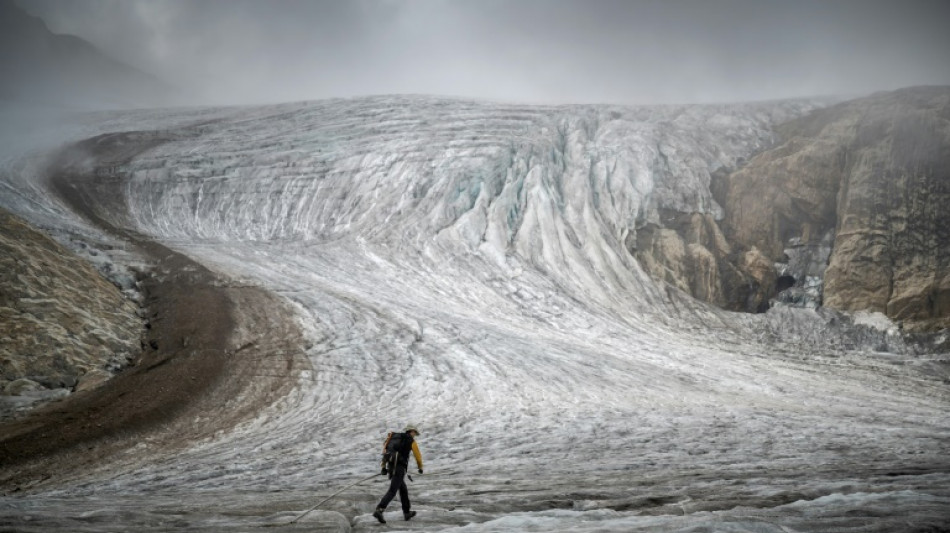
Meltdown: Swiss glaciers hit annual tipping point weeks early / Photo: Fabrice COFFRINI - AFP/File

 Trump's photo of Xi greeting carries signs of AI

 First US trial against TikTok to open Monday

 French literary prize removes novel from longlist after AI claims

 Trump accuser E. Jean Carroll finally has her damages

 Heavy fighting, internet disruption as Ethiopia conflict rages
 Asian markets mixed after oil gains

 UN approves resolution on dealing with rising sea levels

 Global stocks mostly fall as oil prices and bond yields rise

 Starbucks to close 250 more cafes in North America

 Stocks fall as oil prices rise and bonds back under pressure
 Top ECB official to resign to take up IMF role

 Eviction of pensioner puts Spain housing crisis in spotlight

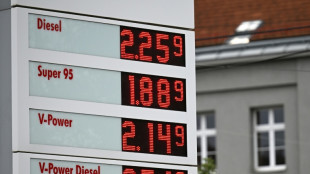 Average EU diesel price hits record 2.23 euros a litre: AFP analysis

 Whitetip Investments Marks 10 Years of Regulation, Transparency & Responsible Trading

 Stocks fall, oil prices rise as global bonds under pressure

 Hungary detects invasive spotted lanternfly for first time in EU

 Forex Expo Dubai 2026 Breaks Guinness World Record Again With 23,816 Attendees

 Asian markets fall on US-China jitters as leaders meet

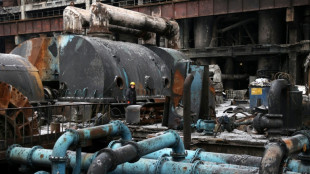 As Moscow steps up attacks, Kyiv residents brace for harsh winter

 Markets mixed as China's Xi arrives for US talks

 Archaeological 'breakthrough' could confirm origins of Paris

 Australian PM says OpenAI hacked government health website

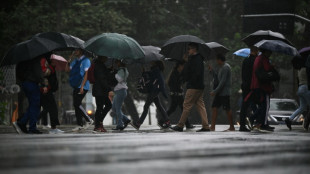 Rio breaks record for rainiest September amid powerful El Nino

 Mandela Digital Extends Early Access Programme to 11 February 2027 Following Strong Response

 McDonald's to boost franchisees as inflation weighs on consumers

The snow and ice accumulated last winter by Switzerland's glaciers has already melted away, a monitoring service said, with Friday marking the alarming second-earliest arrival on record of the tipping point known as glacier loss day.
All further melting between now and October will see the size of glaciers in the Swiss Alps shrink, according to Glacier Monitoring in Switzerland (GLAMOS).
This century, the tipping point, on average, has been reached in mid-August -- itself already bad news for the nation's 1,400 glaciers, which are shrinking at a staggering rate.
Its arrival several weeks earlier on July 4 is "another alarm call", GLAMOS chief Matthias Huss told AFP.
"It's like the glaciers are shouting out: 'We're disappearing. Help us.'"
Glaciers in the Swiss Alps began to retreat about 170 years ago.
The retreat was initially modest but in recent decades, melting has accelerated significantly as the climate warms.
The volume of Swiss glaciers shrank by 38 percent between 2000 and 2024.
- Summer of destruction -
"If we have a glacier loss day, it means that the glacier is losing mass," said Huss.
"For a glacier that is healthy, the day would occur at the end of September, or in October -- or not at all".
With no glacier loss day, the summer would simply melt away only the snow that accumulated over the previous winter.
This would be "the ideal case -- a glacier in equilibrium with the climate", said Huss.
Its arrival on July 4 means that "critically, we have the whole summer left to destroy the ice".
"Moving this day forward by five to six weeks before the normal date over the last 20 years means we're just prolonging this mass loss season dramatically," he said.
The assessment is made using 12 reference glaciers.
Last winter saw low levels of snowfall, and June was the second warmest on record, contributing to the day's early arrival this year.
In data going back to 2000, the only time that the tipping point arrived even earlier was in 2022, when it came on June 26.
"That was really a game-changer for us glaciologists because it was the first year when we saw absolutely extreme melting.
"Everything that we knew before about glacier melting changed," said Huss.
Experts thought 2022 was a complete outlier and although a warming climate meant other such years would be coming down the line, they did not expect to see the next very early glacier loss day coming so soon afterwards.
- Feedback effect -
Huss noted that extreme melting produces an accelerating feedback effect, worsening the situation even further.
Once the reflective white snow coverage from winter is gone from the top of the glacier, the darker, more absorbent grey surface of the bare ice is exposed.
"With the same amount of solar radiation, we can now melt more ice," Huss said.
With the European heatwave over the past week and the possibility of further heatwaves in July and August, "it is very like that again it is a very bad year for Swiss glaciers", he said.
Melting glaciers threatens the long-term water security for millions of people downstream who rely on them for fresh water.
Much of the water that flows into the Rhine and the Rhone, two of Europe's major rivers, comes from the Alpine glaciers.
J.Bondarev--CPN