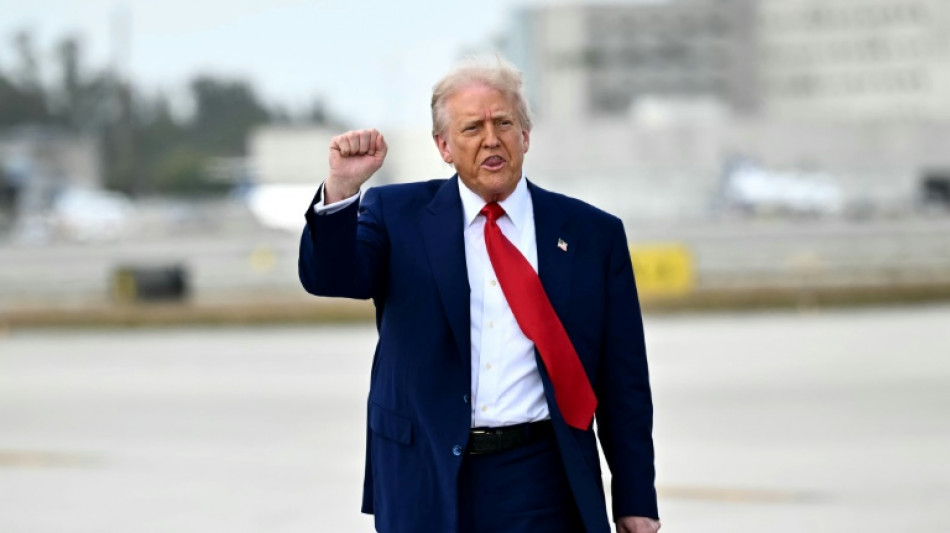
With tariff war, Trump also reshapes how US treats allies / Photo: Mandel NGAN - AFP

 Kenya's economy faces climate change risks: World Bank
 ArcelorMittal confirms long-stalled French steel plant revamp

 AstraZeneca profit jumps as cancer drug sales grow
 Trump tariffs hurt French wine and spirits exports

 Back to black: Philips posts first annual profit since 2021
 'Family and intimacy under pressure' at Berlin film festival

 Unions rip American Airlines CEO on performance
 Three missing employees of Canadian miner found dead in Mexico
 Epstein accomplice Maxwell seeks Trump clemency before testimony

 Emergency measures kick in as Cuban fuel supplies dwindle under US pressure
 AI chatbots give bad health advice, research finds
 Bank of France governor Francois Villeroy de Galhau to step down in June

 Japan restarts world's biggest nuclear plant again
 'Want to go home': Indonesian crew abandoned off Africa demand wages
 Trump says China's Xi to visit US 'toward the end of the year'

 US astronaut to take her 3-year-old's cuddly rabbit into space

 Storm-battered Portugal votes in presidential election run-off

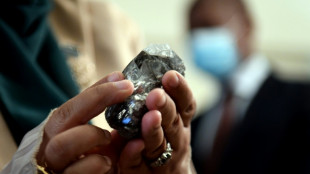 De Beers sale drags in diamond doldrums

 Pakistan's capital picks concrete over trees, angering residents
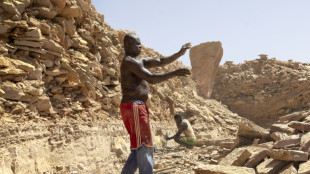
 Chile's climate summit chief to lead plastic pollution treaty talks
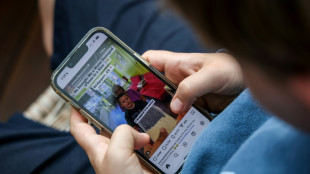 Opinions of Zuckerberg hang over social media addiction trial jury selection
 Dow surges above 50,000 for first time as US stocks regain mojo

 EU nations back chemical recycling for plastic bottles
 Stocks rebound though tech stocks still suffer

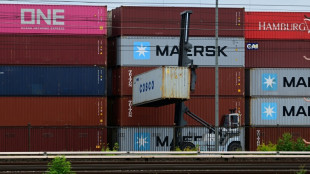 German exports to US plunge as tariffs exact heavy cost

Japan and Taiwan promised billions in investment. Britain offered an invitation from the king. In the end, even US allies failed to dissuade President Donald Trump from hitting them with tariffs, which threaten to remake not just the global economy but the foundations of US foreign policy.
Trump, in what he called "Liberation Day," on Wednesday unleashed across-the-board global tariffs on US friends and foes alike with some of the most punishing rates hitting longstanding US allies.
"This is a huge change in how we deal with the world," said Danielle Pletka of the conservative American Enterprise Institute.
Trump, seeing himself as a master dealmaker, believes he can gain leverage when effectively "you take exports hostage, and then you start negotiating the price of their release."
"That's not usually how America does business. Sometimes it will do business this way with our adversaries," she said. "It is very rarely how we do business with our allies."
Heather Hurlburt, who was chief of staff to the US trade representative during former president Joe Biden's administration, said the United States traditionally has put security ties first.
"What you now have is the people around Trump saying we want to fix our economic relationships and the security relationships can follow where we approve of the economic relationships.
"That's a complete inversion in how US policy has worked," said Hurlburt, now an associate fellow at think tank Chatham House.
- Flattery fails -
In his first term, Trump confounded US allies, but many found combinations of flattery and incentives to prevent drastic actions.
Japan's late prime minister Shinzo Abe, whom Trump singled out for praise at Wednesday's event, had gifted the Republican mogul a golden golf club, building a rapport that helped shield Japan.
French President Emmanuel Macron, in office during both Trump terms, has feted him with an Eiffel Tower dinner and a seat of honor at a military parade. Macron notched up some successes, including persuading Trump to reverse course on pulling out of Syria.
In the White House Rose Garden on Wednesday, Trump instead basked in praise from a blue-collar worker who declared Trump the greatest president ever as he was invited to the podium.
Ahead of the tariffs, some US partners tried to woo Trump with big announcements. Chipmaking giant TSMC of Taiwan, which counts on the United States for security against China, last month said it would invest $100 million in the United States.
Trump acknowledged the investment in his remarks but said that Taiwan "took all of our computer chips and semiconductors" and announced 32 percent tariffs on its exports.
A Washington-based diplomat of one country hit by heavy tariffs said his government decided on a quiet approach, reaching out to Trump officials to plead for cooperation.
"It didn't work at all. The tariffs are much higher than anything we were expecting," he said on condition of anonymity.
- 'Nationalism' on two fronts -
Trump, in sharp contrast to Biden, has piled pressure on allies. He has demanded Europe spend more on its own defense and take the lead in arming Ukraine.
Vice President JD Vance, in an interview with Breitbart News, said the United States would no longer be the "piggy bank of the world" and drew a link between economic and security policies.
"In a word, it's nationalism," he told the right-wing outlet. "In our economic policy, we're going to fight back against ridiculous trade practices. In our foreign policy, we're going to stop starting stupid wars."
Trump has vowed to generate "trillions of dollars" from tariffs to reduce taxes and stimulate domestic manufacturing.
Most mainstream economists dismiss Trump's logic, noting that tariff costs will be passed on to consumers. Wall Street on Thursday suffered its worst fall in five years.
Hurlburt, the Chatham House expert, said that policymakers around Trump consider tariffs an "opening move" to reshape the economic order, with tariffs eventually stabilizing at a "reciprocal level" and a weaker dollar boosting US exports.
To achieve such a long-term transformation, she said, "you need at least some level of cooperation with other countries" -- which will need to be certain that they can make deals that the United States will honor.
"It's a little unclear that other countries will indeed conclude that negotiating with us is a good investment," she said.
Y.Uduike--CPN